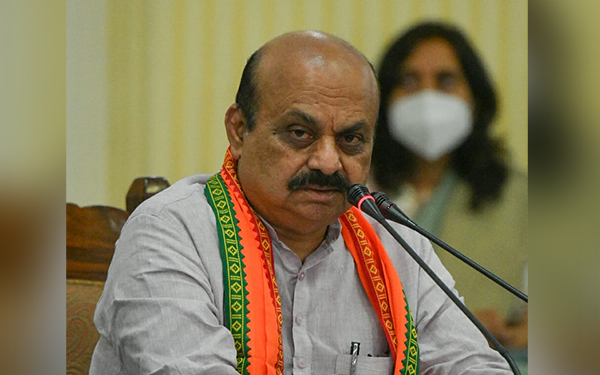
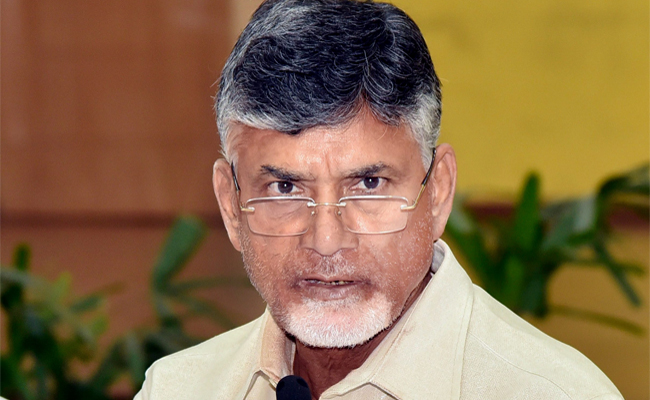
Bengaluru, Aug 5: Karnataka Chief Minister Basavaraj Bommai on Thursday said allocation of portfolios to 29 Ministers inducted into his new cabinet, will be done on August 6.

"Allocation of portfolios will be completed tomorrow," Bommai told reporters here.

A week after taking over as the Chief Minister of Karnataka, Bommai on Wednesday had expanded his new cabinet, by inducting 29 Ministers.

In the cabinet expansion exercise that was seen as the first challenge before the new Chief Minister, Bommai has tried to play safe, as he has by and large retained the old faces, as 23 of them were Ministers in the previous B S Yediyurappa cabinet, while six are new.

While some Ministers are hoping to retain the portfolio they had in the previous cabinet, some are hoping to get bigger portfolios.

Senior party leader and Minister K S Eshwarappa said he was not aspiring for any specific portfolio and would abide by the decision of the CM and party leadership.

Pointing out that he had held departments like water resources, Energy and Revenue in the past, Eshwarappa, who was Rural Development Minister in the previous Yediyurappa government said, he has never asked for any specific portfolios and has effectively performed in what was given to him.

Minister Prabhu Chauhan though said, he is looking to get back the Animal Husbandry department, the portfolio he was in-charge of in the previous cabinet and work for the protection of "Gaumata" (Cows).

"Work in the department is half done, I as a Minister introduced anti cow slaughter law, we are setting up gaushalas, animal helpline, so Animal Husbandry department is my priority, but if I'm given some other also I will perform," he said.

Minister B C Patil, who held Agriculture portfolio in the previous cabinet also said, he would like to retain the same portfolio as more work needs to be done in the department, but if CM allocates any other, he would perform happily.

"The CM asked me which portfolio I wanted.. I leave it to him... I'm ready to do whatever I'm allotted," he said.

B C Nagesh, who has become Minister for the first time said, he had never expected to become a Minister, so there is no aspiration for any specific portfolio.

"I will do my best in whichever department I'm given."

Let the Truth be known. If you read VB and like VB, please be a VB Supporter and Help us deliver the Truth to one and all.


New Delhi, Dec 22 (PTI): Congress Parliamentary Party chairperson Sonia Gandhi on Monday said the "demolition" of the historic Mahatma Gandhi National Rural Employment Guarantee Act (MGNREGA) will have catastrophic consequences for crores of people across rural India and called upon all to unite and safeguard the rights that protect everyone.

In an editorial in 'The Hindu' titled "The bulldozed demolition of MGNREGA", the former Congress chief said the "death" of MGNREGA is a collective failure.

This comes a day after President Droupadi Murmu gave her assent to the Viksit Bharat Guarantee for Rozgar and Ajeevika Mission (Gramin) (VB-G RAM G) Bill, which replaces the MGNREGA and has a provision for 125 days of wage employment for rural workers.

ALSO READ: Delhi polluted owing to Aravalli, says anchor Rajat Sharma; netizens troll him

"MGNREGA realised the Mahatma's vision of Sarvodaya (welfare of all) and enacted the constitutional right to work," Gandhi said.

"It is imperative, now more than ever, to unite and safeguard the rights that protect us all," she added.

Gandhi said the employment guarantee scheme to deal with rural distress has now been "bulldozed and demolished".

MGNREGA was a rights-based legislation inspired by Article 41 of the Constitution of India, which calls upon the government to secure citizens' right to work, she said.

"Over the past few days, the Narendra Modi government worked to bulldoze MGNREGA's abolition without any discussion, consultation, or respect for parliamentary processes or Centre-State relations. The removal of the Mahatma's name was only the tip of the iceberg. The very structure of MGNREGA, so integral to its impact, has been annihilated," she said.

She described VB-G RAM G as "nothing but a set of bureaucratic provisions".

ALSO READ: Hindu outfit urges Karnataka governor to withhold assent to anti-hate speech bill

The Modi government's new Bill has restricted the ambit of the scheme to rural areas as notified by the Union at its discretion, Gandhi said.

Against uncapped central allocation, there is now a pre-determined budgetary allocation that caps the number of days of employment provided in each state. The number of workdays provided are, therefore, left to the Centre's priorities rather than the people's needs, she said, adding that the all-year guarantee of employment has been finished off.

Gandhi said one of the greatest impacts of MGNREGA was increased bargaining power of the landless poor in rural India, which elevated agricultural wages.

"This bargaining power will definitely be eroded under the new law. The Modi government is attempting to suppress wage growth and that too at a time when the proportion of employment in agriculture has risen for the first time since Independence, contrary to what should have been the case," she noted.

She also said by transferring a significant portion of the expense onto the states, the Modi government is discouraging them from providing work under the scheme. The finances of states, already under severe stress and strain, will be further devastated, the Congress leader said.

Under the VB-G RAM G Bill, the cost-sharing pattern is 60:40 between the Centre and states, 90:10 for northeastern and Himalayan states, and 100 per cent central funding for Union territories without legislatures.

Gandhi further said that aside from demolishing the demand-based nature of the programme, the Modi government has ended the decentralised nature of the scheme.

"The Modi government is resorting to fraudulent claims that it has enhanced the employment guarantee from 100 days (under MGNREGA) to 125 days. For all the reasons outlined above, that will certainly not be the case. Indeed, the real nature of the Modi government's intentions can be understood from its decade-long track record of throttling MGNREGA.

"It began with the Prime Minister's (in)famous mocking of the scheme on the floor of the House and proceeded apace through a 'death by a thousand cuts' strategy through, for instance, stagnant budgets, the use of disenfranchising technology and delayed payments to workers," she said in the article.

Gandhi said the demolition of the right to work must not be seen in isolation but as part of the long assault by the ruling establishment on the Constitution and its right-based vision for the country.

"The most fundamental right to vote is under unprecedented assault. The Right to Information has been desecrated with legislative changes that weaken the autonomy of Information Commissioners, and by wholesale exemptions from the Act for ill-defined 'personal information data," she said.

The Right to Education has been undermined and The Forest Rights Act, 2006, was markedly weakened by the Forest (Conservation) Rules (2022), which removed the gram sabha from any role in permitting the diversion of forest land, the Congress leader said, adding that The Right to Fair Compensation and Transparency in Land Acquisition, Rehabilitation and Resettlement Act, 2013 has been significantly diluted.

"Through the three black farm laws, the government attempted to deny farmers the right to a minimum support price. The National Food Security Act, 2013, may very well be next on the chopping block," Gandhi said.