CM Basavaraj Bommai to personally supervise Bengaluru's mega projects
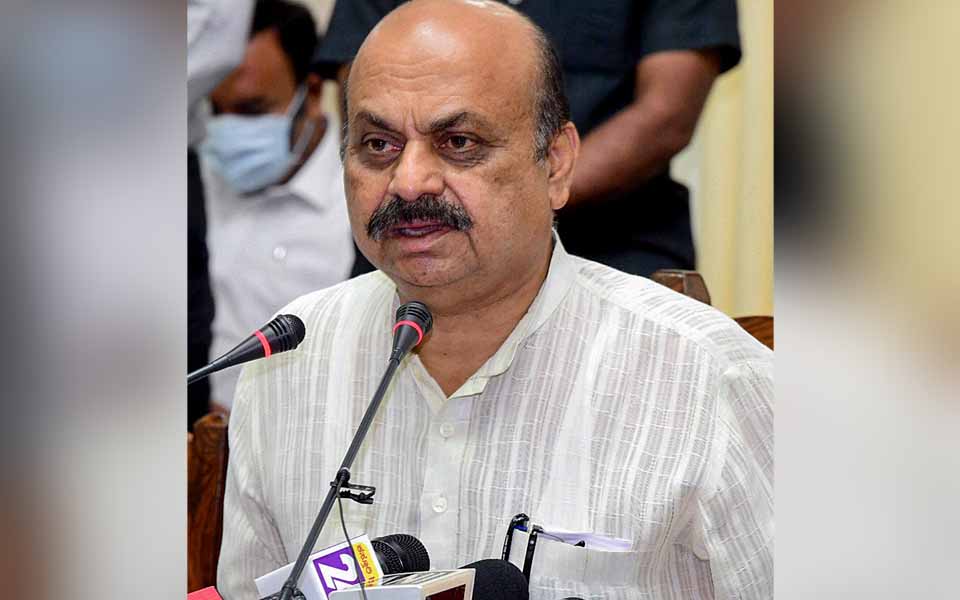
Bengaluru, Aug 29: Karnataka Chief Minister Basavaraj Bommai on Sunday said he will personally monitor the progress of mega projects in Bengaluru, and will be dedicating the first working hour of his day to supervise them.
"We have got a very big vision for Bengaluru, the greatest challenge is whether we will be capable of keeping up the timeline in implementing the projects. Therefore early planning, perfect planning, as well as perfect implementation of the plan is very important," Bommai said.
Speaking at an event here, he said accountability of all the major projects is more important than anything else. "The first decision that I have taken, as far as Bengaluru is concerned is that I will personally supervise the progress of all mega projects in Bengaluru, from CMO (Chief Minister's office). Within next 20 days my dashboard will be ready, day-to-day updates will be there and I will dedicate my first working hour of the day for supervising the progress of mega projects in Bengaluru," he said.
The mega projects that he will personally supervising include metro, outer ring road, high speed train from international airport to the city centre. Bengaluru International Airport will be unique in the world as it will be connected by metro, sub-urban and high speed trains.
The CM was speaking after inaugurating the extended Purple Line of Bangalore Metro on Mysuru Road here.
Noting that not only the infrastructure, his government also has plans to develop the slums in the city and there by improve the living standard of the people there, Bommai said, "we will have special authority for health infrastructure in the city, and regarding traffic we have decided to work on 12 high-density roads for seamless traffic movement, also seamless signaling with artificial intelligence." The government has plans for all-round development of the city that include core areas under the Bruhat Bengaluru Mahanagara Palike (BBMP), about 110 villages that were added to it, and also "showcasing" the Central Business District (CBD).
He said, "Bengaluru has a potential for another 3-4 CBDs- north, east, south and west, this is part of our vision." Observing that Bangalore Metro should increase its potential to carry people, Bommai said, "I have directed Bangalore Metro Rail Corporation Limited (BMRCL) officials to complete the metro works under Phase II by 2024, one year earlier than the present deadline of 2025. They said it is difficult, but I say we have to struggle and overcome that difficulty."
Let the Truth be known. If you read VB and like VB, please be a VB Supporter and Help us deliver the Truth to one and all.
Allahabad HC orders probe into 'reinstatement' of teacher in UP's Barabanki
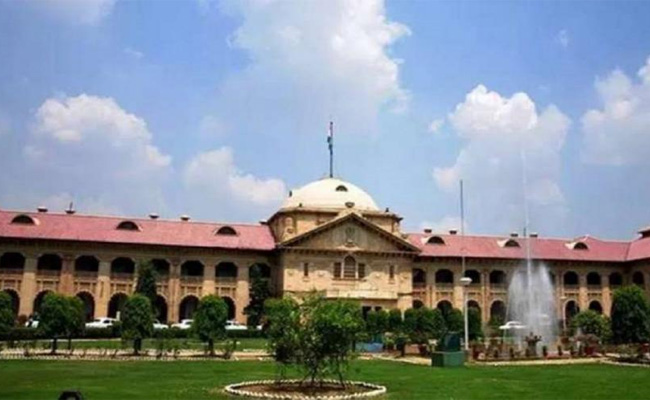
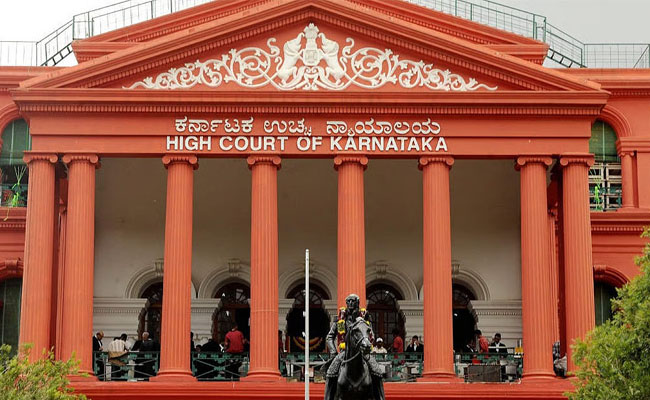
Lucknow (PTI): The Lucknow Bench of the Allahabad High Court on Friday ordered a probe by the special task force (STF) into alleged irregularities in the rejoining of a teacher at City Intermediate College in Barabanki, observing that the reinstatement appeared to be prima facie illegal.
The court also directed the recovery of the salary paid to the teacher during the disputed period.
A bench of Justice Rajeev Singh passed the order on a petition filed by the college management committee. The court expressed doubts over the roles of the District Inspector of Schools (DIOS), Barabanki, the college principal and the teacher concerned and hence, directed a detailed inquiry into the matter.
Taking note of alleged manipulation of records and misleading submissions, the court ordered the immediate transfer of the Barabanki DIOS to ensure a fair probe. It also directed the initiation of disciplinary proceedings against the then joint director of education of the Ayodhya division.
In its order, the court found that the teacher, Abhay Kumar, was initially appointed as an assistant teacher in 2018 but joined an Eklavya Model Residential School in Chhattisgarh as a lecturer in June 2024 without obtaining permission from the management. His subsequent request to retain the lien was rejected.
Despite this, he was allowed to rejoin the Barabanki College in September 2025 on the directions of the joint director of education and the DIOS, and was even paid the salary for October 2025. The court termed the rejoining "wholly illegal" and lacking any legal basis.
The bench also expressed concern over lapses in communication within the education department and directed the Uttar Pradesh chief secretary to ensure that official orders are communicated through email and WhatsApp as well, to prevent disputes.
The matter is next listed for hearing on May 28 when a compliance report is sought.