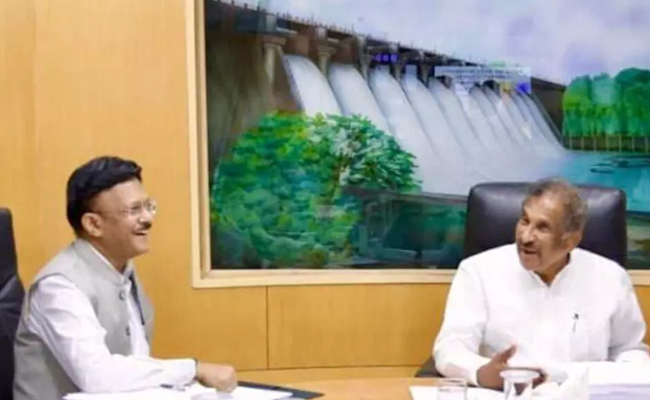
CM Bommai, other BJP leaders meet BSY as exit polls predict Congress victory
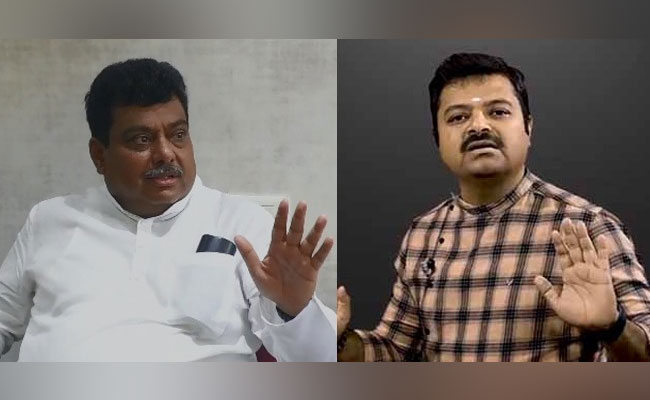
Bengaluru: Karnataka Chief Minister Basavaraj Bommai and other BJP leaders held a meeting with BJP veteran leader and former Chief Minister BS Yediyurappa on Friday, at Yediyurappa’s house ‘Kaveri’, apparently to discuss the BJP strategy in relation to the Assembly elections.
The meeting is learned to have been held in the backdrop of the exit polls prediction that the Congress will win the Assembly elections in Karnataka.
Murugesh Nirani, Basavaraj Byrathi, Lahar Singh Siroyi and BY Vijayendra were a part of the meeting.
Speaking to reporters after the meeting, CM Bommai said, “I repeat what I have been stating so far: the BJP will get a clear majority in the Assembly and form the government. We are confident of winning the elections as we have information on the ground realities at all booths and constituencies.”
He added, “I called the members of the party high command and informed them of the situation in the state. The high command too has expressed confidence in BJP’s victory.”
Let the Truth be known. If you read VB and like VB, please be a VB Supporter and Help us deliver the Truth to one and all.
Four, including two siblings, dead, five injured as truck hits motorcycle and SUV in MP's Damoh
Damoh (PTI): Four persons, including two brothers, died and five others sustained injuries after a truck hit a motorcycle and a sports utility vehicle (SUV) in Madhya Pradesh's Damoh district on Friday, a police official said.
The incident took place near Basa Tarkheda village, around 10 km from the district headquarters, close to a temple along Damoh-Sagar state highway in the evening, Sagar Naka police outpost in charge inspector Vikram Dangi said.
"The truck first hit a motorcycle, killing siblings Jeevan Ahirwar (33) and Suraj Ahirwar (30) on the spot. It then rammed into a Bolero, killing two persons identified as Raju Choudhary (50) and Dharmendra Sikhaiya (32). Five persons sustained injuries and have been hospitalised," he informed.
The truck driver and his assistant fled from the spot and efforts are on to nab them, the official added.