CM Bommai rejects chances of defection of BJP leaders to other parties
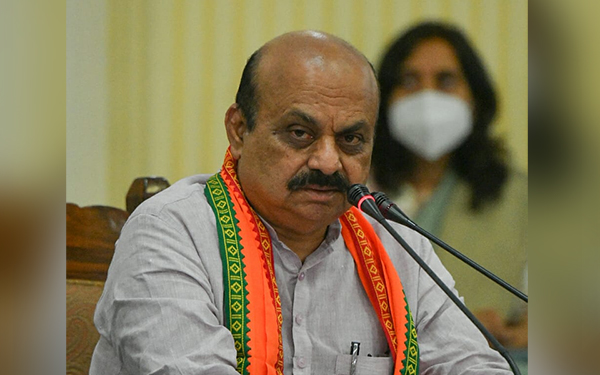
Bengaluru, Mar 13: Karnataka Chief Minister Basavaraj Bommai on Sunday ruled out the possibility of anyone from the ruling BJP in the state defecting to other parties.
Regarding chances of leaders from other parties joining the BJP in the state, he said "just wait and see".
These (defections) are just speculations, which have no basis. There is no question of anyone from BJP defecting to other parties. Neither earlier, nor now. I can tell you categorically that no one from our party will defect to other parties. As for anyone from other parties hopping onto BJP, just wait and see," Bommai told reporters here.
To a query on the possibility of early elections following a favourable outcome for BJP in the assembly elections in five states, the Chief Minister dismissed it saying these were only media speculations whereas there were no talks at any level in the party.
Regarding his visit to Delhi for the cabinet expansion as four ministerial berths were still lying vacant, Bommai said he would wait for signals from the seniors in the party.
Seniors had told me that they will give me a hint (about expansion). They have not given any indications yet. Once they do so, then I will immediately go there (Delhi), the Chief Minister said.
Against the sanctioned strength of 34, Karnataka has 30 ministers while lobbying is still on to grab the ministerial positions, BJP sources said.
Regarding the state tour of the leaders and party programme, Bommai said the party state executive committee is due to take place on March 30 and 31 where these matters will be decided.
With regard to bringing medical student Naveen S G's body from war-torn Kharkiv in Ukraine following his death due to shelling, the Chief Minister said once the bombings in Kharkiv reduces, the government will make efforts to bring back the corpse.
Naveen S G, a fourth-year medical student in Kharkiv, had died in the shelling as he ventured out to get food, water and currency.
Let the Truth be known. If you read VB and like VB, please be a VB Supporter and Help us deliver the Truth to one and all.
Odisha: BJD, Congress demand rollback of fuel price hike
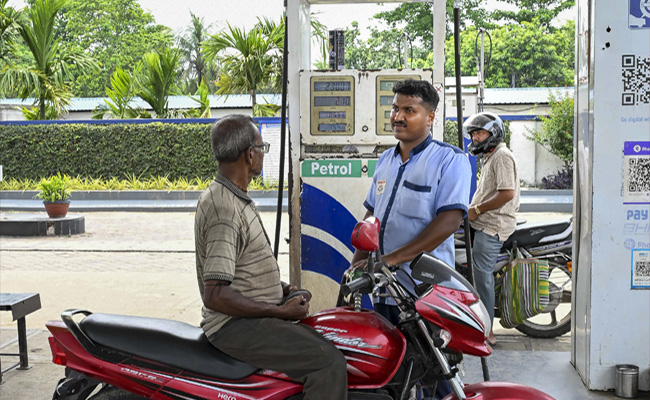
Bhubaneswar (PTI): The opposition BJD and Congress on Friday demanded an immediate rollback of the fuel price hike, accusing the ruling BJP of adopting a "double standard" on the issue of GST on petrol and diesel.
The women's wing of the Congress staged a demonstration near a fuel station in Bhubaneswar, protesting the increase of Rs 3 per litre in petrol and diesel prices.
BJD spokesperson Lenin Mohanty said the BJP had demanded that petrol and diesel be brought under the GST regime when it was in the opposition in the state, but was now taking a contradictory stand after coming to power.
"This is the time for the BJP to honour its earlier commitments and bring petrol and diesel under GST after withdrawing VAT. The party said one thing while in opposition, but after assuming power, it is misleading the people with a different stance," he alleged.
In a statement, the BJD claimed that fuel prices were not reduced even when international crude oil prices had fallen below USD 60 per barrel, allowing oil companies to earn massive profits at the expense of consumers.
"Now, when crude oil prices are rising, the BJP government has increased fuel prices by Rs 3 per litre to protect the profits of oil companies. This exposes the true character of the BJP," it alleged.
Ipsita Sahu, president of the Biju Chhatra Janata Dal, said the Centre should explain "under what pressure" it was being compelled to avoid cheaper fuel imports from Russia.
Meanwhile, Mahila Congress activists marched from the party's state headquarters to a fuel station in the Unit-2 area of Bhubaneswar, demanding rollback of the hike in petrol, diesel, commercial LPG and CNG prices.
As part of the protest, women activists brought two-wheelers without petrol to symbolically highlight the burden of rising fuel costs.
District Mahila Congress president Shriya Mohanty claimed the fuel price hike exposed the real nature of the BJP government.
"During the Manmohan Singh government in 2014, diesel was sold at Rs 55 per litre and petrol at Rs 70 per litre," she claimed.