CM Kumaraswamy says one language should not be imposed on others
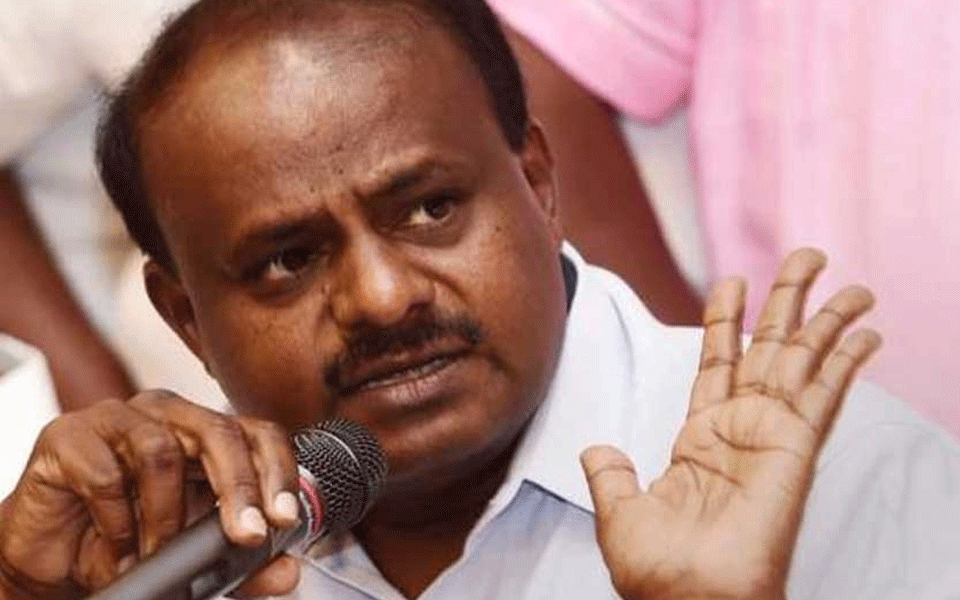
Bengaluru, Jun 2: Joining the chorus against a proposal for teaching Hindi in non-Hindi speaking states, Karnataka Chief Minister H D Kumaraswamy Sunday said one language should not be imposed on others in the name of three-language formula.
I am aware of the draft education policy released by the HRD Ministry yesterday. One language should not be imposed on others for any reason in the name of three-language policy.
State governments stand will be known to the Centre after gathering more information on this issue," he tweeted.
The draft of the new National Education Policy, proposed by the panel constituted in the previous Modi government, had suggested teaching of Hindi in non-Hindi speaking states.
It has already drawn strong opposition from parties, including the DMK, in Tamil Nadu who alleged it tantamount to "thrusting" Hindi.
Meanwhile, newly elected Bengaluru South BJP MP Tejaswi Surya termed the opposition to Hindi as an act of Breaking India forces.
It's sad that a few people with vested interests have created a 'Hindi Imposition' sentiment despite these facts being in the public domain.
"These 'Breaking India' forces are afraid that if this policy sees the light of the day, their hideous agenda of disintegrating Bharat by peddling false narratives will fall flat, Surya tweeted.
He said people will understand the "hidden narrative" and would not let these forces win.
In the wake of the controversy, Union Minister Prakash Javadekar had Saturday clarified the committee had only prepared a draft report and no decision has been taken on implementing it.
He asserted no language should be imposed on anyone.
The panel was constituted by Javadekar when he was HRD minister in the previous Modi government.
"The committee has submitted its report. The draft has been prepared but the government has not taken any decision. It is just a misunderstanding. We will only take a decision after feedback on the draft has been received," Javadekar had said.
Let the Truth be known. If you read VB and like VB, please be a VB Supporter and Help us deliver the Truth to one and all.
Trump says EU has until July 4 to approve last year's trade deal or it will face higher tariffs
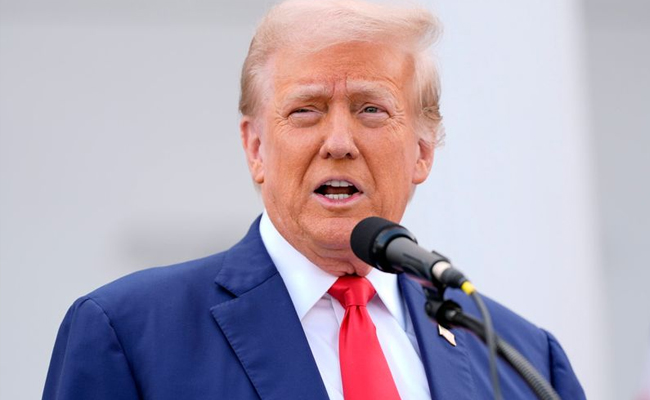
Washington (AP): President Donald Trump has said in a social media post that goods from the European Union would face higher tariff rates if the 27-member bloc fails to approve last year's trade framework by July 4.
The announcement on Thursday appeared to be a deadline extension after the president said last Friday that EU autos would face a higher 25 per cent tariff starting this week. Trump made the updated announcement after what he described as a "great call" with European Commission President Ursula von der Leyen.
Still, the US president was displeased that the European Parliament had yet to finalize the trade arrangement reached last year, which was further complicated in February by the US Supreme Court ruling that Trump lacked the legal authority to declare an economic emergency to impose the initial tariffs used to pressure the EU into talks.
"A promise was made that the EU would deliver their side of the Deal and, as per Agreement, cut their Tariffs to ZERO!" Trump posted. "I agreed to give her until our Country's 250th Birthday or, unfortunately, their Tariffs would immediately jump to much higher levels."
It was unclear from the post whether Trump was implying that the tariff rates would jump on all EU goods or the increase would only apply to autos.
His latest statement indicates he might be backing away from his earlier threat on EU autos by giving the European Parliament several more weeks to approve the agreement.
Under the original terms of the framework, the US would charge a 15 per cent tax on most goods imported from the EU.
But since the Supreme Court ruling, the administration has levied a 10 per cent tariff while investigating trade imbalances and national security issues, aiming to put in new tariffs to make up for lost revenues.