CM Siddaramaiah blames Centre for urea shortage, says Karnataka steering ahead despite constraints
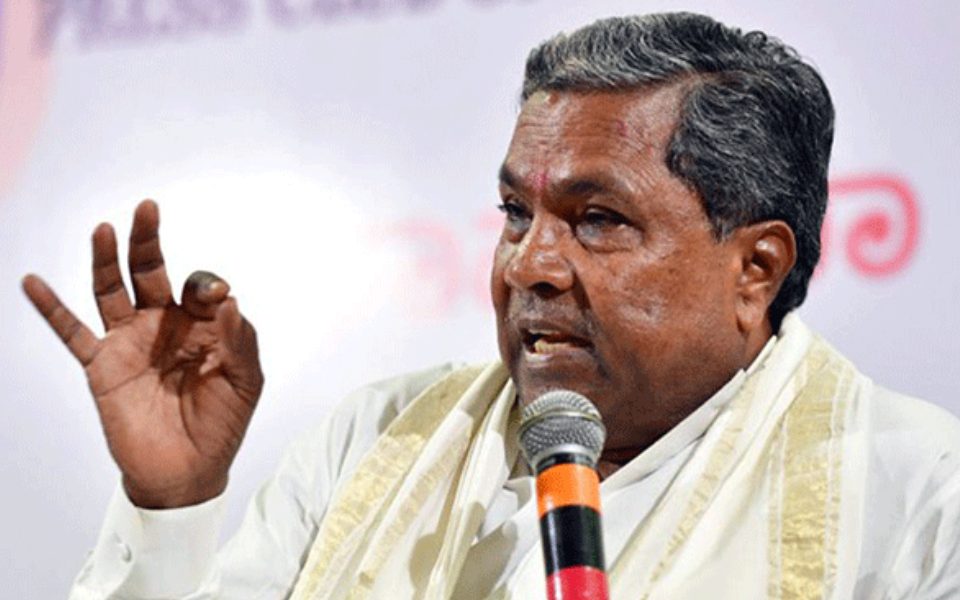
Bengaluru, Jul 30 (PTI): Karnataka Chief Minister Siddaramaiah on Wednesday accused the Centre of "reducing the state’s urea allocation", leading to a shortage at a time when sowing activity is in full swing following good rainfall.
He said the state has received favourable rains this season and that sowing activity has picked up significantly. However, he claimed the reduced supply of urea has led to a shortage, affecting farmers during this crucial period.
During a review meeting with district in-charge ministers, cabinet colleagues, and legislators on governance and development issues, the chief minister’s office shared these observations.
Against the requirement of 11.17 lakh metric tonnes (MT) between April and July, only 5.17 lakh MT has been supplied, resulting in a shortfall of 1.66 lakh MT, he said.
"The allocation was curtailed despite an increase in hybrid jowar sowing by two lakh hectares this year. Despite the Centre's non-cooperation, our farmers should not face any hardship," he claimed.
Calling the BJP’s protests over the issue "politically motivated" and "shameful", Siddaramaiah urged legislators to clarify the situation to their constituents.
He also blamed the previous BJP government for what he termed as "financial mismanagement", and alleged that works worth Rs 2.70 lakh crore were undertaken without budgetary allocation, including Rs 1.66 lakh crore under the then chief minister’s discretionary quota, leaving behind unpaid bills of over Rs 72,000 crore.
The CM claimed that Karnataka’s share of central taxes had been reduced by 23 per cent under the 15th Finance Commission, resulting in a loss of over Rs 68,000 crore in the last five years.
Despite such losses, the state continues to spend Rs 52,000 crore annually on guarantee schemes and Rs 1.12 lakh crore on social pensions, subsidies, and other beneficiary-oriented programmes, he added.
Implementation of the Seventh Pay Commission recommendations has increased the state's salary and pension bill to Rs 1.24 lakh crore this year, he said, adding that Rs 83,200 crore is being invested in capital expenditure—20.03 per cent of the state budget—one of the highest in the country. An additional Rs 45,600 crore is being spent on debt servicing, he added.
Referring to central data, Siddaramaiah said Karnataka now ranks first in the country in per capita income at constant prices, at Rs 2,04,605 for 2024-25.
Citing studies, he said the ‘Shakti’ scheme has contributed to a 23 per cent rise in women’s employment in Bengaluru and 21 per cent in Dharwad. "These are encouraging indicators," he said.
"Despite the Centre’s non-cooperation and the financial mess left by the previous government, we are steering the administration in a better direction," he claimed.
Siddaramaiah also emphasised the need for effective implementation of budgetary promises and directed ministers and legislators to actively participate in Karnataka Development Programme (KDP) meetings.
"These meetings must be used to address people’s grievances, technical hurdles in project implementation, bureaucratic delays, and negligence," he added.
Highlighting Karnataka’s economic progress, he urged MLAs to inform voters that the state’s five guarantee schemes (Gruha Lakshmi, Shakti, Gruha Jyothi, Anna Bhagya and Yuva Nidhi) were key contributors to the improvement in per capita income.
"This is a matter of pride for the state," he added.
He thanked legislators for their cooperation and announced a special grant of Rs 50 crore for developmental works, calling for its optimal and transparent utilisation.
The meeting also reviewed district-wise development activities, agricultural progress, and the utilisation of released funds, with officials instructed to expedite project execution with clear deadlines.
Let the Truth be known. If you read VB and like VB, please be a VB Supporter and Help us deliver the Truth to one and all.
UAE denies Netanyahu secretly visited the country during Iran war
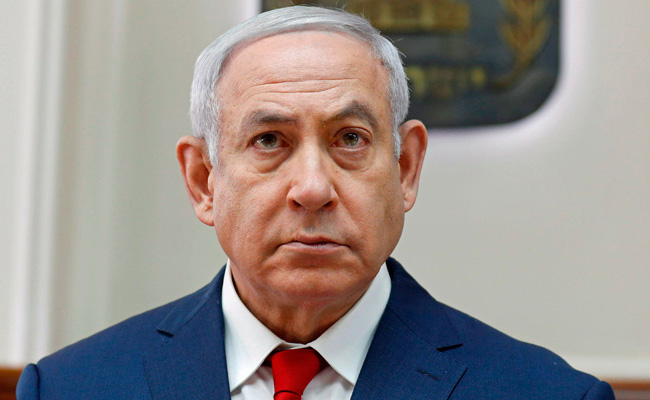
Jerusalem (AP): Israeli Prime Minister Benjamin Netanyahu secretly visited the United Arab Emirates during the Israeli-US war with Iran, further strengthening ties with a Gulf nation that normalised relations with Israel in 2020, his office said Wednesday. The UAE denied any secret visit had occurred.
Netanyahu met with UAE President Sheikh Mohammed bin Zayed Al Nahyan in a gathering that “resulted in a historic breakthrough in relations between Israel and the United Arab Emirates", according to the Israeli statement.
THE UAE's official WAM news agency posted an article denying the report about a Netanyahu visit.
According to WAM, the country's relations with Israel “are public and conducted within the framework of the well-known and officially declared Abraham Accords, and are not based on non-transparent or unofficial arrangements”.
The report also denied any Israeli military delegation was received in the UAE.
Israel's announcement came a day after US Ambassador to Israel Mike Huckabee revealed that Israel had sent Iron Dome air-defence weapons and personnel to operate them to the UAE.
The UAE has faced Iranian missile and drone fire even after the ceasefire was reached last month. It has been trying to signal to nervous investors that it remains open for business and safe.
Last week, WAM reported that Netanyahu was among the leaders who called the Emirati president to condemn Iranian attacks and express their solidarity with the Gulf federation.
It was rare public acknowledgment of direct talks between the countries that normalized relations in the 2020 Abraham Accords and have strengthened their ties during the Iran war.
Iran has criticised that agreement and has repeatedly suggested over the years that Israel maintained a military and intelligence presence in the Emirates.
Israeli leaders have made occasional visits to the UAE in recent years after normalising relations.
Iran demands Kuwait release detainees
===================
Iran's foreign minister accused Kuwait of attempting to “sow discord” by detaining four Iranians that the Gulf Arab country accuses of being Revolutionary Guard operatives.
In a post Wednesday on X, Foreign Minister Abbas Araghchi demanded the Iranians' immediate release and said Iran reserved the right to respond.
“This illegal act took place near an island used by the US to attack Iran,” Araghchi wrote.
A day earlier, Kuwait said four men were detained and two escaped while trying to infiltrate Bubiyan Island in the northwest corner of the Persian Gulf on May 1.
Bubiyan Island is home to Mubarak Al Kabeer Port, which is under construction as part of a Chinese plan to build infrastructure across the world. It also came under Iranian attack during the war.
Iranian human rights lawyer released
======================
Prominent Iranian human rights lawyer Nasrin Sotoudeh has been released from prison more than a month after being detained, a rights group and her daughter said Wednesday.
Sotoudeh, who is known for defending activists, opposition politicians and women prosecuted for removing their headscarves, was detained by Iranian intelligence agents at her house in Tehran in April.
Her release comes as US President Donald Trump arrived in China for a long-anticipated visit that is expected to touch on the war in Iran.
The US-based Human Rights Activists News Agency, which closely tracks developments in Iran, said that Sotoudeh was released on bail from Tehran's Evin Prison.
Her daughter, Mehraveh Khandan, posted on social media that Sotoudeh was released on temporary custody. Iran's semiofficial ISNA news agency also reported Sotoudeh release.
Sotoudeh has been imprisoned multiple times. Her activist husband, Reza Khandan, has been imprisoned in the same prison as his wife.
Nobel Peace laureate needs long-term care
==========================
Doctors who examined Nobel Peace laureate and activist Narges Mohammadi more than a week after she collapsed at a prison in Iran said she needs months of treatment, according to her foundation.
Mohammadi, 53, was urgently transferred from prison to a hospital in northwestern Iran on May 1 after she fell unconscious. She was released on bail nearly 10 days later and transferred to a hospital in Tehran where her specialists examined her.
The doctors said her vascular disease has worsened since she was last checked in 2024 and recommended eight months of treatment.
She was awarded the Nobel in 2023 while in prison and has been jailed repeatedly throughout her career. Her latest imprisonment began in December when she was arrested in the northeastern Iranian city of Mashhad.