CM Siddaramaiah chairs first Greater Bengaluru Authority meeting, directs focus on civic amenities
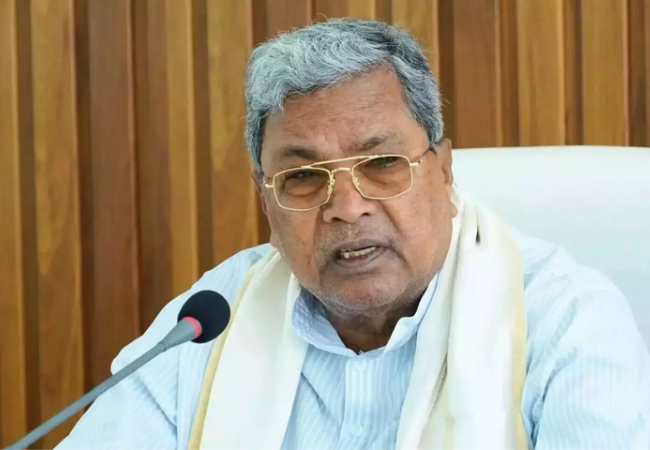
Bengaluru (PTI): Karnataka Chief Minister Siddarmaiah on Friday chaired the inaugural meeting of the Greater Bengaluru Authority (GBA), and directed the authorities to provide necessary basic facilities to the residents of the city, that include proper garbage disposal, reducing traffic congestion, and maintaining roads and sewage systems.
He has also instructed to take steps to keep the city clean, enhance its beauty, and increase the revenue of all five municipal corporations under the GBA.
The newly formed umbrella agency —the Greater Bengaluru Authority (GBA)—will act as a coordinator, while the city will be administered by five corporations.
The GBA, chaired by the chief minister, includes 75 members, including MLAs, MPs, and MLCs.
However, BJP members boycotted Friday's meeting, and accused the Congress government of "dividing" the city founded by Nada Prabhu Kempegowda, and violating the 74th Amendment of the Constitution, which empowers urban local bodies to legislate and execute laws on municipal matters.
They also cited procedural lapses, including delay in sending the meeting agenda, as reason for the boycott.
"All municipal commissioners should increase tax collection in their jurisdiction. Garbage disposal and cleanliness should be given priority. Footpaths should be made as wide as possible. Quality should not be compromised for any reason. If the authorities are involved with the contractors, quality work cannot be done," Siddaramaiah said at the meeting, according to his office statement.
He instructed officials to chalk out a plan to improve last mile connectivity on the metro line to ease traffic congestion, and directed the Transport Minister to review the deployment of small buses for this.
The CM said in the coming days, all the concerned departments, like Bangalore Development Authority (BDA), Bangalore Water Supply and Sewerage Board (BWSSB), Bangalore Electricity Supply Company (BESCOM), Bangalore Metro Rail Corporation Limited (BMRCL), which are providing services to the citizens of Bengaluru, should work in coordination with GBA.
He asked authorities to identify locations for adequate administrative offices for the five municipal corporations and take steps for their construction.
"The respective corporations should take steps to ensure proper garbage disposal at their level," he added.
Clarifying that there is no political motive behind the formation of the Greater Bengaluru Authority, Siddramaiah said everyone should work in coordination in the coming days to achieve the goal of providing best civic facilities and good governance to the people.
The Chief Minister also noted that public representatives have the opportunity to voice their opinions freely at GBA meetings.
Taking on the BJP, he said, "But some public representatives hae missed this opportunity. Those who are against the development of Bengaluru and those who are against decentralization of power have boycotted this meeting."
Accusing the Congress government of "dividing" Bengaluru that was founded by Nada Prabhu Kempegowda, BJP leader R Ashoka told reporters that on returning to power, his party will reunite the city.
Seeking to know whether decentralization of power means dividing the city, he asked, "Will you (CM) divide the state too, for the sake of development... Delegation of power is important, do it, rather than dividing the city."
Noting that a notice has to be issued seven days in advance for the meeting, Ashoka said phone calls were made only yesterday, agenda was sent at 12 noon on Friday, and the meeting was held at 4 in the evening.
The 74th Amendment to the Constitution is like the "Bhagavad Gita" for local bodies, he said adding that for the five new corporations, the Mayors should hold supreme authority, but instead the powers here have been vested in the authority headed by CM.
Deputy Chief Minister and Bengaluru Development Minister D K Shivakumar said the GBA has been given the responsibility of the city's planning authority and the power to issue Transferable Development Rights (TDR). "This power has been handed over to GBA from BDA."
Noting that the financial limit of the municipal committees' expenditure has been increased, Shivakumar said, "the expenditure limit of municipal commissioners has been increased from Rs 1 crore to Rs 3 crore. Thus, Rs 15 crore will be given to the commissioners of the five corporations. The expenditure limit of the standing committee has been increased from Rs 3 crore to Rs 5 crore. Rs 25 crore will be given for the standing committee of the five municipalities.
The expenditure limit of the mayor has been increased from Rs 5 crore to Rs 10 crore, and it will be Rs 50 crore for the five corporations, he said, "This is a historic decision."
Defending creation of five corporations, he said, "it has been done while ensuring that the 74th Amendment is not violated."
Let the Truth be known. If you read VB and like VB, please be a VB Supporter and Help us deliver the Truth to one and all.
Karnataka Muslim Convention to be held in Bengaluru on May 16
Muslim organisations to release report on Congress govt’s three-year performance
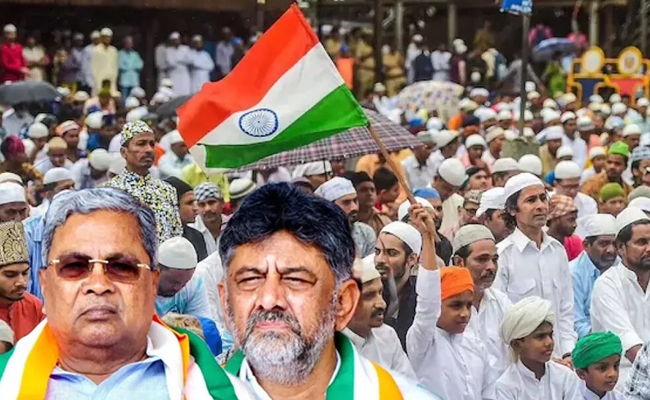
Bengaluru: Major Muslim organisations and federations in Karnataka have decided to organise a large public convention titled ‘Karnataka Muslim Convention’ at Town Hall in Bengaluru on May 16. During the convention, a comprehensive report reviewing the three-year performance of the Congress government under the theme “What did the Congress government promise? What did it do? What next?” will be released.
According to a statement issued on Friday, no politicians will be invited to the convention. The report will be submitted to the government and all MLAs after the event.
The convention is being held at a time when the Congress government is nearing the completion of three years in office on May 20. Muslim organisations have expressed dissatisfaction, alleging that despite extending strong support to the Congress in bringing it to power, the community is being neglected.
The Convention is being organised at time when there are concerns over inadequate political representation for Muslims, alleged neglect of community demands, and the suspension of senior Muslim leaders who had worked for the party for decades.
The organisers said the convention aims to raise questions on what the Congress government has delivered so far and what further steps are expected from the government.
The decision to hold the convention was taken during a meeting held on May 6 at A J International Hotel in Shivajinagar, Bengaluru. Representatives of major Muslim organisations, associations, ulema bodies, federations, and members of the ad hoc committee of Karnataka Rajya Muslim Okkoota attended the meeting.
More than 75 representatives and delegates, including senior ulemas, jamaat leaders, lawyers, retired officials, journalists and members of the KRMO ad hoc committee, participated in the discussions.
Members of the KRMO ad hoc committee’s report preparation team and experts from different sectors presented a detailed report on the Congress government’s three-year performance. The report examined promises made to Muslims on ten major issues, the extent to which they were fulfilled, pending promises, alleged discrimination in representation, and the demands now being placed before the government.
The report covered issues such as the hijab ban, reservation cancellation, hate speech and hate crimes, budget allocation, political representation, waqf matters, the anti-cow slaughter law, anti-conversion law, scholarships and educational grants.
Participants offered suggestions and recommendations on various points, and necessary corrections to the report were accepted after detailed discussions.
The meeting also reportedly expressed strong dissatisfaction over the manner in which the Congress government has treated the Muslim community. Participants are said to have opined that if the government and the Congress party continue in the same manner, the community should keep its political options open.
It was later decided that the report would be officially released at the large public convention on May 16 under the title “Karnataka Muslim Convention – What did the Congress government promise? What did it do? What next?”
The organisers appealed to people from all districts of the state to participate in large numbers and send a strong message to the government and the Congress party through the convention.
They also decided that all organisations, jamaats and associations should work towards ensuring participation from every district in Karnataka.
The statement reiterated that no politicians would be invited to the May 16 convention and that the report on the Congress government’s three-year performance would be submitted to the Chief Minister, Deputy Chief Minister, ministers and MLAs after the event.