CM Siddaramaiah meets PM, insists demands on sugarcane price, AIIMS
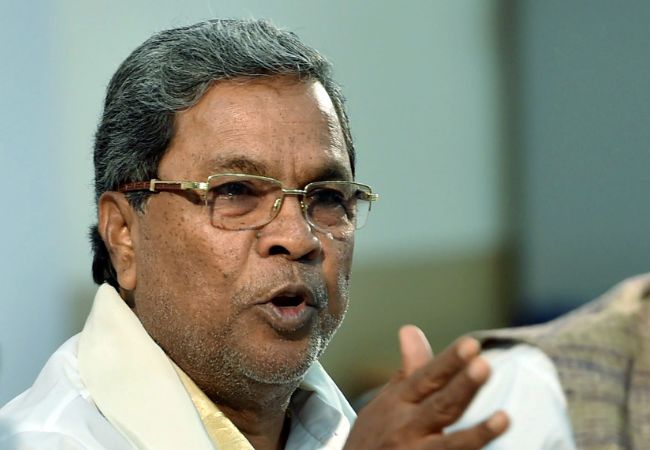
New Delhi/Bengaluru (PTI): Karnataka Chief Minister Siddaramaiah on Monday met Prime Minister Narendra Modi and insisted on demands pertaining to the state including on Fair Recovery Price of sugarcane, AIIMS for Raichur, releasing of flood relief among others.
His demand on sugarcane price came in the wake of farmers' protest in the north Karnataka demanding an increase in the cane procurement price.
The chief minister highlighted several long-standing demands of the state including the release of over Rs 2,100 crore in flood relief, and the clearance of crucial irrigation projects in his memorandum to Modi.
"The meeting, which comes amid ongoing state concerns over central fiscal devolution and disaster funding, covered five critical areas outlined in the document submitted to the PM," a statement issued by the chief minister's office said.
In his memorandum to the prime minister, Siddaramaiah sought a sustainable solution for sugarcane pricing crisis.
"Following recent farmer agitations, the state government informed the PM that it had brokered a solution by mandating an additional payment of Rs 100 per tonne of sugarcane, with the state bearing half the cost (Rs 50)," the statement said.
The memorandum stressed that this is a temporary fix and placed the onus for a permanent solution on the Centre, the statement said.
The chief minister made three key requests -- an immediate revision of the 'frozen' Minimum Support Price (MSP) for sugar, currently at Rs 31 per kg; an assured offtake of ethanol from Karnataka's distilleries; and a central notification empowering states to fix harvesting and transport costs.
The Chief Minister demanded setting up an All India Institute of Medical Sciences (AIIMS) in Raichur, described it as having 'sub-par' health and education indicators and a high populace of SC/ST and backward classes, hence in need of a high-quality Referral Medical Centre.
Siddaramaiah told Modi that the state has already submitted a detailed project report, identified land, and established a government medical college in Raichur to create a basic ecosystem for the national institute.
Regarding Jal Jeevan Mission, the CM said, "A significant point of discussion was the alleged financial shortfall in the Centre's share for the Jal Jeevan Mission (JJM). The state claimed that while it has achieved over 86 per cent functional household tap connections, the central government has a cumulative short release of Rs 13,004.63 crore up to 2025-26."
The memorandum stated that for 2025-26, no central funds have been released, while Karnataka has already advanced Rs 1,500 crore from its own budget to prevent work stoppages. Bills worth Rs 1,700 crore are pending, with another Rs 2,600 crore in the pipeline, prompting an urgent request for the release of balance funds, the statement said.
Siddaramaiah also sought the Prime Minister's intervention to break the logjam on several irrigation and drinking water projects.
Regarding the Mekedatu Balancing Reservoir on Cauvery, Siddaramaiah urged the Centre to direct the Central Water Commission (CWC) for expeditious clearance of the balancing reservoir project on the Cauvery.
On Krishna Tribunal, told the Prime Minister the gazette notification of the Krishna Water Dispute Tribunal-II (KWDT-II) award is pending for over a decade.
About Upper Bhadra dam project, Siddaramaiah sought the release of the central assistance of Rs 5,300 crore announced in the 2023-24 Union Budget.
The chief minister also asked for forest and wildlife clearances for Kalasa Banduri project from the Environment Ministry for these drinking water projects for the Hubballi-Dharwad region.
Along with that, Siddaramaiah explained to Modi about the severe natural calamity from unprecedented rains and riverine floods this year.
He told the PM that the state has submitted two memoranda seeking assistance from the National Disaster Response Fund (NDRF). The floods damaged crops across 14.5 lakh hectares, affecting 19 lakh farmers, and destroyed thousands of houses, roads, and schools.
In this connection, Siddaramaiah requested an assistance of Rs 614.9 crore under 'Rescue and Relief' to cover the shortfall in crop input subsidies and Rs 1,521.67 crore under 'Recovery and Reconstruction' for restoring damaged public infrastructure.
"The state government expressed hope for a positive consideration of its demands to address both immediate crises and long-term developmental needs," the statement said.
Let the Truth be known. If you read VB and like VB, please be a VB Supporter and Help us deliver the Truth to one and all.
How Indian AI Is Booming with GEOX AI Leading the Next Wave of Geolocation Intelligence
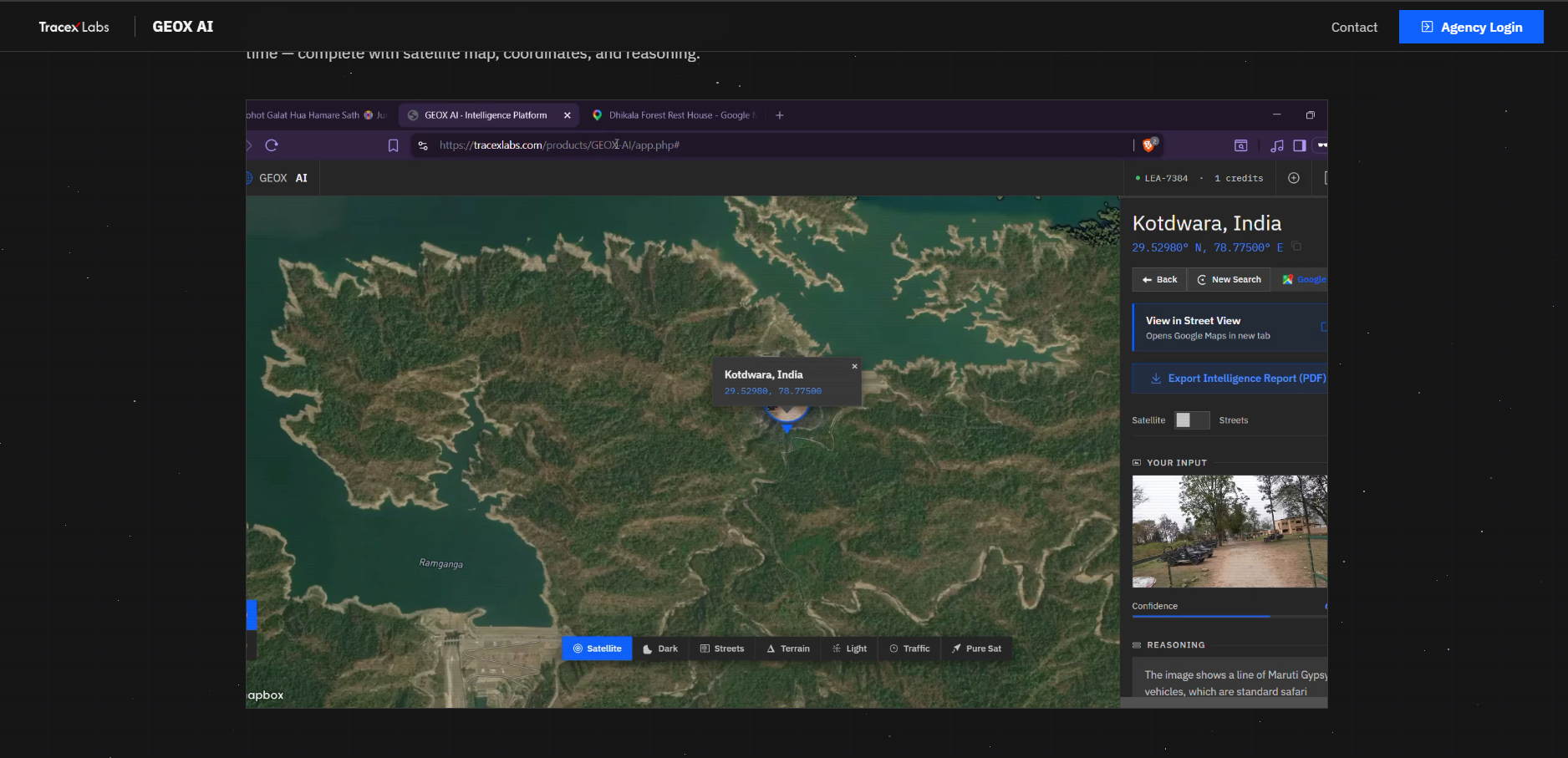
TraceX Labs has announced the launch of GEOX AI, an advanced artificial intelligence platform capable of identifying the real-world location where a photograph or video was taken using only the visual content within the media.
Positioned as an enterprise-grade intelligence solution, GEOX AI leverages advanced computer vision and multi-agent AI to analyze pixel-level details such as architecture, road patterns, vegetation, signage, lighting, and environmental context. By interpreting these visual clues, the system can estimate—and in many cases precisely determine—the origin of an image or video.
AI-Powered Geolocation Intelligence
Marketed under the concept of “Locate Anywhere From Any Image,” GEOX AI is designed for intelligence operations where speed, accuracy, and reliability are critical. The platform currently supports:
- 400+ analyses available
- <10 seconds average response time
- Up to 99% accuracy on landmark-based identification
- Global coverage across diverse terrains and environments
Core Capabilities
GEOX AI integrates multiple intelligence features into a single platform:
- Precise Geolocation:
Identifies exact geographic coordinates using visual landmarks, architecture, vegetation, and cultural indicators. - Satellite Map View:
Results are plotted on live satellite imagery with 2D/3D viewing options and multiple map styles for deeper analysis. - AI Reasoning Analysis:
Provides a detailed explanation of how the system arrived at a conclusion, including confidence scoring. - Multi-Result Analysis:
Returns multiple possible locations ranked by confidence, enabling cross-verification. - Intelligence PDF Export:
Allows one-click generation of professional reports containing maps, coordinates, analysis, and structured findings. - Credit-Based Access:
Agencies are allocated credits, with each analysis consuming one credit. Additional credits can be requested directly.
Speed Meets Intelligence
GEOX AI is designed to balance rapid processing with analytical depth:
- Fast Mode: Delivers results within seconds for clear and high-context images
- Advanced Mode: Performs deeper multi-step analysis for complex or ambiguous visuals
- Built for real-time decision-making in high-pressure environments
How GEOX AI Works
The platform follows a simple and efficient workflow:
- Upload any image or video frame
- AI analyzes visual clues such as structures, terrain, and environment
- The system identifies location with coordinates, confidence score, and reasoning
- Results are displayed on an interactive satellite map
- Export a professional intelligence report in one click
A Breakthrough for Investigations
GEOX AI is expected to have wide-ranging applications across multiple domains:
- Tracking the origin of images from social media and open sources
- Supporting digital forensics and cyber investigations
- Assisting law enforcement and intelligence operations
- Helping journalists and OSINT analysts verify visual content
- Providing support in missing person cases and threat intelligence scenarios
Enterprise Access and Deployment
GEOX AI is available to verified law enforcement agencies, intelligence organizations, and authorized enterprises. Access is provided through a structured system where organizations can request credentials and define their operational use cases.
Interested users can request access via tracexlabs.com or contact contact@tracexlabs.com, with response times typically within 24–48 hours.
Privacy Debate Intensifies
The launch of GEOX AI has also sparked renewed discussion around digital privacy. By demonstrating how location data can be extracted purely from visible elements within images, the platform highlights the potential risks associated with sharing photos online without considering what those visuals may reveal.
Conclusion
With GEOX AI, TraceX Labs is entering the rapidly evolving geolocation intelligence space with a platform that combines speed, precision, and real-world usability. As artificial intelligence continues to advance, tools like GEOX AI are expected to play a critical role in shaping the future of investigations, security, and digital intelligence.