CM Siddaramaiah's economic advisor denies saying 'Karnataka is no: 1 in corruption'
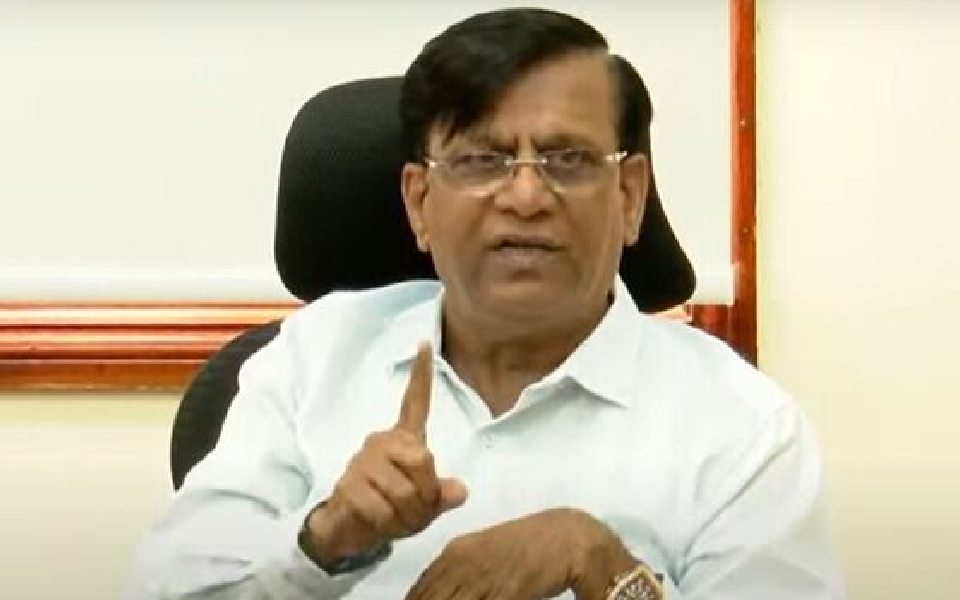
Bengaluru, Apr 9 (PTI): Chief Minister Siddaramaiah’s economic advisor, Basavaraj Rayareddi, on Wednesday said he never claimed that "Karnataka is number one in corruption" during the tenure of the present Congress government.
Rayareddi issued a clarification after a few publications in Karnataka reported that, during a review meeting by a committee for the redressal of regional imbalance, he had told officers that Karnataka tops the country in corruption.
Accusing the media of twisting his statement made in Koppal, the Yelburga Congress MLA said he had only highlighted the perception that "Karnataka is branded as the most corrupt state", which, he said, is unfortunate.
"I did not say that corruption has increased during Chief Minister Siddaramaiah’s tenure. It’s a phenomenon that has been prevailing for the past two to three decades," Rayareddi told reporters here.
Insisting that he never made such a statement at a press conference, Rayareddi claimed, "I never said Karnataka is the number one corrupt state. I only said that Karnataka is branded as the most corrupt state. This impression has been created due to the poor governance by the previous BJP and JD(S) governments."
The MLA said that Chief Minister Siddaramaiah was doing commendable work by ensuring fair administration and was supported by dynamic ministers such as Krishna Byre Gowda and Priyank Kharge.
"Our government is doing good work. I support our Chief Minister because he is doing a good job. Whether he makes me a minister or removes me from this assignment (as economic advisor), I will continue to support him," Rayareddi said.
His remarks gave ammunition to the opposition, which has been alleging rampant corruption in the state.
BJP MLA C N Ashwath Narayan appreciated the Yelburga MLA for being candid in “accepting” that corruption has increased in Karnataka.
"We are happy that at least someone from within the Congress spoke about it," Narayan said.
In response, Rayareddi hit out at the BJP and JD(S), saying these two parties brought a bad name to Karnataka, and that some of their ministers had even gone to jail during their tenure.
Rayareddi said he was clear in his speech in Koppal on Tuesday that corruption had increased over the last few decades without blaming any one political party.
According to him, "corruption in North Karnataka is more prevalent compared to the old Mysuru region."
He also remarked that schools built these days collapse within five years, while those built during his father’s time remain intact for decades.
The MLA said he was concerned that corruption has escalated mainly due to electoral politics and felt that a public discussion on the issue was long overdue.
"I am happy that the media presented half the truth about what I said. At least this way, a discussion to curb corruption has begun," he quipped.
Let the Truth be known. If you read VB and like VB, please be a VB Supporter and Help us deliver the Truth to one and all.
SC refuses to entertain plea seeking guidelines for display of Ashoka Chakra
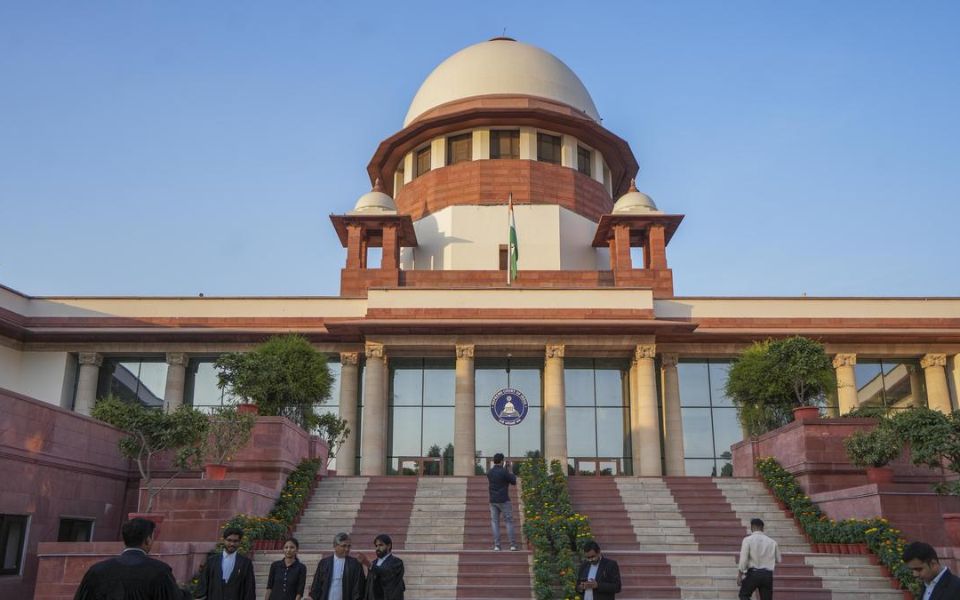
New Delhi (PTI): The Supreme Court on Thursday refused to entertain a plea seeking a direction to the Centre and others to frame guidelines for the display of the Ashoka Chakra on the national flag.
A bench of Chief Justice of India (CJI) Surya Kant and Justices Joymalya Bagchi and Vipul M Pancholi told the petitioner, who appeared in person, to do something constructive for society.
"There is no need to be so emotional about these things. Your idea is good. You have informed the authorities. Now it is for the authorities to see what they want to do," the CJI told the petitioner.
"You do some constructive work for society," the bench said.
The petitioner showed a picture of the Ashoka Chakra installed at a roundabout in Varanasi, but the bench refused to entertain the plea.