Cong govt targeting Savarkar to divert public attention from MUDA 'scam': K'taka BJP chief
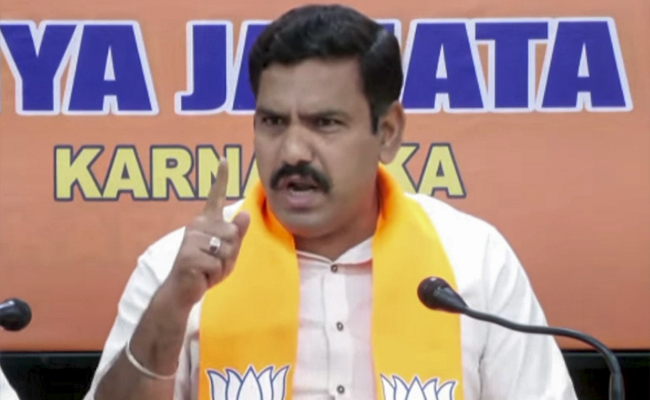
Bengaluru(PTI): Karnataka BJP president B Y Vijayendra on Friday accused the Congress government of targeting Hindutva ideologue Vinayak Damodar Savarkar just to divert public attention from the MUDA 'scam'.
Karnataka Health Minister Dinesh Gundu Rao claimed on Wednesday that Savarkar used to eat meat and was not against cow slaughter.
In an online post, Vijayendra said: "This is a betrayal of our national heroes! The Congress government, driven by its greed for power, has shamefully targeted Veer Savarkar - a patriot who dedicated his life to India's freedom - just to divert public attention from their corruption in the #MUDAScam. This desperate ploy to mislead the public is unacceptable."
He further said that the BJP will fight until the "corrupt leaders" of Congress are held accountable.
"It's not just an attack on Savarkar, but an insult to every Indian who values our nation's sacrifices. As Vir Savarkar himself said, 'Independence is never given, it is always taken.' No lies or distractions will hide the truth, and we will fight until your corrupt leaders are held accountable!," Vijayendra added.
Minister Rao had claimed: "Savarkar, a 'Chitpavan Brahmin', used to eat meat. He was a non-veg eater and he was not against cow slaughter. He was modern in a way."
Lokayukta police on September 27 registered an FIR against Chief Minister Siddaramaiah, his wife Parvathi B M and others in the MUDA (Mysuru Urban Development Authority) case.
The ED has also registered an Enforcement Case Information Report (ECIR), equivalent to an FIR by police, against the chief minister over the alleged irregularities in the allotment of 14 sites to his wife by the MUDA.
Let the Truth be known. If you read VB and like VB, please be a VB Supporter and Help us deliver the Truth to one and all.
UP SIR: Over 84 lakh voters added in final list, total electorate rises to 13.39 crore
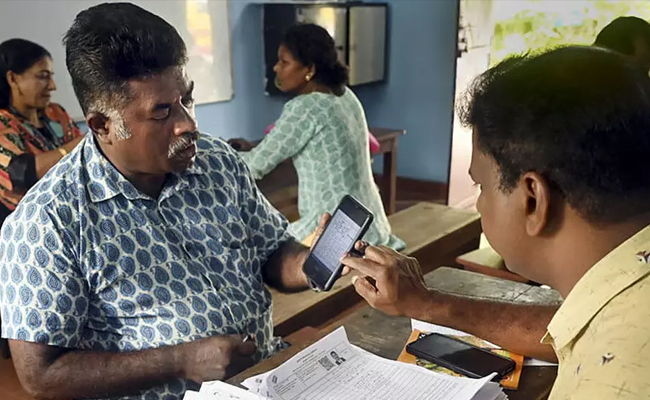
Lucknow (PTI): Uttar Pradesh's electorate grew by over 84 lakh to 13.39 crore after the completion of the Special Intensive Revision (SIR), according to the final voter list published on Friday.
Addressing a press conference at the Lok Bhawan Media Centre here, Uttar Pradesh's Chief Electoral Officer Navdeep Rinwa said the SIR exercise was conducted from October 27, 2025, to April 10, 2026, covering all 75 districts, 403 assembly constituencies and polling stations across the state.
He said the 166-day exercise was carried out with the contribution of 75 District Election Officers (DEOs), 403 Electoral Registration Officers (EROs), 12,758 Assistant EROs, 18,026 BLO supervisors and 1,77,516 Booth Level Officers (BLOs). In addition, 5,82,877 booth-level agents of recognised political parties and crores of voters extended cooperation.
Print, electronic and digital media also played a key role in awareness efforts, he added.
Rinwa said the draft electoral roll published on January 6, 2026, had a total of 12,55,56,025 voters, including 6.88 crore male voters, 5.67 crore female voters and 4,119 third gender voters.
The number of voters in the 18-19 age group stood at 3,33,981, while the gender ratio was 824 female voters per 1,000 male voters.
The final electoral roll published on April 10 shows the total number of voters at 13,39,84,792, he said.
Of these, male voters number 7,30,71,071 (around 54 per cent), female voters 6,09,09,525 (45.46 per cent) and third gender voters 4,206 (less than 0.01 per cent).
The number of voters in the 18-19 age group has risen to 17,63,360, accounting for 1.32 per cent of the total electorate. The gender ratio has also improved to 834 female voters per 1,000 male voters.
Comparing the draft and final rolls, Rinwa said the total increase in the number of voters is 84,28,767. This includes an increase of 42,27,902 male voters, 42,00,778 female voters and 87 third gender voters.
The 18-19 age group registered a rise of 14,29,379 voters, while the gender ratio improved by 10 points from 824 to 834, he said.
Among districts, Prayagraj recorded the highest increase in voters at 3,29,421, followed by Lucknow at 2,85,961, Bareilly at over 2,57,000, Ghaziabad at 2,43,666 and Jaunpur at 2,37,590.
The CEO said the successful completion of the revision exercise reflects coordinated efforts by election officials, political parties and voters across the state.