Cong questions survey on EVM's accuracy, BJP calls it 'direct blow' to 'Vote Chori' narrative

Bengaluru (PTI): The ruling Congress in Karnataka on Friday questioned the credibility of the survey that found a majority of citizens in the state believe elections in India are conducted freely and fairly and that EVM's deliver accurate results.
The opposition BJP, however, termed the report as a "direct blow" to Rahul Gandhi's 'Vote theft' narrative.
The findings are part of a study titled “Lok Sabha Elections 2024 – Evaluation of Endline Survey of Knowledge, Attitude and Practice (KAP) of Citizens”, published for Karnataka Monitoring and Evaluation Authority (KMEA). The survey report dated August 2025 was recently made public.
The KMEA functions under the Planning, Programme Monitoring and Statistics Department and is the state’s apex institution for promoting evidence-based policymaking. The study was commissioned to assess the impact of the Systematic Voters’ Education and Electoral Participation (SVEEP) programme implemented by the Office of the Chief Electoral Officer Karnataka.
The survey was carried out in May 2025 by Mysuru-based GRAAM (Grassroots Research and Advocacy Movement).
The findings come at a time when the Congress is running a campaign on alleged electoral irregularities, led by senior party leader Rahul Gandhi.
They also emerge as the Karnataka government has proposed conducting all future panchayat and urban local body elections in the State using ballot papers, citing an alleged erosion of public confidence in Electronic Voting Machines (EVMs).
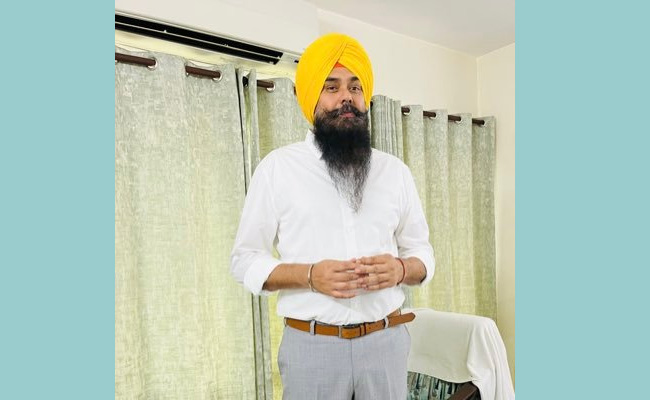
"Survey commissioned by the Election Commission through the State Chief Electoral Officer. Survey conducted by a Modi’s man who works in the PMO and has authored a lavish tribute to the PM," Karnataka Minister for IT/BT Priyank Kharge said in a post on 'X', in an apparent reference to GRAAM founder R Balasubramaniam.
Pointing out that the survey was conducted in May 2025, while detailed vote chori exposé by the Congress came out in August 2025, he said, "Survey covered only 50 respondents per Assembly. Statistically weak, prone to wide sampling error and selection bias and not suitable for drawing conclusions."
Accusing the BJP of "falsely peddling" the survey as “State Government survey”, he said, "interestingly, BJP is silent on the Aland Vote Chori charge sheet which has named former BJP MLA as A1 (accused number 1)."
Senior Congress leader and MLC B K Hariprasad mentioned that GRAAM's survey claimed that a majority percent of people in Karnataka have accepted the EVM system.
According to him, the survey appears to be pleasing or supporting the Election Commission of India.
The survey framing is pro ECI. The questions are framed around belief and perception, not verifiable audit, transparency, or accountability.
"(There is ) no serious probing on: EVM malfunction complaints VVPAT mismatch concerns Demand for 100 per cent VVPAT counting This conveniently supports the ECI’s long-standing position that EVMs are beyond doubt," he said in a statement.
The survey was publicised amid national debate on EVM credibility, Hariprasad said adding it comes at a time when opposition parties are raising concerns on electoral integrity, Courts are hearing petitions on EVM-VVPAT verification.
"The timing makes it appear like a defensive narrative-building exercise for ECI. GRAAM is founded by R Balasubramaniam who is a member of Modi’s think tank and has written a Modimala."
"The GRAAM survey does not strengthen democracy, does not address transparency concerns, functions as a perception-management report, it helps the Election Commission defend itself, instead of encouraging reforms. Democracy does not survive on manufactured consent or perception surveys," he added.
Reacting to the survey report, state BJP President B Y Vijayendra said Congress’ “Vote Chori” stands exposed once again.
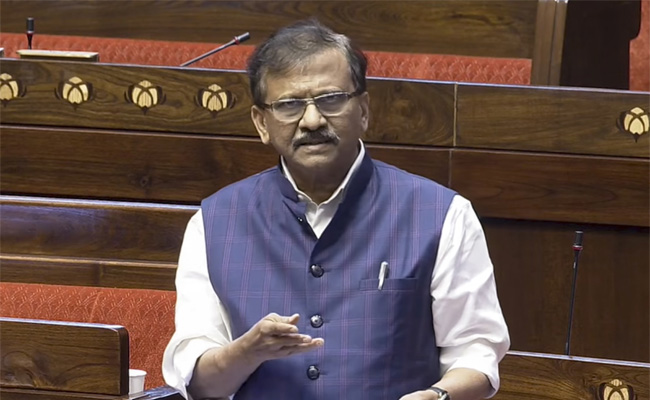
"The survey report published by the Government of Karnataka clearly shows that a decisive majority of our people believe elections in India are conducted freely and fairly. This is a direct blow to Rahul Gandhi, who, unable to accept Congress repeated electoral failures, chose to invent the “Vote Chori” narrative and launch a reckless campaign casting doubts on the Election Commission. In doing so, he repeatedly attempted to mislead the public and weaken trust in a constitutional institution of impeccable repute," he posted on 'X.
In Karnataka, this insecurity translated into governance decisions, as the Siddaramaiah led government, eager to appease its high command, announced that local body elections would be conducted using ballot papers, a regressive move that pulls the State backwards, undoing years of technological progress and hard-earned public confidence in electronic voting, he said.
As per the survey report, the majority of respondents across all divisions believe that elections in India are conducted freely and fairly, with 91.31 per cent agreeing, which includes 6.76 per cent neutral.
It also said a large majority of respondents trust that Electronic Voting Machines (EVMs) provide accurate results, with 69.39 per cent agreeing and 14.22 per cent strongly agreeing overall.
A total of 5,100 respondents were surveyed across 102 assembly constituencies, covering all 34 election districts in Karnataka, representing rural, urban, and reserved constituencies across the state’s four divisions -- Bengaluru, Belagavi, Kalaburagi and Mysuru.
Let the Truth be known. If you read VB and like VB, please be a VB Supporter and Help us deliver the Truth to one and all.
Ranchi: Temple guard bludgeoned to death during robbery attempt, 3 held

Ranchi (PTI): A 60-year-old security guard of a temple in Ranchi was bludgeoned to death with a stone during a robbery attempt, police said on Saturday.
The incident happened late on Thursday at the Jagannath Temple in the Dhurwa Smart City area, they said.
"Three persons were arrested on Friday for killing the security guard. They confessed to the crime and told police that the victim had identified them. Therefore, in fear of being caught, they killed him by attacking him with a stone on his head," SSP Rakesh Ranjan said.
"Thereafter, they took money from the donation box and fled the scene. Two of them have criminal antecedents," he added.
Ranjan said the investigators recovered Rs 3 lakh in cash that had been robbed, the stone with blood-stained marks, and the iron rod used to break open the lock of the donation box kept there.
An FIR in this regard was lodged at the Dhurwa police station, he said, adding that the accused were sent to judicial custody by a court.