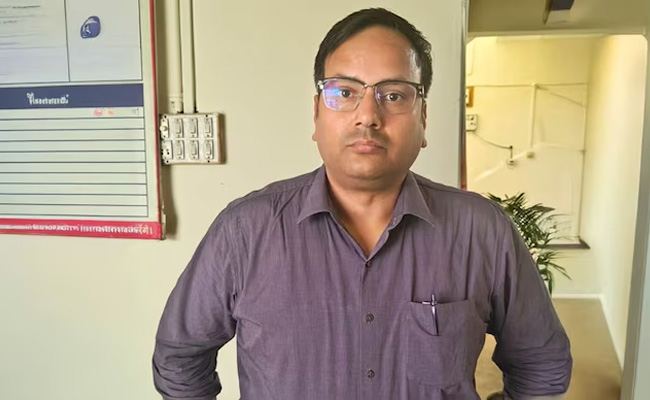
Congress issues notice to Tanveer Sait following discontent over ceding Mysuru Mayor post to JD(S)
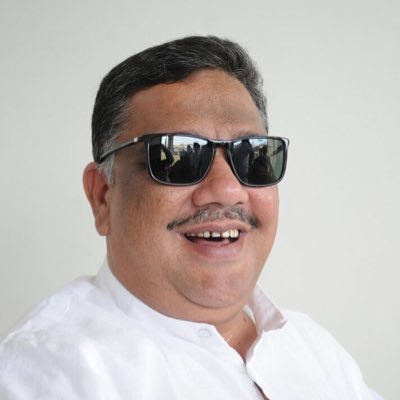
Bengaluru, Mar 2: Amid discontent within the party over ceding Mysuru Mayor post to the JD(S), the Congress on Tuesday issued show-cause notice to senior party leader and former Minister Tanveer Sait asking him to explain the turn of events during the election last week.
Sait along with local leaders is said to have decided on giving up the Mayor post to JD(S), which has left the Congress divided, forcing the party high command to intervene.
The Congress was to get the Mayor post as per its earlier understanding with the JD(S), and the decision to cede it to the regional party has deeply upset Congress Legislature Party leader Siddaramaiah, as he hails from Mysuru.
"We are serving him (Sait) a notice, I have told our disciplinary committee.Congress should have got the Mayor post, this was the direction from me and Siddaramaiah. We are seeking explanation on what happened and will look into it," Shivakumar told reporters here.
AICC secretary Madhu Yashki Goud has met him regarding the developments, and will be going to Mysuru, Shivakumar said.
"Ours is a disciplined party, whoever might have given the statements or shown disrespect towards leadership, it will not be tolerated," he said.
In response to a question, the Congress state chief denied Siddaramaiah was miffed.
In a last minute twist, the Congress and JD(S) had joined hands to keep away the BJP from taking control of the Mysuru City Corporation, during the Mayor elections held on February 24, which saw JD(S)' Rukmini Made Gowda elected as Mayor, and Congress' Anwar Baig the Deputy Mayor.
Subsequently at a Congress meeting, several senior party leaders had questioned Shivakumar on the decision to join hands with the JD(S) and giving up the Mayor post to the regional party, during which Siddarmaiah had expressed "hurt".
Madhu Yashki Goud said the party high command will not tolerate any indiscipline, as he also indicated about the party high command's disapproval regarding alliance with JD (S).
"High Command is aware of the situation, the mandate is very clear that every leader should work in tandem and together.Any indiscipline will not be tolerated.. whoever they are, however big they are, they have to follow the party instructions, " he said after meeting Siddaramaiah and Shivakumar.
Disciplinary committee Chairman Rahman Khan has been asked by Congress general secretary in-charge of Karnataka Randeep Surjewala to look into any indiscipline, Goud said.
Any indiscipline, any slogan shouting against the CLP leader or any senior leader of the party will not be tolerated however big they are whether it is in Mysuru or Raichur, he asserted.
Pro-Congress Muslims on Monday had staged a protest in Raichur against Siddaramaiah in support of Sait.
Regarding alliance with JD(S), Goud said the party, which claims to be secular, indirectly supported the BJP, and had helped the saffron party in removing the Legislative Council Chairman, who was from the Congress.
"We will work with the party that is committed to secular ideology, but joining hands with Congress and indirectly helping the BJP- we are hesitant to move with them," he said.
According to sources, Congress high command stepped in and deputed Goud as Siddaramaiah was adamant on action against those responsible for the party giving up the Mayor post to JD(S), despite his strong opposition.
He is also said to have threatened about not participating in the party's organisational activities and march beginning from Wednesday.
Siddaramaiah and his supporters see the turn of events during Mysuru Mayoral polls as an attempt to weaken him at his home turf by Shivakumar and team, sources said, adding that it seems to be part of the ongoing political one-upmanship between the two leaders to gain control over party affairs in the state.
Though this Mayoral polls saw the continuation of the Congress-JD(S) alliance, the turn of events came as a surprise, as JD(S) leader H D Kumaraswamy ahead of polls had ruled out allying with any party and had fielded candidates.
In the council where no party has an absolute majority, all three parties had fielded candidates making the contest interesting, but at the last moment Congress and JD(S) decided to join hands to keep BJP out of power.
The JD(S) relented and agreed to join hands with Congress after the latter decided to sacrifice the Mayor post.
After meeting Shivakumar and Goud, Sait, an MLA from the Narasimharaja constituency in Mysuru, today said he has received the notice and will respond to it, and also meet leaders whenever required.
Noting that he has given a report to the KPCC regarding the developments on the election day, Sait said "CLP leader and KPCC leader were aware of alliance talks with JD(S) and wanted Mayor post for Congress, but as it was difficult we had to agree for Deputy Mayor post."
"I will respond to explanation that the party has sought."
Later in the evening, Shivakumar met Siddaramaiah at his residence and held discussions.
Let the Truth be known. If you read VB and like VB, please be a VB Supporter and Help us deliver the Truth to one and all.
Bagalkot: Siddaramaiah made false promises to farmers, alleges B.Y. Vijayendra
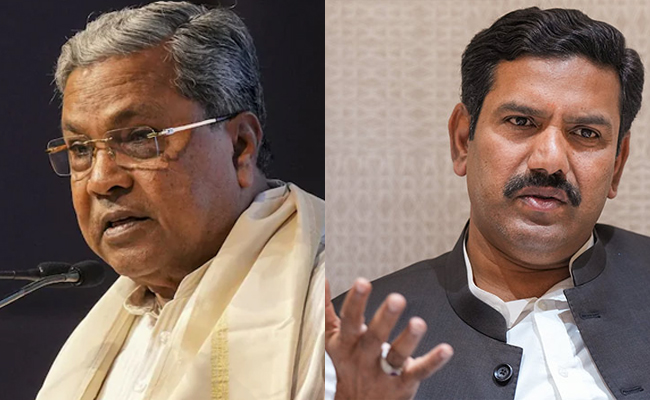
Bagalkot: BJP state president B.Y. Vijayendra on Tuesday accused Chief Minister Siddaramaiah of making false promises to farmers affected by the raising of the Almatti dam height, and sought clarity on compensation and fund allocation, The New Indian Express reported.
Addressing media persons while campaigning for the bypolls in Bagalkot city, Vijayendra questioned the government’s announcement of convening a special cabinet session to address farmers’ issues.
“How much funds have actually been released? The government should explain the status of the Upper Krishna Project,” he said.
He further said that the government had, around four months ago, promised compensation of Rs 40 lakh per acre for irrigated land and Rs 30 lakh per acre for dry land to farmers likely to lose their land.
Vijayendra demanded that the government disclose how much of the promised compensation has been disbursed so far.