Congress poll manifesto for Karnataka vows 1 crore jobs
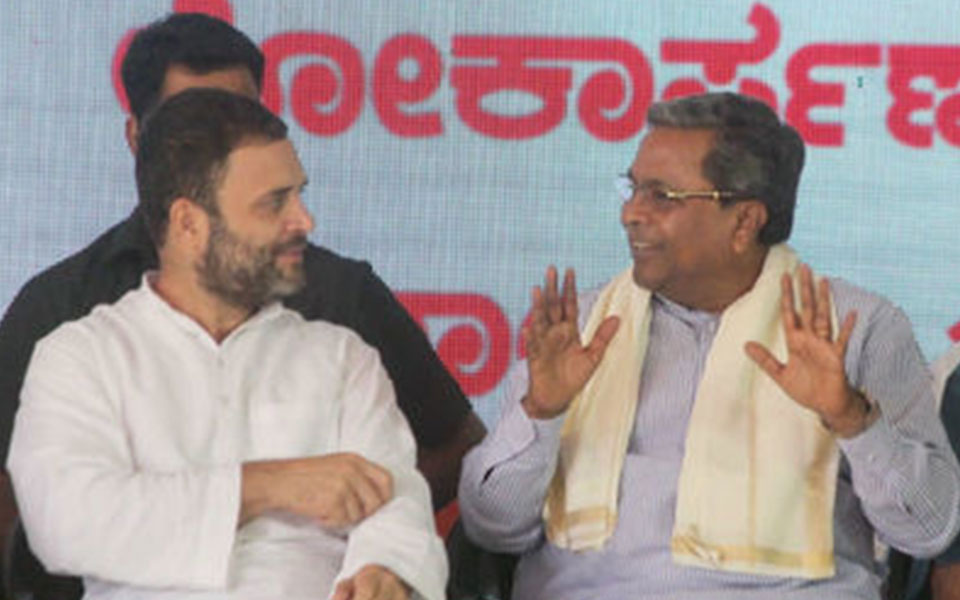
Mangaluru, April 27: In a bid to retain power in Karnataka, the ruling Congress on Friday promised to create one crore jobs across the southern state in its manifesto for the May 12 Legislative Assembly elections.
"We aim to create at least 15-20 lakh jobs each year in the state and provide programmes for skill development, encouraging entrepreneurship and increasing youths' employability quotient," said the manifesto released by party President Rahul Gandhi in this port city.
Terming its 47-page manifesto a "people's manifesto", the party said it wants to create a hut-free Karnataka and would build 50 lakh houses in the rural parts of the state.
"We are committed to address the urban housing challenge and propose to build 15 lakh houses (3 lakh houses per year) for the people of the state," it said.
Claiming to the first state in the country to roll out the "Arogya Karnataka" universal healthcare scheme, the Congress said it will increase the budget allocation for health from the current 0.9 per cent to at least 1.5 per cent.
On March 2, Chief Minister Siddaramaiah had unveiled the state's public healthcare scheme, that is expected to benefit about 1.43 crore households, by providing free treatment to all below poverty line (BPL) families at government hospitals.
The party also promised to provide free education to all students from grades 1 to 12 across all the state-run schools in the state. Presently, the state gives free elementary education to all children from class 1 to 8 in state-run and government-aided schools.
In a bid to promote girl child education, Siddaramaiah had said on February 16 while announcing the state Budget that all girls will get free education up to post-graduation in state-run institutions.
All college-going students in the state will receive a smartphone, the manifesto added.
Information Technology (IT) will be made an important driver of the state economy by increasing the field's contribution from the current $60 billion to $300 billion, the ruling party said.
Currently, the state capital Bengaluru alone, which is home to over 750 multinationals and 2,000 IT firms, contributes about 40 per cent of the total IT exports done by the country.
"We will build a talent pool to cater to over 3 million IT jobs in the state by skill upgradation and IT-driven curriculum," added the manifesto.
Let the Truth be known. If you read VB and like VB, please be a VB Supporter and Help us deliver the Truth to one and all.
345 Indian fishermen stranded in Iran return home via Armenia
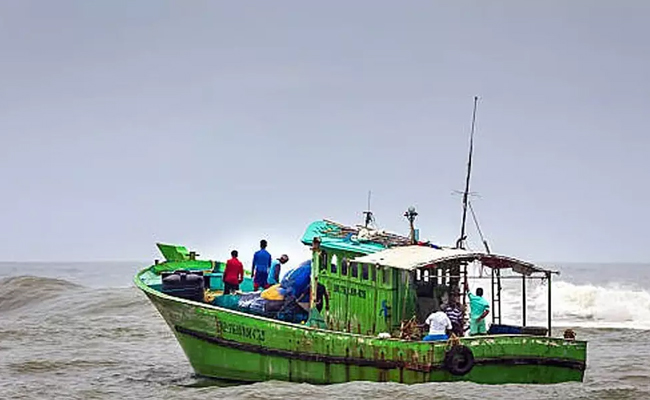
New Delhi (PTI): A group of 345 Indian fishermen, who were stranded in Iran amid escalating regional tensions, returned to India via Armenia on Saturday, officials said.
External Affairs Minister S Jaishankar thanked his Armenian counterpart Ararat Mirzoyan for assistance in return of the Indian nationals.
The Indian nationals arrived in Chennai this evening, the officials cited above said.
The circumstances that led to them being stranded in Iran were not immediately known.
"Thank FM @AraratMirzoyan and the Government of Armenia for facilitating the evacuation of Indian fishermen today from Iran, through Armenia to India," Jaishankar said on social media.
Over 1,500 Indian nationals have left Iran through land border crossings in Armenia and Azerbaijan since the start of the West Asia conflict over a month ago.
"A group of Indian fishermen, stranded in Iran, are returning home via Armenia today; their flight is expected to reach India this evening," a government statement said.
It said the Ministry of External Affairs continues to closely monitor the evolving situation in the West Asian region, with the safety, security and welfare of the Indian community being accorded the highest priority.
It also made a mention of five Indians being injured in Abu Dhabi on Friday.
According to Abu Dhabi authorities, the Indian nationals were among the 12 people injured by debris from an intercepted missile.
"In an attack in Abu Dhabi, five Indian nationals were injured; four have been discharged, one remains under treatment," the Indian government's statement said.
It said the Indian mission in Abu Dhabi is extending "full" assistance and coordinating with local authorities, adding that their flight is expected to reach India this evening.