Congress seeks Karnataka minister's sacking after SC refuses plea to stay FIR in bribery case
Hiriyur (Karnataka) (PTI): The Congress Tuesday demanded the sacking of BJP minister S T Somshekhar in Karnataka after the Supreme Court rejected his plea to stay an FIR in a Rs 12-crore bribery case.
Congress general secretary in-charge for Karnataka Randeep Surjewala asked Chief Minister Basavaraj Bommai when he will sack the minister of state for co-operation.
Somshekhar was elected from the Yeshvanthapura assembly seat in 2018 on a Congress ticket, but later defected and won the by-election in 2019 as a BJP candidate.
"The Chronology -- Bribery of Rs 12 Crore alleged in a BDA Contract. Lokayukta Police orders an FIR against Minister S.T.Somshekhar and others on Sept 18, 2022. SC declines the plea to stay FIR. Mr @BSBommai, when will u sack him?," Surjewala asked on Twitter, using the hashtag "#40PercentSarkara".
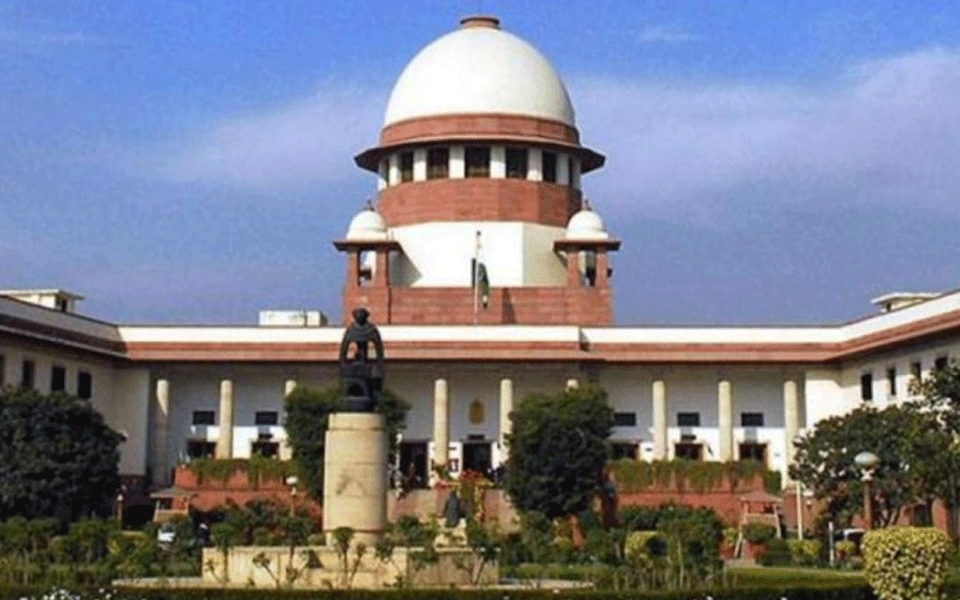
The Supreme Court Monday refused to consider separate pleas by Somashekar, IAS officer G C Prakash and businessman K Ravi against lodging a corruption case pertaining to a Bangalore Development Authority (BDA) construction project.
The court had earlier stayed the probe against former Chief Minister B S Yediyurappa in connection with the FIR.
The case relates to bribe charges to award a BDA contract to a construction firm to build a housing complex when the BJP's Yediyurappa was chief minister.
Let the Truth be known. If you read VB and like VB, please be a VB Supporter and Help us deliver the Truth to one and all.
KSCA expresses disappointment over missing IPL playoffs, says it was ready to host matches in B’luru
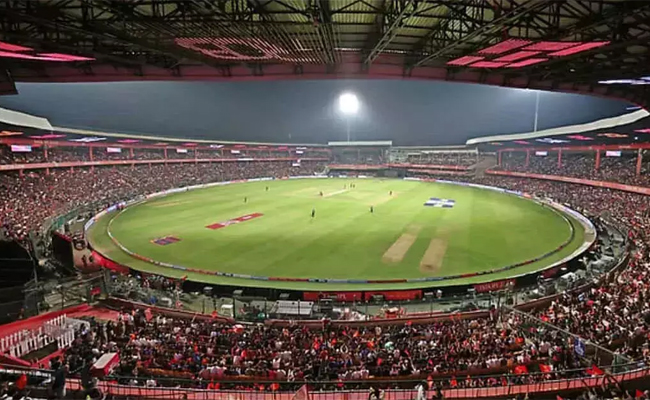
Bengaluru: The Karnataka State Cricket Association (KSCA) has issued a clarification stating that it was fully prepared to host the IPL playoffs and final matches in Bengaluru but the fixtures were allotted to other venues.
In a media note, KSCA said it was disappointed with the decision. The association stated that its president, former India cricketer Venkatesh Prasad, had been in touch with the Board of Control for Cricket in India (BCCI) and had formally conveyed the association’s readiness and interest in hosting the matches at the M. Chinnaswamy Stadium.
KSCA said the IPL matches held in Bengaluru this season were appreciated for smooth conduct, crowd management and overall experience for spectators. It said this reflected its ability to handle high-profile matches.
The association also stated that it had sent a detailed communication to the BCCI explaining its preparedness and the operational arrangements followed during the current IPL season. According to KSCA, these systems have been in place since the start of the Indian Premier League in 2008 and were followed consistently, including during previous playoff matches hosted in Bengaluru.
The clarification added that the communication sent to the BCCI was only meant to provide factual and operational details and to bring clarity on logistical and stakeholder-related requirements involved in hosting such matches.
KSCA said that although it had shown willingness and preparedness, the BCCI has decided to allocate the playoff matches to other venues. It added that the reasons for this decision have not been formally shared with the association, but it respects the authority of the board in taking such decisions.
The association further said it remains ready to host matches of national and international importance and will continue to cooperate with the BCCI, franchises, government authorities and other stakeholders for conducting cricket events.
The statement was issued by KSCA official spokesperson Vinay Mruthyunjaya, who also thanked the media and cricket fans for their continued support.