Congress will never make Satish Jarkiholi Chief Minister: Govind Karjol
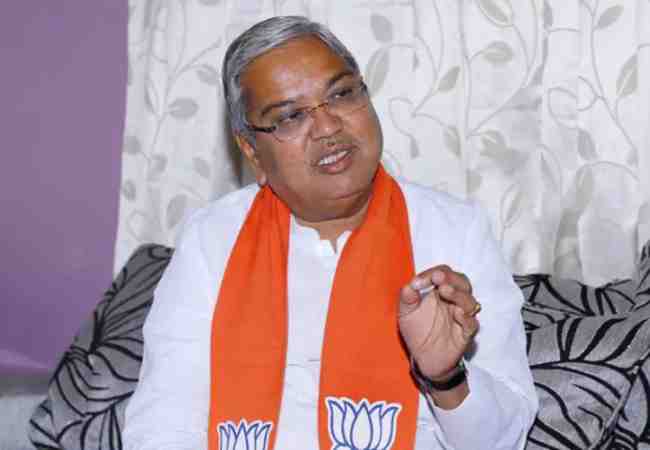
Hubballi: Member of Parliament Govind Karjol launched a sharp critique against the Congress party on Thursday, asserting that they will never appoint a Dalit leader as Chief Minister and are merely using the community as a "vote bank."
Speaking to reporters in the city, Karjol stated, "The Congress will never, for any reason, make Satish Jarkiholi the Chief Minister. The discussion around a Dalit Chief Minister is limited to just talk."
He accused the Siddaramaiah-led government of fostering internal conflict while the party's central leadership in Delhi remained passive. "Mallikarjun Kharge has been striving to become Chief Minister for 40 years, and Dr. G. Parameshwara for 20 years, but to no avail," Karjol remarked.
The BJP leader claimed that despite being in power for the majority of the post-independence era, Congress has consistently deceived the Dalit community by taking their votes without ever appointing a leader from the community to the state's top post.
Karjol also raised the issue of internal reservations, questioning the Congress government's inaction. "We have been fighting for internal reservation for 35 years. What is the Congress, which came to power promising its implementation, doing now?" he asked.
He further criticised the state government's handling of the matter in the Supreme Court.
"The Supreme Court had issued an order regarding internal reservation from the perspective of social justice... However, when the case was recently heard in the Supreme Court, no one from the state government was present for the proceedings," Karjol alleged.
"The government led by Siddaramaiah is not prepared to implement social justice. It is only engaged in eyewash, doing injustice to the poor, and sowing seeds of poison in society. Their intention is to keep the internal reservation issue unresolved," he added.
Let the Truth be known. If you read VB and like VB, please be a VB Supporter and Help us deliver the Truth to one and all.
J'khand: 4 minors detained for 'raping' girl at birthday party

Ranchi (PTI): Four minors were detained for allegedly raping a 15-year-old girl at a birthday party in Jharkhand’s Ranchi, police said on Saturday.
The incident took place on March 31 within the Namkum police station limits. An FIR in this regard was lodged on April 16 based on the girl’s statement, they said.
“All five, including the victim, were friends, and the girl had gone to attend the birthday party of one of those detained. At the party, the accused consumed alcohol and allegedly raped her,” said Ramnarayan Singh, the officer in-charge of Namkum police station.
“The four, aged between 15 and 17 years, have been detained and the medical examination of the girl is underway,” Singh said.
Further investigation is underway.