COVID-19: 428 new cases in Karnataka, 3 deaths
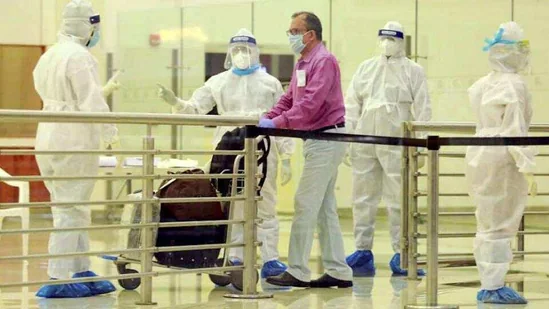
Bengaluru, Jan 27: Karnataka on Wednesday reported 428 new cases of COVID-19 and 3 related fatalities, taking the total number of infections to 9,37,383 and the death toll to 12,207, the Health department said.
The day also saw 760 patients getting discharged after recovery.
A total of over 1,67,50,398 samples have been tested so far, out of which 58,695 were tested on Wednesday alone, and 2,937 among them were rapid antigen tests.
Out of the 428 fresh cases reported, 227 cases were from Bengaluru Urban alone.
As of January 27 evening, cumulatively 9,37,383 COVID-19 positive cases have been confirmed in the state, which includes 12,207 deaths and 9,18,859 discharges, a department bulletin said.
According to the bulletin, out of 6,298 active cases, 6,151 patients are in isolation at designated hospitals and stable, while 147 are in ICU.
Out of the 3 deaths reported, one each are from Bengaluru Urban, Bengaluru Rural and Dharwad.
Among the districts where the new cases were reported, Bengaluru Urban accounted for 227, Mysuru 17, Dharwad 16, Hassan 15, Dakshina Kannada, Davangere, Kodagu and Uttara Kannada 14, Chitradurga 13, followed by others.
Bengaluru Urban district tops the list of positive cases, with a total of 3,97,836, followed by Mysuru 53,299 and Ballari 39,129.
Among discharges too, Bengaluru Urban tops the list with 3,89,440, followed by Mysuru 52,054 and Ballari 38,474.
Let the Truth be known. If you read VB and like VB, please be a VB Supporter and Help us deliver the Truth to one and all.
Bengali actor Rahul Arunoday Banerjee drowns in sea
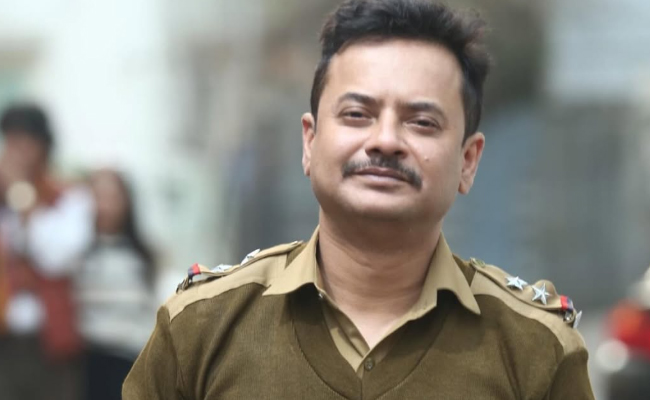
Kolkata (PTI): Popular Bengali actor Rahul Arunoday Banerjee died on Sunday after drowning in the sea at Talsari beach in Odisha, film industry sources said.
He was 43, and left behind his 13-year-old son and actor-wife Priyanka Sarkar.
He had gone to the beach, located near Digha in West Bengal's Purba Medinipur district, for shooting a Bengali soap titled 'Bhole Baba Par Karega', his co-actor Diganta Bagchi said.
"After today's shoot, he went alone to the water but somehow got entangled in something under the water... The exact circumstances are not clear. Suddenly, people, including crew members, were shouting that Rahul was drowning and we pulled him out of the water. We rushed him to Digha hospital, where doctors declared him brought dead," Bagchi said.
A West Bengal Police officer said the actor was declared dead at Digha hospital after being brought from a sea beach in neighbouring Odisha.
"We have contacted our counterparts in Odisha to ascertain the sequence of events. A case of unnatural death has been registered in Digha police station as well. We are also talking to his production team members and eyewitnesses," he said.
Expressing grief over the incident, West Bengal Chief Minister Mamata Banerjee said in a statement, "I am shocked, deeply saddened to hear the news that the distinguished, young, and popular actor Rahul Arunoday Banerjee is suddenly no longer among us."
"I am unable to comprehend what exactly happened. He was one of my favourite actors and a person I truly admired. I extend my heartfelt condolences to his bereaved family, loved ones, and countless admirers," she added.
"Rahul's sudden passing is an irreparable loss to the Bengali entertainment industry, to both Tollywood and television," she pointed out.
Rahul, known in the Bengali television industry for his character roles, had been active in soaps for several years.
He shot to fame with his role in the blockbuster 'Chirodini tumi je amar' in 2008, followed by a string of hits such as 'Tumi asbe bole' (2014), 'Zulfiqar' (2016), 'Byomkesh Gotro' (2018), 'Biday Byomkesh' (2018), 'The Academy of Fine Arts' (2025), among others.
He had acted in TV serials such as 'Hargouri pice hotel' and 'Mohonna'.
Expressing shock over the news, director Raj Chakraborty said, "After I received phone calls about his death, I wished it was not true. But, later it was confirmed."
Chakraborty, who had directed 'Chirodini tumi je amar', casting Rahul in the lead role, said he was a spontaneous actor and had immense possibilities.
"I am in a state of shock," he said.
Actor-director Anjan Dutta said he had known Rahul for many years and was not in a condition to speak about the incident.