COVID-19: Total recoveries breach 4 lakh mark in Karnataka, 8,364 new cases
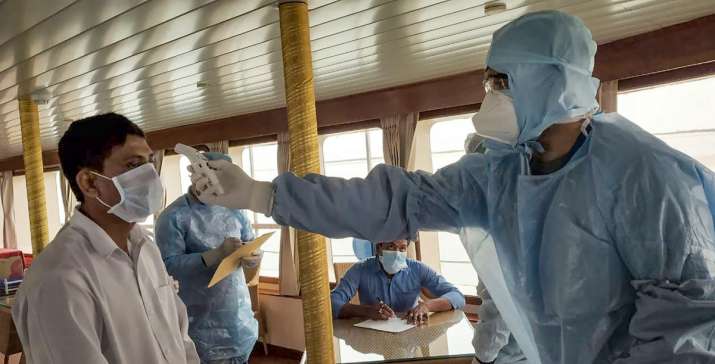
The total number of infections in the state on Saturday stood at 5.11 lakh cases and the toll was at 7,922.
The day also saw the number of recoveries outnumbering new infections, with 10,815 patients getting discharged after recovery.
Out of 8,364 fresh cases reported on Saturday, 3,733 cases were from Bengaluru urban alone.
As of September 19 evening, cumulatively 5.11 lakh COVID-19 positive cases have been confirmed in the state, which includes 7,922 deaths and 4,04,841 discharges, the health department said in its bulletin.
It said, out of 98,564 active cases, 97,742 patients are in isolation at designated hospitals and are stable, while 822 are in ICU.
Out of total 114 deaths reported on Saturday, 33 are from Bengaluru urban, followed by Mysuru 12, Ballari, Chamarajanagara and Koppal 7, Belagavi and Uttara Kannada 6, Dakshina Kannada, Dharwad and Hassan 5, Tumakuru 4 and others.
Among the districts where the new cases were reported, Bengaluru urban accounts for 3,733, Mysuru 626, Dakshina Kannada 432, Gadag 391, Ballari 300, Dharwad 264, Udupi 215, followed by others.
Bengaluru urban district tops the list of positive cases, with a total of 1,91,438 infections, followed by Mysuru 29,303 and Ballari 28,785.
A total of 41.79 lakh samples were tested so far, out of which 63,784 were tested on Saturday alone.
Among the samples tested today 28,822 were rapid antigen tests.
Let the Truth be known. If you read VB and like VB, please be a VB Supporter and Help us deliver the Truth to one and all.
India calls for UNSC expansion, says lack of reform 'constrains' global body
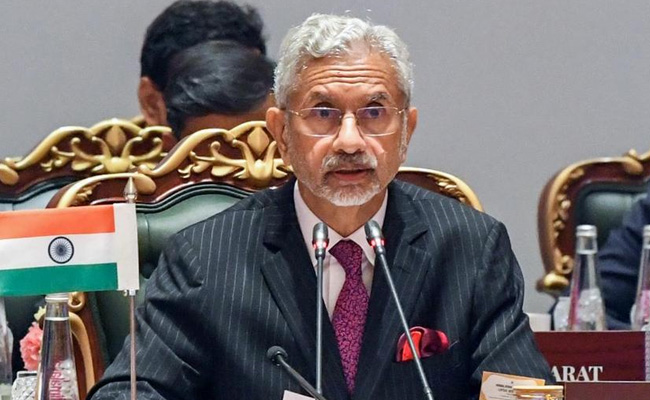
New Delhi (PTI): India on Friday strongly called for expansion of the UN Security Council with External Affairs Minister S Jaishankar saying that the effectiveness and credibility of the global body will remain "constrained" without reforming it.
Jaishankar made the remarks at a conclave of the foreign ministers of the BRICS nations in New Delhi.
"We meet at a time when the effectiveness of global governance and the credibility of multilateralism are under increasing scrutiny," he said.
"The world today is more interconnected, complex, and multipolar than when many of our current institutions were created. Yet, the structures that underpin global governance have not kept pace with these changes," he noted.
Jaishankar listed four specific points to press for reforming the key international bodies and multilateral trading systems, and asserted that the reform of the United Nations and its subsidiary bodies remains "central".
"The membership of the United Nations has expanded significantly, and its responsibilities have grown. Yet, key structures, particularly the Security Council, continue to reflect an earlier era," he said.
"Without meaningful reform, including expansion in both permanent and non-permanent categories, the effectiveness and credibility of the UN will remain constrained. Representation of Asia, Africa, and Latin America is essential," he noted.
India has been a strong contender for a permanent seat at the UN Security Council.
Elaborating his second point, Jaishankar said the time has come for serious negotiations for reform of the UN Security Council.
"BRICS itself has debated this issue deeply, especially at the Johannesburg Summit. Our outcome documents have reflected that consensus. But much more has to be done to make reform a reality," he said.
"Third, there is an urgent need to reform the international financial architecture," the external affairs minister said.
He said there is a need to reform the global financial architecture to effectively deal with various economic challenges including vulnerabilities in supply chains, pressures on food and energy security, and inequalities in accessing critical resources.
"Fourth, the multilateral trading system must be strengthened and reformed. Non-market practices, concentration of supply chains, and uncertain market access have exposed the global economy to new risks," he said.
Jaishankar said a rules-based, fair, open, and inclusive trading system, with the World Trade Organisation at its core, remains essential.
"At the same time, it must address asymmetries and reflect the concerns of developing countries," he said.