Criticism of PM Modi, repeated mentions of guarantees to be highlights of K’taka Budget: LoP Ashoka
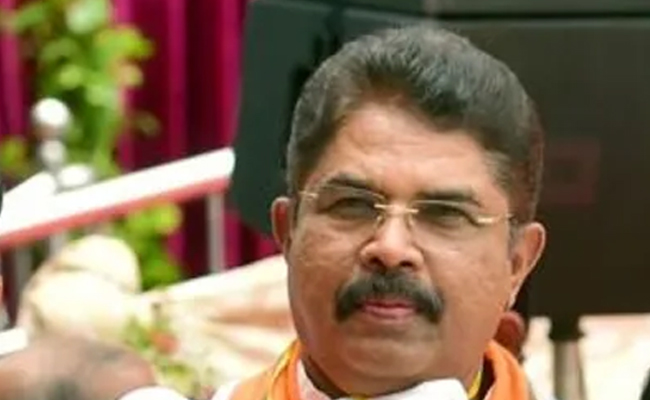
Bengaluru (PTI): Leader of Opposition in the Karnataka Assembly R Ashoka on Thursday took a dig at CM Siddaramaiah ahead of the state Budget presentation, claiming that the government is expected to borrow Rs 1.15 lakh crore and is likely to impose fresh taxes on the people.
He said the Budget would have nothing new, adding that its highlights would be criticism of Prime Minister Narendra Modi and repeated mentions of the five guarantee schemes ('Shakti', 'Gruha Lakshmi', 'Gruha Jyoti, 'Yuva Nidhi' and 'Anna Bhagya').
Chief Minister Siddaramaiah, who also holds the Finance portfolio, is scheduled to present the 2026–27 Budget on March 6. This will be his record 17th budget.
“Siddaramaiah-led Congress government’s budget will be presented tomorrow. While Finance Minister Nirmala Sitharaman reduced the tax burden in the Union Budget, Siddaramaiah is known for imposing taxes on people. He imposes about four taxes a month and has already introduced 36 taxes, and is now looking for ways to impose more,” Ashoka said.
Speaking to reporters, he said the Congress had promised people before coming to power that the guarantee schemes would be implemented without imposing any burden on them.
“By the end of the chief minister’s term, the state’s total debt will probably exceed Rs 6 lakh crore. The government has already breached financial discipline. Siddaramaiah and his government are somehow managing the situation,” Ashoka claimed, adding that his borrowings as CM equal those of 12 or 13 former chief ministers combined.
Stating that the Budget should create higher revenue sources, ensure that no burden is placed on people, and take the state away from debt, the opposition leader said this could be ensured only by a “clever and intelligent finance minister.”
“Anyone can run a government by pushing the state into debt,” he said, accusing Siddaramaiah of “increasing the state’s debt and failing to meet the expectations of the people.”
Highlighting that Siddaramaiah blames the previous BJP government for everything, Ashoka said Basavaraj Bommai, the chief minister during the previous BJP government, had presented a “surplus budget,” without excessive borrowings.
“Despite having the opportunity to borrow more while staying within the parameters of financial discipline, he (Bommai) did not do so, as it would burden the people,” he said, accusing Siddaramaiah of borrowing crores of rupees every year.
“I feel that this time too, he will take a loan of Rs 1.15 lakh crore,” he claimed.
The BJP leader said he had written to the CM requesting an allocation of Rs 15,000 crore annually for the development of backward taluks, as recommended by the High Power Committee on Redressal of Regional Imbalance (HPCRRI), chaired by economist Prof M Govinda Rao.
Claiming that the government appears “inactive” due to internal rifts, Ashoka pointed to an ongoing power struggle between factions led by Siddaramaiah and Deputy Chief Minister D K Shivakumar over the CM’s post.
“Amid all this, we cannot expect anything new from this Budget. The CM will repeatedly speak about the guarantee schemes and target the central government and PM Modi. Criticising Modi and repeated mentions of the five guarantee schemes will be the highlight of this Budget. Other than that, there will be nothing new,” he added.
He also dismissed the CM's claim that the government had achieved 90 per cent of the promises made in the previous Budget. “The fact is that not even 9 per cent has been achieved. I have evidence for it,” he said.
Ashoka further alleged that the government had also failed in tax collection, achieving only 48 per cent of the target, and had released less than 40 per cent of the allocated funds to some departments.
Let the Truth be known. If you read VB and like VB, please be a VB Supporter and Help us deliver the Truth to one and all.
Delhi schools suspend outdoor activities, plan early steps to shield students from heat
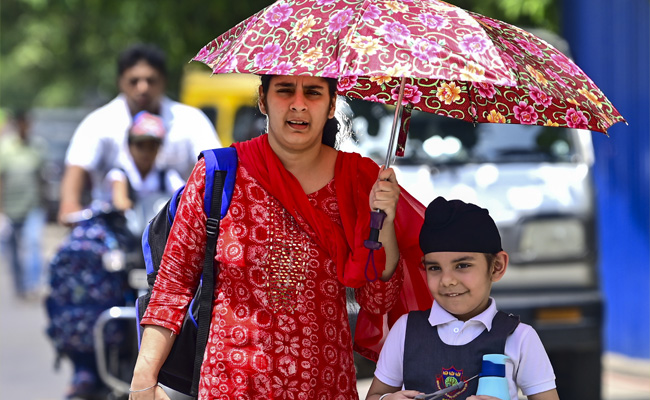
New Delhi (PTI): To shield students from heat-related ailments amid soaring temperatures and harsh afternoon sun, schools across Delhi have begun taking precautionary measures by suspending outdoor activities, shifting assemblies indoors, with some even considering early closure for junior classes.
From indoor games and hydration breaks to ORS consumption and modified dispersal timings, schools are tightening measures as the city braces for prolonged heatwave conditions.
Sudha Acharya, principal at ITL Public School in Dwarka, said all outdoor activities, including morning assembly and games, have been shifted to the school's multipurpose hall.
“We have issued an advisory to all parents to take precautionary measures before sending their children to school. We are also planning to close the school from classes 1 to 8 from May 14 onward if the weather conditions worsen," she said.
Mallika Preman, principal at Tagore International School in East of Kailash, said students have been advised to remain indoors during peak afternoon hours and keep themselves hydrated.
“We have suspended all outdoor activities, and students now play indoor games like carrom and chess. We have also modified the dispersal system so that students are not brought out until their parents arrive at their designated collection areas,” Preman said.
“This reduces their exposure to heat in the afternoon. Students have also been advised to wear caps or use umbrellas during dispersal,” she added.
Ritu Sharma, principal at Sovereign Public School in Rohini, said that teachers have been asked to closely monitor students for signs of heat exhaustion.
“Our priority is to ensure that children remain safe and comfortable during school hours. We are encouraging them to carry water bottles, avoid direct sun exposure and immediately report any discomfort. We have also arranged shaded rest areas and indoor engagement activities to reduce heat exposure,” she said.
The Directorate of Education (DoE) has launched a ‘Beat the Heat’ initiative for government, government-aided and private unaided recognised schools in Delhi in view of the heatwave conditions forecast by the India Meteorological Department (IMD).
The initiative follows the Heat Wave Action Plan issued by the Delhi Disaster Management Authority (DDMA) and aims to protect students from heat-related illnesses while promoting hydration, environmental awareness and care for animals and birds.
Under the initiative, schools have been directed to ring a 'hydration bell' daily in the penultimate period, during which every student will consume oral rehydration solution (ORS). Teachers will also briefly explain the importance of staying hydrated.
Schools have also been encouraged to create 'cool corners' with earthen water pots, promote a ‘one child-one plant’ green mission and appoint student volunteers as 'Jal Mitras' to place and refill water bowls for birds and stray animals, the advisory said.
According to the DoE, the other measures include ensuring safe drinking water stations, spreading awareness on heat stroke prevention, training teachers to identify symptoms of heat stress, and prominently displaying emergency helpline numbers across campuses.
The heads of schools have been asked to submit an action taken report on the implementation of the measures to their respective district offices by April 28, it said.