CT Ravi calls for renaming of JNU as Swami Vivekananda University
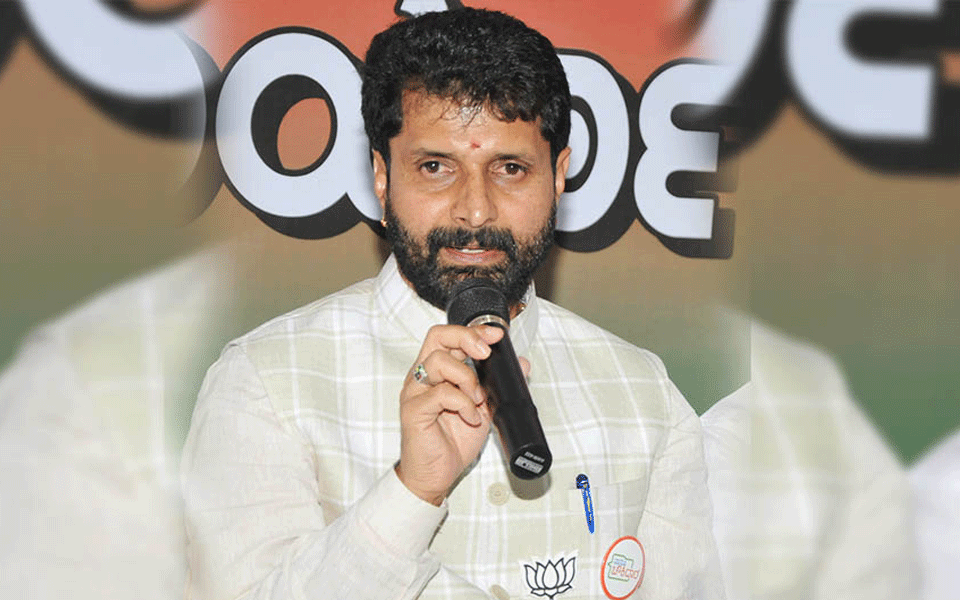
Bengaluru: Former Karnataka Minister and newly appointed national General Secretary of the BJP, CT Ravi on Tuesday triggered controversy after he called for renaming of the historic Jawaharlal Nehru University (JNU).
CT Ravi proposed that the university be renamed after Swami Vivekananda.
"It was Swami Vivekananda who stood for the idea of 'Bharat'. His philosophy and values signify the ‘strength of Bhara’. It is only right that Jawaharlal Nehru University is renamed Swami Vivekananda University. Life of Bharat’s patriotic saint will inspire generations to come” Ravi said.
Just four days ago, Prime Minister Narendra Modi had virtually unveiled a statue of Swami Vivekananda on the JNU campus and asserted that people may have ideological differences, but ideology should be seen supporting and not opposing the nation in matters of national interest.
Let the Truth be known. If you read VB and like VB, please be a VB Supporter and Help us deliver the Truth to one and all.
Allen, Raghuvanshi, Green power KKR to 29-run win over GT
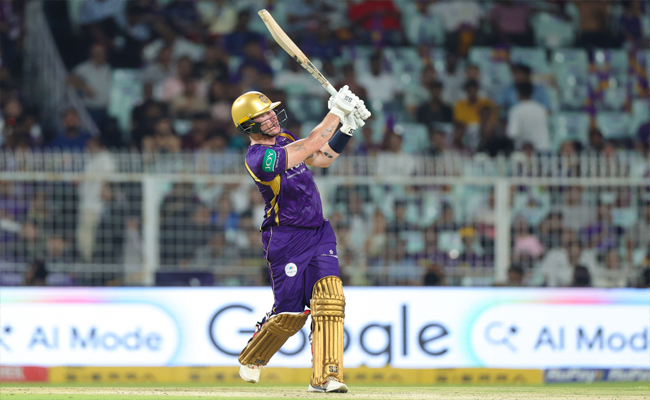
Kolkata (PTI): Finn Allen blasted a 35-ball 93, while Angkrish Raghuvanshi hit an unbeaten 44-ball 82 as Kolkata Knight Riders kept their playoff hopes alive with a 29-run win over Gujarat Titans in the IPL match here on Saturday.
Sent in to bat, Allen went on a six-hitting spree, smashing 10 maximums and four boundaries to add 95 off 41 balls with Raghuvanshi (82).
Raghuvanshi then shared another 108 off 53 balls with Cameron Green (52 not out) to power KKR to a challenging 247 for 2.
In reply, GT could manage 218-4, riding on skipper Shubman Gill's 49-ball 85 and a 35-ball 57 from Jos Buttler. Opener Sai Sudarsan was retired hurt but returned to make a 28-ball 53 not out.
Sunil Narine (2/29) claimed two wickets and Saurabh Dubey snapped one for KKR.
For GT, Mohammed Siraj (1/50), Sai Kishore (1/38) were the wicket-takers.
Brief Score:
KKR: 247 for 2 in 20 overs (Finn Allen 93, Angkrish Raghuvanshi 82 not out, Camero Green 52 not out; Mohammed Siraj 1/50).
GT: 218 for 4 in 20 overs (Shubman Gill 85, Sunil Narine 2/29).