Curtains come down on Mysuru's grand Dasara festivities
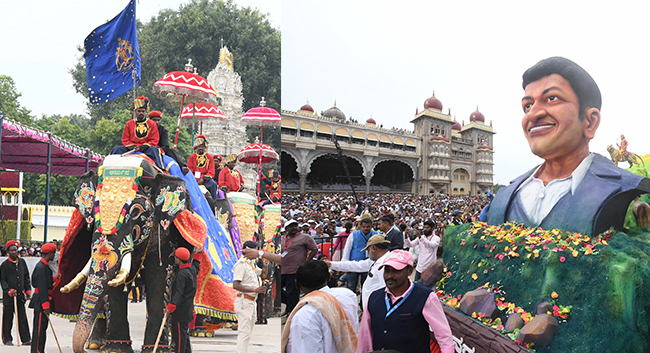
Mysuru(PTI): Curtains came down on the 10-day long world renowned Dasara celebrations in this palace city on Wednesday, with a spectacular procession marking the grand finale.
Celebrated as 'Nada Habba' (state festival), the Dasara or 'Sharan Navaratri' festivities was a grand affair this year, depicting Karnataka's rich culture and traditions, coupled with reminiscence of royal pomp and glory, after being devoid of fanfare for the last two years in view of the COVID-19 pandemic.
Thousands of people witnessed the 'Jambu Savari', a march of a dozen caparisoned elephants led by 'Abhimanyu' carrying the idol of Goddess Chamundeshwari, the presiding deity of Mysuru royals, on a 750 kg howdah or "Ambari" with gold.
The grand procession began with Chief Minister Basavaraj Bommai offering pooja to the 'Nandi Dhwaja' (Nandi Flag) from the imposing Amba Vilas Palace premises, at the auspicious Makara Lagna between 2.36 pm to 2.50 pm.
The procession also consisted of number of artists' or cultural groups and tableaux from various districts, depicting its regional culture and heritage, covering a distance of about five km before ending at Bannimantapa.
Tableaux from various government departments, depicting various schemes or programmes and social message, were also part of the procession, as people had lined up along the procession route, hours before it started.
For the last two years, the procession was restricted to the Amba Vilas Palace premises, due to COVID-19.
After offering pooja to Nandi Dhwaja, Bommai greeted the people on the occasion of Vijayadashami, and said he has prayed to the goddess for the prosperity of the state and welfare of its people.
Speaking to reporters here, he said, "this year's Dasara had been grand, lakhs of people have taken part in the festivities, all the events and programmes during the last nine days have been successful, and it has been celebrated as Nada Habba in a true sense."
He complimented the district administration, officials and people of Mysuru for the "grand success" .
The Chief Minister then flagged off the procession of caparisoned elephants by showering flowers on the idol Chamundeshwari, placed in a Howdah at around 5:38 pm.
He was accompanied by Mysuru royal family scion Yaduveer Krishnadatta Chamaraja Wadiyar, District in-charge Minister S T Somashekar, Kannada and Culture Minister V Sunil Kumar, Mayor of Mysuru city and senior district administration officials.
The Dasara procession is held on "Vijayadashami" day, signifying the victory of good over evil.
During the days of yore, the king would sit in the howdah accompanied by his brother and nephew. Sri Jayachamarajendra Wadiyar was the last member of the royal King of Mysuru to ride in Howdah. Seven cannons were fired as a mark of respect.
The tradition of the Dasara procession continues to this day, but now instead of kings, the idol of the presiding deity of the Mysuru city, Goddess Chamundeshwari, is taken in procession in the howdah. The core of the 750-kg howdah is said to be wood, but is covered with 80 kg of gold.
At the palace, keeping up with the traditions, the royal scion Yaduveer Krishnadatta Chamaraja Wadiyar, dressed in grand attire, took out the 'Vijaya Yatra' from Amba Vilas Palace till Bhuvaneshwari Devi temple, within the premises, where he performed special pooja to 'Shami' tree today.
Ahead of this, Vajramushti Kalaga', a special duel between 'Jetties' (wrestlers) armed with a Vajramushti' or a knuckle-duster, was also part of the celebrations at the palace today, in which Jetties from Mysuru, Bengaluru, Chamarajanagara and Channapatana participated.
Various programmes were held for last nine auspicious days of Navrathri, during which the palace, major streets, turnarounds or circles and buildings of Mysuru were beautified by illuminating them with lights, fondly known as "Deepalankaara", and cultural programmes were held at various venues.
Dozens of events like- food mela, flower show, cultural programmes, farmers' Dasara, women's Dasara, Yuva Dasara, children's Dasara, and poetry recital attracted people this year, along with regular crowd pullers like the famous Dasara procession (Jambu Savari), Torch Light Parade, and Mysuru Dasara Exhibition, turning the city into a carnival of sorts.
The Navaratri festivities included various decorations and celebrations observed in every households across Mysuru and surrounding areas, namely Gombe habba (arrangement of traditional dolls), Saraswati Pooja, Ayudha Pooja and Durga Pooja, among others.
While at the palace too, the royal family celebrated the festivities as per their traditions.
The Navaratri celebrations at the palace included several rituals every day, most remarkably Yaduveer Krishnadatta Chamaraja Wadiyar, dressed in grand attire, conducting 'Khasagi durbar' (private durbar) by ascending the golden throne, amid chanting of vedic hymns.
Dasara was celebrated by the rulers of the Vijayanagar empire and the tradition was inherited by the Wadiyars of Mysuru.
Festivities were first started in Mysuru by the Wadiyar King, Raja Wadiyar I in the year 1610.
It became a private affair of the royal family following the abolition of the privy purse in 1971 and the discontinuation of the privileges of the erstwhile rulers.
However, a low-key Dasara used to be held on the initiative of the local people until the state government stepped in and the then Chief Minister D Devaraja Urs revived the Dasara celebrations in 1975, which is being followed till date.
Let the Truth be known. If you read VB and like VB, please be a VB Supporter and Help us deliver the Truth to one and all.
Three arrested for running fake Aadhaar racket in UP's Badaun
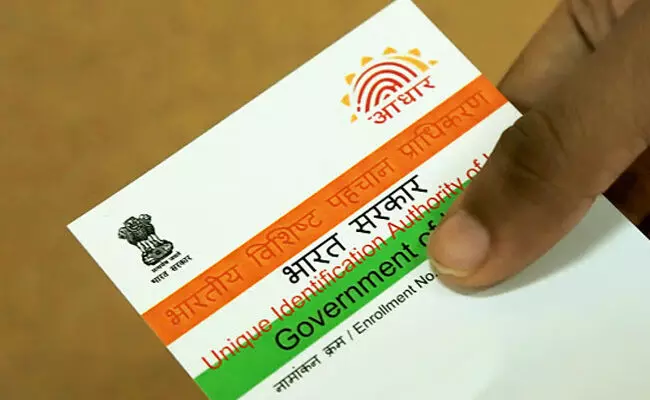
Budaun (UP), Apr 30 (PTI): The Budaun Police on Thursday busted a gang allegedly involved in preparing fake Aadhaar cards and forged documents, and arrested three of its members, officials said.
The action was carried out in the Hazratpur area, where the accused were found operating an illegal setup to generate fake identity documents, they said.
The accused have been identified as Farman Ali, a resident of Munshi Nagla, Anuj Kumar of Uprela, and Brajnandan of Sirsauli.
The police said a fingerprint scanner, three laptops, a hard disk, a scanner, a large number of Aadhaar cards and several suspicious documents were recovered from their possession.
ALSO READ: Hit by car, delivery agent dies after falling from flyover in Delhi
During interrogation, it was revealed that the gang had been involved in preparing fake identity documents for a long time, misleading people and earning money through illegal means, officials said.
Station House Officer Pushpendra Singh said the accused have been produced before a court, and efforts are underway to identify and arrest other members of the gang.
He added that further revelations are likely as the investigation progresses.