Cybercriminals used over 65,000 mule accounts in Karnataka in 2024: Report

Bengaluru: Cybercriminals used more than 65,000 mule bank accounts from Karnataka in 2024 to funnel illicit funds, according to data from the Indian Cybercrime Coordination Centre (I4C), an agency under the Ministry of Home Affairs.
The data, which was cited by Deccan Herald on Monday, indicates that these accounts form only the first layer of fraudster accounts, and the actual numbers may be far higher. The first layer refers to the initial accounts that victims are tricked into transferring their money to, at the behest of cyber fraudsters.
Mule accounts play a crucial role in the operation of cybercrimes by acting as intermediaries between the victim’s bank account and the scammer’s account. These accounts are often created, rented, or purchased by cybercrooks.
Karnataka ranked fifth among Indian states for the number of first-layer mule accounts. It trailed behind Maharashtra, Rajasthan, Haryana, and Uttar Pradesh, the report added.
Investigators have pointed to negligence by banks as one of the primary reasons behind the proliferation of mule accounts. Despite technological advancements, many banks lack robust monitoring systems to track suspicious accounts and transactions effectively.
"Banks have the responsibility of monitoring suspicious accounts and transactions, but they are often compromised. There is no proper existing system for monitoring such things in many banks, despite technological advancements," DH quoted an Assistant Commissioner of Police-rank investigator as saying.
Furthermore, there are growing concerns about the potential leakage of customer data by bank employees. The officer added the bank representatives not only give out contact information of people but also give details of gullible individuals holding bank accounts with no activity.
These accounts become prime targets for fraudsters, who approach the account holders to buy or rent them for use in scams.
Let the Truth be known. If you read VB and like VB, please be a VB Supporter and Help us deliver the Truth to one and all.
CM Revanth Reddy slams PM Modi over petrol, diesel price hike, seeks immediate rollback
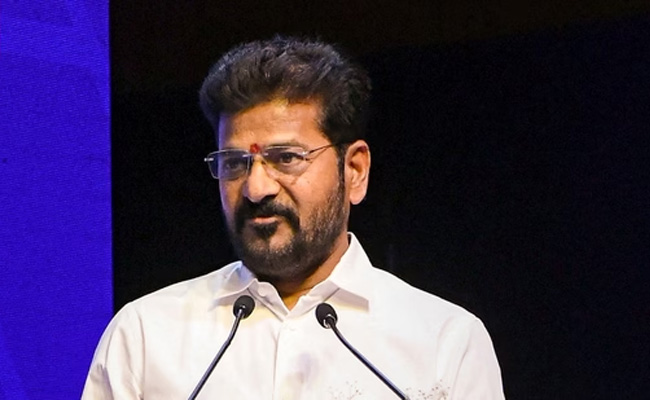
Hyderabad (PTI): Telangana Chief Minister A Revanth Reddy on Saturday demanded that the Centre roll back the recent hike in petrol and diesel prices, saying the move will adversely impact many sectors.
In a post on X, Reddy termed the Prime Minister Narendra Modi-led government’s decision to increase prices of petroleum products as "unjustifiable".
He said that citing the US-Iran war as an excuse to raise petrol and diesel prices does nothing but break the backbone of the common man.
Reddy claimed that before the recent elections in four states and one Union Territory, the PM Modi government repeatedly stated that “petroleum product prices will not be increased.
Yet, less than ten days after the election results, prices were raised by more than Rs 3. This amounts to betraying the people's trust. People believe Modi "lies" merely for votes and electoral victories. This is a betrayal of public trust. I demand that the central government immediately roll back the increased petrol and diesel prices,” Reddy slammed the PM.
According to him, due to the central government’s inefficient administration and ill-conceived policies, the country’s economy has weakened and 'Atmanirbhar' has proven to be merely a slogan to garner votes rather than a policy that delivered results.
"Small and medium-scale industries have suffered. A situation has emerged where there is no guarantee of employment for the youth. The promise of doubling farmers’ incomes has remained only a promise. Over the past ten years, the value of the rupee has been steadily declining, and now that decline has reached its peak," he said.
Reddy sought to know how the Modi government could justify the decision while proudly claiming that it had made India the world’s third-largest economy.