Daughter not trained for war-like situations: B'luru based family of Tehran varsity medical student
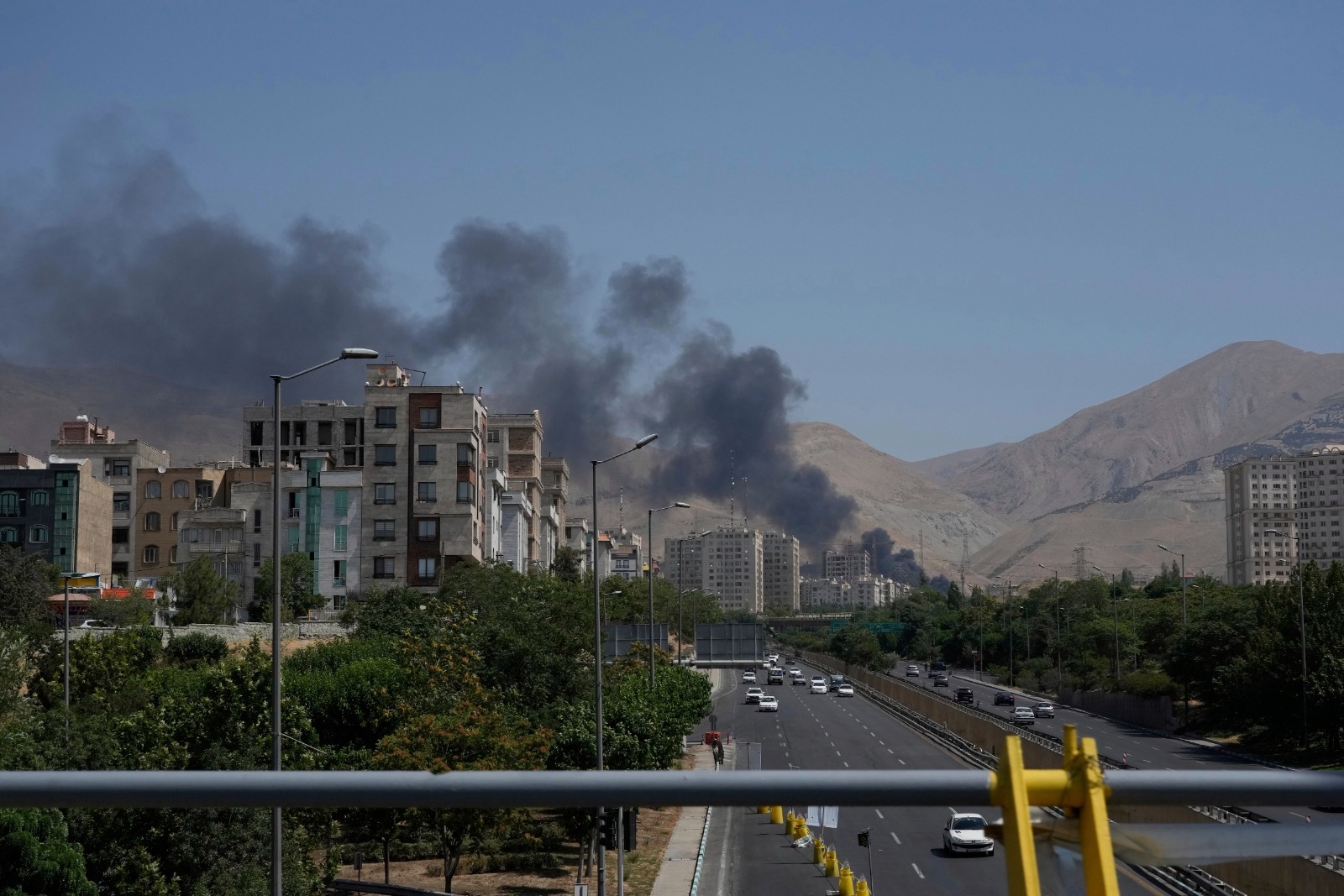
Bengaluru (PTI): The first evacuation flight from Iran that landed in New Delhi on Thursday morning comes as a ray of hope for the family members waiting for their loved ones to arrive.
The ones left behind are anxious and are panicking, so the Indian government must hurry with the evacuation, said a couple from Richmond Town in Bengaluru whose daughter is studying medicine at Tehran University of Medical Sciences.
In an exclusive interview with PTI Videos, Imran Mehdi, father of Fareehy Mehdi, said there was a blast very near to where his daughter was staying a couple of days ago.
"My daughter does not know how to survive in war-like situations. She is panicking so much already. So, I am requesting our Prime Minister and our External Affairs Minister to get all the Indian citizens stuck there as early as possible," said Shabana Mehdi, Fareehy's mother.
Imran said when he spoke to his daughter on June 13, he realised the gravity of the situation and tried to get her back immediately. "But I could find tickets only for June 15 in Air Arabia. By then, the airspace was already closed for commercial flights. So, she is stuck there," he added.
The couple also expressed their gratitude to the Indian government for moving their daughter to a "safer" place.
"We were told that a batch of students were moved to Armenia, which is about six to seven hours from where my daughter is staying. She is still in Iran though. We do not know exactly where she is, as we were told that it is being kept a secret for their safety," said the mother.
Stating that they have only been communicating through WhatsApp messages for now, Shabana said she is still worried about the safety of her daughter and spends sleepless nights.
"The internet connection is also not stable there. So, we are not sure how long this will also last," said Imran.
"It's been five days now since I made the last video call to her. It's a terrible state for a mother to be in. I speak on behalf of all the parents. There are 10,500 medical students and 4,000 other students from India there. So I request the government to evacuate them as soon as possible," added Shabana.
The first flight carrying 110 Indian students, who were evacuated to Armenia from war-torn Iran, landed in Delhi in the early hours on Thursday.
Amid escalating conflict between Israel and Iran, Indian students in Tehran were moved out of the city, 110 of them crossing the border into Armenia, through arrangements made by the Indian Embassy on Tuesday under 'Operation Sindhu'.
Let the Truth be known. If you read VB and like VB, please be a VB Supporter and Help us deliver the Truth to one and all.
Climate Change crisis: IMD to change parameters to declare heatwaves
Thiruvananthapuram (PTI): The IMD, along with its technical partners, will soon revise the criteria for declaring heatwave conditions in the country, as the present parameters do not suit India’s geographical conditions, according to official sources here.
Kerala, in particular, has faced difficulties in issuing heatwave warnings because of the limitations of the existing parameters.
Sources in the India Meteorological Department said the state experienced severe heat and humidity this summer and, for the first time, weather forecasts were made based on the anti-cyclone system that formed near the Karnataka–Maharashtra coast.
"We have never had an anti-cyclone system form closer to the South before, and this time we had to predict the weather based on it," a senior IMD official told PTI.
Anti-cyclonic systems are common over north-western parts of India, but this year one formed near the southern region, leading to unusually hot nights.
The anti-cyclone caused downward air movement, which pushed warm air towards the surface and prevented it from dispersing at night, the official added. As a result, Kerala recorded night temperatures 3 to 4 degrees Celsius above normal.
Because Kerala has experienced a steady temperature increase during the summer months for the last few years, changing the parameters for declaring heat waves would benefit the state, enabling the authorities to issue warnings more efficiently, the official added.
The IMD currently issues hot and humid weather warnings, although the situation warrants a heatwave warning, as the existing parameters do not allow the department to issue one.
At present, the IMD issues a heat wave warning in coastal areas when the maximum temperature reaches 37 degree Celsius or more with a temperature departure of 4.5 degree Celsius over the recorded maximum temperature.
For plains, the threshold is 40 degrees Celsius with a departure of 4.5 degrees Celsius or more from normal, while for hilly regions it is 30 degrees Celsius with a departure of 4.5 degrees Celsius or more.
Officials said the current heatwave declaration parameters also require these conditions to be recorded at two stations in the state to issue the warnings.
"In Kerala, we hardly get to record these conditions in two areas; moreover, we have severe heat stress that can easily cause a heat stroke. So we have decided to rework the heatwave declaration parameters and the changes will be implemented shortly. There will be a consultation with the Disaster Management Authority also before finalising the parameters," the official said.
Throughout Kerala, temperatures recorded this summer were three to four degrees Celsius higher than usual. The state also reported multiple cases of heatstroke despite regular warnings issued by the IMD and the state disaster management authority.
According to experts, Kerala has become a climate change hotspot, with a steady increase in atmospheric temperatures and erratic monsoons.
The IMD has also predicted a below-normal monsoon this year, as this is the first time two consecutive El Nino years are being witnessed.