Davangere : Honour killing claims minor girl
Grandmother, father held
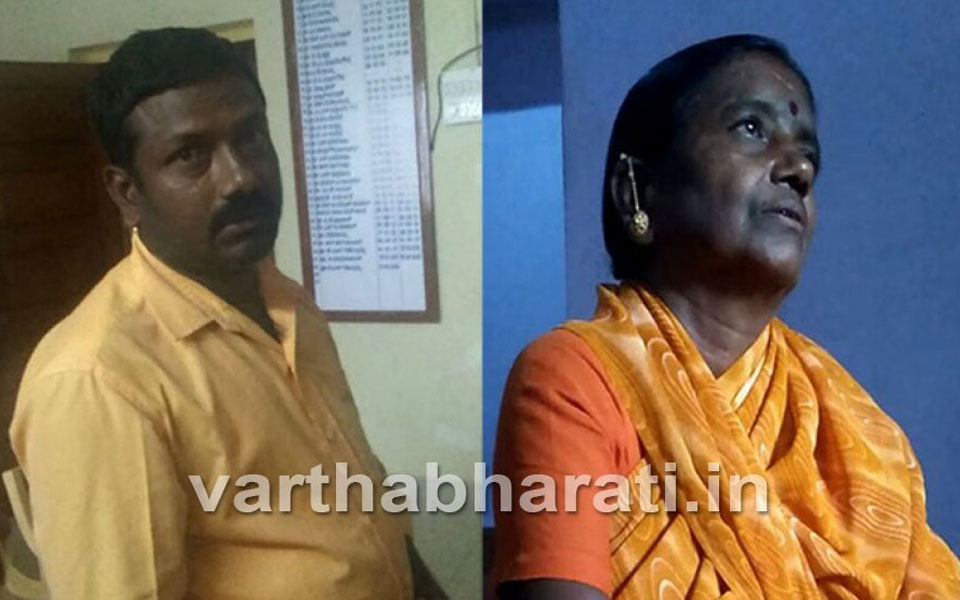
Davangere : Fearing the disrepute to the family, father and grandmother together allegedly killed their daughter at Maravanji village in Channagiri taluk in the district. The incident came to light of late.
The accused were identified as grandmother Dakshayanamma and her son Parameshwarappa.
The elder daughter (minor) of Parameshwarappa and Pushpa couple had eloped with a youth Praveen of the same village belonging to other cast a few months back. Later, her parents lodged a missing complaint at the Channagiri police station. The police traced both of them and brought them to Channagiri and handed over the girl to her parents, while the youth was sent to jail under POSCO Act.
After this, the girl tried to commit suicide by consuming sleeping pills. She was treated at McGann Hospital in Shivamogga and she was alright. Meanwhile, her parents tried to get her married. As Parameshwarappa was suffering from illness, he had gone to Manipal Hospital with his wife Pushpa. At that time, the girl who was with her grandmother, consumed poison due to depression. Suddenly, she informed her son over phone. As Parameshwarappa told his mother to kill his daughter as she brought disrespect to the family, the grandmother strangulated her with a rope and later, it was said that she committed suicide.
However, in the postmortem report, it was confirmed that the girl died because of strangulation. When the family members were interrogated, grandmother admitted that she has strangulated her on the words of her son. Now, the police arrested both mother and son in the case.
Let the Truth be known. If you read VB and like VB, please be a VB Supporter and Help us deliver the Truth to one and all.
Three company directors held in Rs 100-crore investment fraud in Kochi

Kochi (Kerala) (PTI): Police on Sunday arrested three directors of a firm accused of cheating hundreds of investors of over Rs 100 crore through a fake investment scheme linked to agricultural tourism here, officials said.
The accused were identified as Muraleedharan, Ashik Murali and Akhil Murali, all natives of Thrissur.
The arrests were made by the Kalamassery police in connection with a fraud involving ATCOS (Agri Tourism Cooperative Society), a firm headquartered at Pathadipalam here.
Police said the company had promised high returns by collecting investments from the public in the agricultural tourism sector, but allegedly cheated hundreds of people and fled with the money.
ATCOS was registered under the Multi-State Cooperative Societies Act and operated 13 branches across various districts in Kerala, besides a branch in Coimbatore in Tamil Nadu, officials said.
When investors failed to receive their promised returns or the invested amount, complaints were filed with the police.
Officials said around 54 cases have been registered against the firm in 32 police stations across the state, including 29 cases at the Kalamassery police station alone.
Following instructions from Kochi City Police Commissioner K S Mahesh Kumar, a special investigation team was formed under the supervision of Deputy Commissioner of Police (Law and Order) Shehensha and Thrikkakara ACP Manoj Kumar.
The team traced the accused to an apartment in Amala Nagar in Thrissur, where they had been hiding after secretly renting the flat, officials said.
The bank accounts of the accused have been frozen, and steps have been initiated to trace their assets, officials said.
Police also conducted a raid at the company’s office at Pathadipalam and seized several documents related to the case.
The accused were produced before the Judicial First Class Magistrate Court in Kalamassery, which remanded them to judicial custody and sent them to Kakkanad jail.
Police said they would seek the custody of the accused for further interrogation as the investigation continues.