Death of motorist from falling tree is 'vehicle accident': Karnataka HC
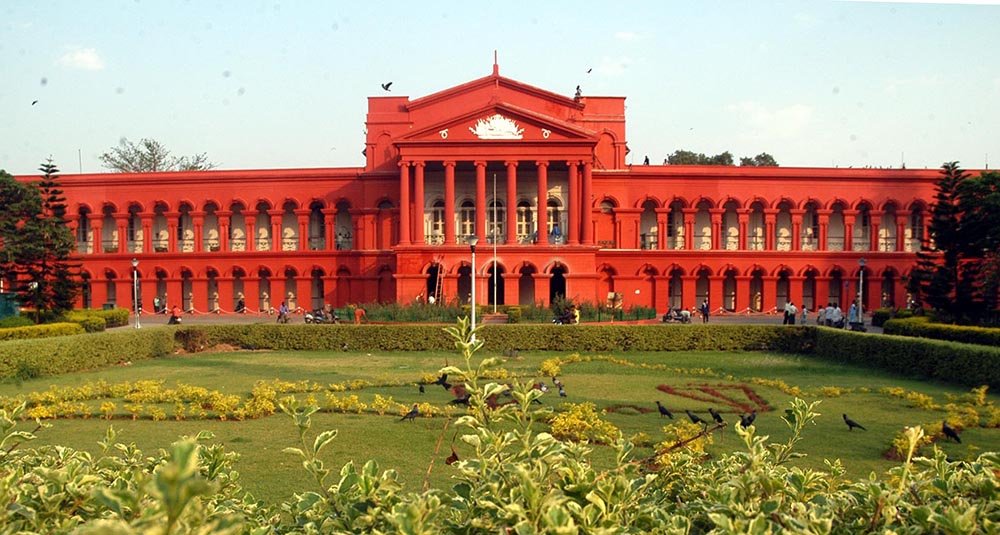
Bengaluru, Oct 10: The Karnataka High Court has held that the death of a motorist from a falling tree branch is still an accident "arising out of the use of motor vehicle", and therefore the insurance company is liable to pay compensation.
The judgement by Justice H P Sandesh came in an appeal filed by the United India Insurance Company, which had approached the HC against the order of a lower court that had awarded compensation of Rs 3.62 lakh to the family members of a motor vehicle accident victim.
The accident happened on July 2, 2006, and the lower court judgement was delivered in February 2011. The appeal was filed in the HC later that year and the judgement came recently.
Shamrao Patil, 44, died in an accident while he was riding a motorcycle on Salpewadi-Gargoti road in Kolhapur district of Maharashtra. A branch of a eucalyptus tree fell on his head which resulted in his death.
Challenging the award of compensation, the company claimed in the HC that the accident is because of a branch of eucalyptus tree falling on him and it was not an accident "arising out of the use of motor vehicle".
Sanjay S Katageri, advocate for the victim's family, pointed out the 2003 case of Sulochana vs KSRTC in which a banyan tree had fallen on a bus on the road resulting in the death of three people.
The court had then ruled that the deaths were "due to accident arising out of the use of motor vehicle", and therefore it came under Section 163A, Schedule II of the Motor Vehicles Act.
Other judgements where the courts have held that a person who is not the owner of the vehicle becomes a 'third-party', were also referred.
The HC, in its judgement, cited the case of Shivaji Dayanu Patil vs Vatschala Uttam More where a petrol tanker had overturned after a collision and the public had gathered to collect petrol. An explosion resulted in these people getting injured. The Supreme Court had held that this was still a vehicle accident and the insurance company had to pay them compensation.
In another case of Rita Devi vs New India Assurance, an auto-rickshaw driver, who was murdered by the passengers who wanted to steal his vehicle, was also held to be an accident victim arising out of use of motor vehicle for the sake of awarding compensation.
In the present case, the HC also said that though the bike was owned by the daughter of the victim, he had stepped into the shoes of the owner by borrowing it to commute. It also held that negligence cannot be held as a ground for not awarding compensation. It held that the insurance company was thus liable to pay compensation.
However, the HC also noted that since personal accident cover was charged for 'owner-cum-driver' it was liable only to pay the personal accident (PA) cover of Rs 1 lakh.
In the insurance, there was a specific Rs 50 collected as personal accident cover. This entitled payment of compensation of Rs 1 lakh and not the compensation of Rs 3.62 lakh which the lower court had ordered, the HC said.
Let the Truth be known. If you read VB and like VB, please be a VB Supporter and Help us deliver the Truth to one and all.
KSCA expresses disappointment over missing IPL playoffs, says it was ready to host matches in B’luru
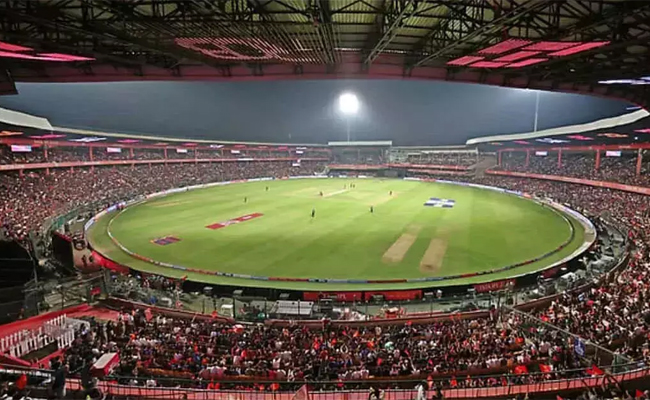
Bengaluru: The Karnataka State Cricket Association (KSCA) has issued a clarification stating that it was fully prepared to host the IPL playoffs and final matches in Bengaluru but the fixtures were allotted to other venues.
In a media note, KSCA said it was disappointed with the decision. The association stated that its president, former India cricketer Venkatesh Prasad, had been in touch with the Board of Control for Cricket in India (BCCI) and had formally conveyed the association’s readiness and interest in hosting the matches at the M. Chinnaswamy Stadium.
KSCA said the IPL matches held in Bengaluru this season were appreciated for smooth conduct, crowd management and overall experience for spectators. It said this reflected its ability to handle high-profile matches.
The association also stated that it had sent a detailed communication to the BCCI explaining its preparedness and the operational arrangements followed during the current IPL season. According to KSCA, these systems have been in place since the start of the Indian Premier League in 2008 and were followed consistently, including during previous playoff matches hosted in Bengaluru.
The clarification added that the communication sent to the BCCI was only meant to provide factual and operational details and to bring clarity on logistical and stakeholder-related requirements involved in hosting such matches.
KSCA said that although it had shown willingness and preparedness, the BCCI has decided to allocate the playoff matches to other venues. It added that the reasons for this decision have not been formally shared with the association, but it respects the authority of the board in taking such decisions.
The association further said it remains ready to host matches of national and international importance and will continue to cooperate with the BCCI, franchises, government authorities and other stakeholders for conducting cricket events.
The statement was issued by KSCA official spokesperson Vinay Mruthyunjaya, who also thanked the media and cricket fans for their continued support.