Dharmasthala case: Minister Parameshwara questions need for NIA probe
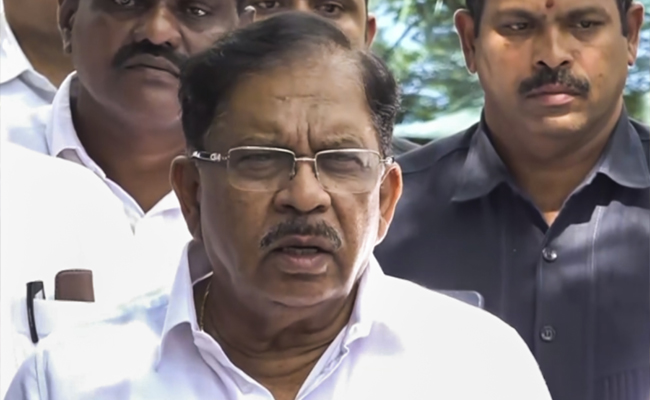
Bengaluru (PTI): Amid mounting pressure for an NIA probe into the Dharmasthala case, Karnataka Home Minister G Parameshwara on Thursday said the state government has already constituted a Special Investigation Team (SIT) and that the Centre has to justify any move to take over the inquiry.
Questioning the rationale behind the demand for an NIA probe, Parameshwara remarked, “... We formed an SIT to probe it. Earlier, they (religious leaders) were saying that the SIT probe itself was not proper. Now they are demanding that the matter be handed over to the NIA. Isn’t that an investigation too?”
He was responding to a query from reporters about Seers meeting Union Home Minister Amit Shah and pressing for a National Investigation Agency (NIA) probe.
On the issue of foreign funding, he replied, “Naturally, the central government has to probe that aspect as the state government cannot do it.”
Addressing the media, the Minister maintained that SIT was looking into the allegations of multiple murders and burial of bodies in the temple town of Dharmasthala in Dakshina Kannada district.
“If there are any shortcomings in the investigation, then it should be brought to our notice,” Parameshwara said.
Asked whether the state would comply if the NIA formally sought the case, he said, “The NIA will have to justify why it wants to probe it. The state government will not have options if they justify it.”
Commenting on SIT summoning Uday Jain, he said, “I don’t know what information SIT got because they have to gather details related to each matter. The SIT might have summoned him based on the information provided by the informants. Every information cannot be shared unless the investigation is completed.”
Refuting claims of a reinvestigation into the 2012 case of Sowjanya, who was kidnapped, raped and murdered in 2012 in Dharmasthala, Parameshwara said, “I am not going to call it reinvestigation. We will get to know with what objective and link they (SIT) are investigating it. We cannot say at this juncture.”
Asked why the government did not act sooner on intelligence inputs about meetings allegedly held by an NGO after the Soujanya case verdict, Parameshwara responded, “I only deal with policing, law and order, and crime. Intelligence is with the Chief Minister.”
Reacting to political leaders' march to Dharmasthala, he said, “Lord Manjunatha Swamy (the deity of Dharmasthala) doesn’t belong to any individual. He gives a call to everyone. From that point of view there is nothing wrong in going there — whether BJP, JD(S) or Congress go there. There is no hindrance in anyone going to Dharmasthala.”
He added, “We are only questioning why they (BJP) went there after the Dharmasthala issue surfaced. A question emerges as to why didn’t they (BJP) go there earlier. It’s obvious that there is politics behind it.”
Parameshwara further said the Congress rally to Dharmasthala was in response to the BJP.
“Because the BJP went to Dharmasthala, Congress workers too marched there. Hadn’t they (BJP) gone there, Congress workers also wouldn’t have travelled there. That’s how we must think,” he remarked.
A controversy erupted after a complainant, later identified as C N Chinnaiah and arrested on charges of perjury, claimed burying a number of bodies, including those of women with signs of sexual assault, in Dharmasthala over a period of time, with the implications pointing towards the administrators of the local temple.
The BJP had protested against targeting the temple. Veerendra Heggade, the Dharmadhikari or the custodian of the temple too had welcomed the constitution of the SIT.
Let the Truth be known. If you read VB and like VB, please be a VB Supporter and Help us deliver the Truth to one and all.
Illegal sand mining has created environmental crisis in National Chambal Gharial Sanctuary: SC
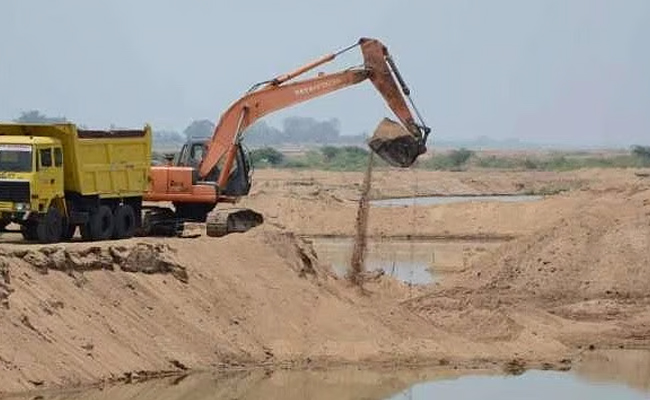
New Delhi (PTI): The Supreme Court on Friday said rampant illegal riverbed sand mining has created an "environmental crisis" and wreaked "havoc" in the National Chambal Gharial Sanctuary, causing a grave risk to the gharial (long-snouted crocodile) preservation project.
Slamming the states of Rajasthan, Madhya Pradesh and Uttar Pradesh for their utter failure in dealing with the issue, the apex court directed them to install high-resolution Wi-Fi-enabled CCTV cameras along all routes frequently used for illegal sand mining in the area.
A bench of Justices Vikram Nath and Sandeep Mehta directed that live feed of such surveillance cameras shall be placed under the direct control, supervision and operational oversight of the superintendent of police or the senior superintendent of police of the concerned district and the divisional forest officer.
It said these officers shall ensure continuous and effective monitoring of the CCTV feeds by designating appropriate officers.
"It can't be gainsaid that the issues involved are of great concern in as much as the rampant illegal mining activities in the river bed have created an environmental crisis and havoc in the National Chambal Gharial Sanctuary causing a grave risk to the very project of gharial preservation of which the state governments themselves were proponents and were under an obligation to foster and promote," Justice Mehta said while pronouncing the order.
The bench directed the authorities in these three states to initiate prompt and necessary action under law if any instance of illegal mining or allied activities comes to light.
It said the authorities shall ensure seizure of vehicles or machinery found involved in illegal sand mining and also initiate prosecution of persons involved in it.
The bench, which passed several other directions, posted the matter for hearing on May 11.
The top court passed the order in a suo motu case titled 'In Re: Illegal sand mining in the National Chambal Sanctuary and threat to endangered aquatic wildlife'.
The National Chambal Sanctuary, also called the National Chambal Gharial Wildlife Sanctuary, is a 5,400-sq km tri-state protected area.
Besides the endangered gharial, it is home to the red-crowned roof turtle and the endangered Ganges river Dolphin.
Located on the Chambal river near the tripoint of Rajasthan, Madhya Pradesh and Uttar Pradesh, the sanctuary was first declared a protected area in Madhya Pradesh in 1978 and now constitutes a long and narrow eco-reserve co-administered by the three states.
On March 13, the top court took suo motu cognisance of news reports about rampant illegal sand mining on the banks of the Chambal river.