Dharmasthala case: Sujata Bhat’s lawyer urges SIT to use ground penetrating radar to locate remains
Advocate for Sujata Bhat says terrain changes over 11 years may have obscured burial sites
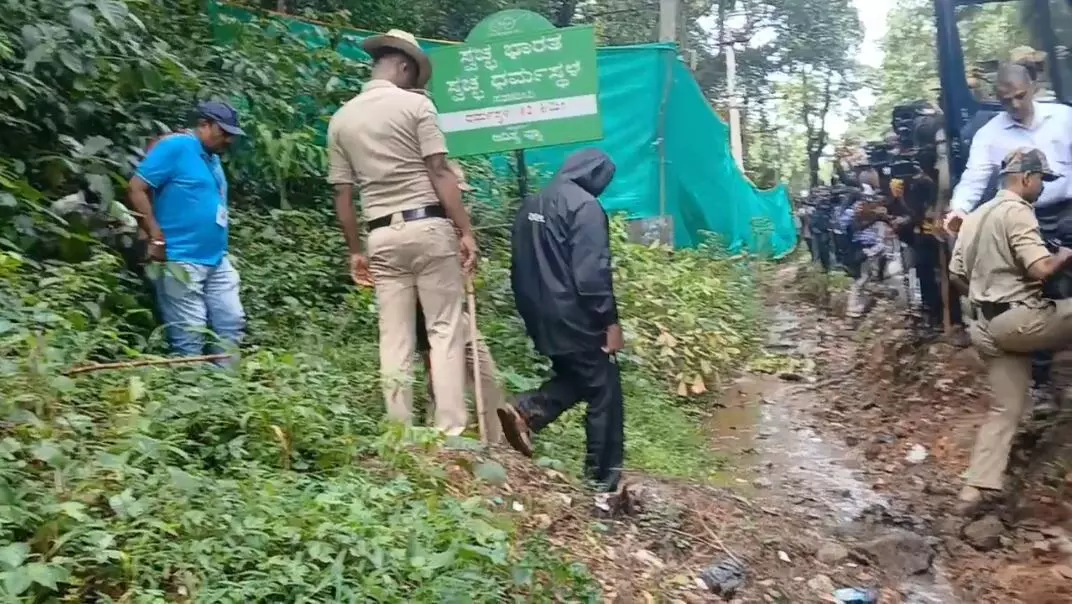
Mangaluru: Advocate Manjunath N., representing Sujata Bhat, the mother of missing medical student Ananya Bhat, has urged the Special Investigation Team (SIT) to deploy advanced Ground Penetrating Radar (GPR) technology at sites already identified and excavated by the witness-complainant in the Dharmasthala crime case.
In a press release dated August 3, 2025, he stated: “It is learnt that skeletal remains have been discovered at some of the 10 locations identified by the witness-complainant.”
Citing the witness’s own testimony, he added: “As the witness himself has stated, he left Dharmasthala in 2014. The Dharmasthala region experiences heavy rainfall and there is a high possibility of soil shifting and accumulation from one place to another.”
The advocate further explained the need for advanced forensic assistance: “Since considerable changes have occurred in the forest area over approximately 11 years, there is a high probability that the landmarks the witness had relied on in his memory may have changed or shifted.”
Reiterating a previous petition submitted on July 29, 2025, he formally requested: “We request the deployment of the most advanced Ground Penetrating Radar (GPR) available in India to detect skeletal remains at the already excavated locations and in the surrounding areas.”
Describing the practicality of using GPR in the ongoing search, Manjunath N. noted: “We request that GPR units, which are comparable in size to machines used for clearing grass and weeds and which can be deployed with very few persons, be deployed to detect skeletal remains at the already excavated locations and in the surrounding areas.”
Commending the SIT’s efforts thus far, he said: “We once again commend the SIT for conducting the excavation process with the assistance of an excellent team.”
He also expressed confidence in the leadership involved: “Many experts anticipate that the SIT, led by Sri Pronab Mohanty, will implement GPR technology. We have unwavering faith and confidence that the Karnataka Government and the Hon’ble Chief Minister Sri Siddaramaiah will support the SIT in deploying GPRs.”
Finally, he called on the media to play an educational role in the public interest: “We request that the media provide to the public, information about GPRs and also, similarly, appeal to the SIT and the state government to deploy them.”
Let the Truth be known. If you read VB and like VB, please be a VB Supporter and Help us deliver the Truth to one and all.
Power tariffs under BESCOM to rise from May 1

Bengaluru (PTI): Power bills for consumers under the Bangalore Electricity Supply Company Limited (BESCOM) will go up from May 1, following an order issued by the Karnataka Electricity Regulatory Commission (KERC) on Friday.
The hike comes after KERC allowed the BESCOM to recover a revenue deficit of Rs 2,068 crore incurred in 2024-25, from the consumers.
As a result, for every unit of electricity consumed in 2024-25, the customers will be charged an additional 56 paise, it said.
"BESCOM shall calculate, for each of the active consumers of FY2024-25 the amount to be recovered based on their actual energy consumption during FY2024-25. Such amount shall be recovered during FY 2026-27 in equal monthly instalments, to be called as 'FY25 True up Charges', commencing from the first meter reading date falling on or after 1 May 2026 and concluding with the reading date ending on 30 April 2027," the order said.
"It is further ordered that BESCOM shall maintain a separate head of account, allocated for the purpose, to record the adjustment of the said amount to ensure full recovery of the deficit," it added.
Similarly Chamundeshwari Electricity Supply Corporation Limited (CESC) has also recorded a revenue deficit of Rs 121.71 crore and can collect an additional 15 paisa per unit for consumption in 2024-25, official sources said.