DK Suresh responds to Shivakumar's chances of becoming Karnataka CM; Here's what he said
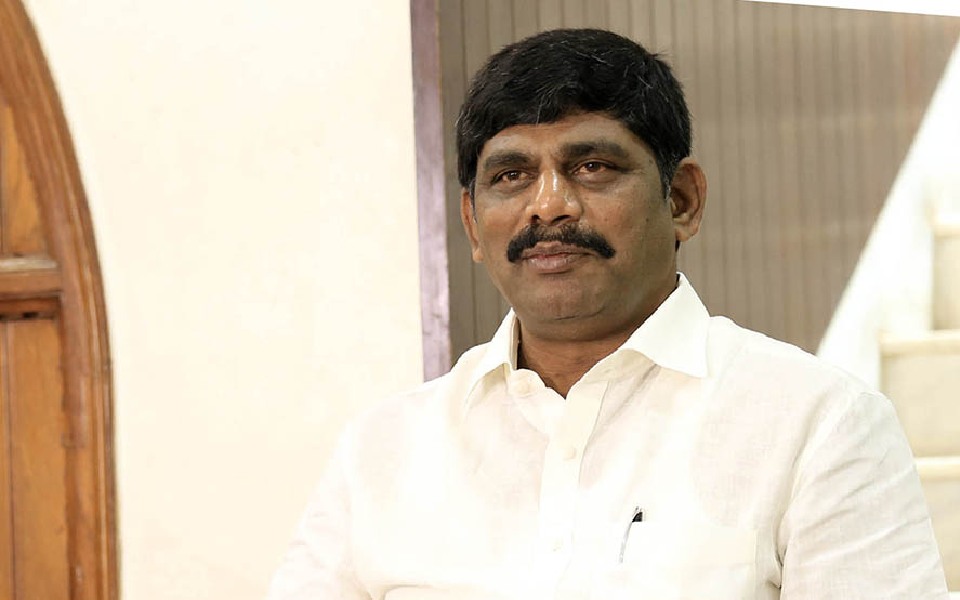
Bengaluru: DK Suresh, the Congress MP and younger brother of party heavyweight DK Shivakumar, expressed his happiness over the possibility of his brother becoming the Chief Minister of Karnataka. When asked about the chances of his brother becoming the CM, Suresh stated that he would be delighted as a brother and as a common man if Shivakumar assumes the position.
The statement from Suresh came in the backdrop of Congress emerging as the single largest party in the recently concluded Karnataka Assembly elections, raising speculations about the next CM of the state. DK Shivakumar, who is known for his strong political acumen and organizational skills, is seen as a frontrunner for the position within the party.
However, it remains to be seen who the Congress high command ultimately chooses to lead the government in Karnataka. The decision is expected to be made in the coming days after a series of discussions and consultations with senior party leaders.
Let the Truth be known. If you read VB and like VB, please be a VB Supporter and Help us deliver the Truth to one and all.
ISRO successfully conducts second integrated air drop test for Gaganyaan mission
New Delhi (PTI): Space agency ISRO has successfully conducted the second integrated air drop test (IADT-02) for the upcoming Gaganyaan mission at the space station in Andhra Pradesh's Sriharikota.
The system is essential to ensure a safe recovery of the crew module -- the capsule in which astronauts sit during a human flight -- during re-entry and landing.
Union minister Jitendra Singh congratulated the Indian Space Research Organisation (ISRO) for successfully conducting the test.
"Congratulations #ISRO for the successful accomplishment of Second Integrated Air Drop Test (IADT-02) for #Gaganyaan, India's first Human Space flight scheduled next year. The second Integrated Air Drop Test (IADT-02) was successfully conducted at Satish Dhawan Space Station Sriharikota," Singh said in a post on X.
The IADT-02 follows the successful completion of the first IADT, which took place on August 24, 2025, at the Satish Dhawan Space Centre in Sriharikota.
Air drop tests recreate the last leg of a spacecraft's return to Earth. An aircraft or helicopter drops the spacecraft from a height to test various systems under different scenarios.
These are the deployment of the parachute system in case the mission is aborted mid-flight, system performance when one parachute fails to open and the spacecraft's orientation and safety during splashdown etc.
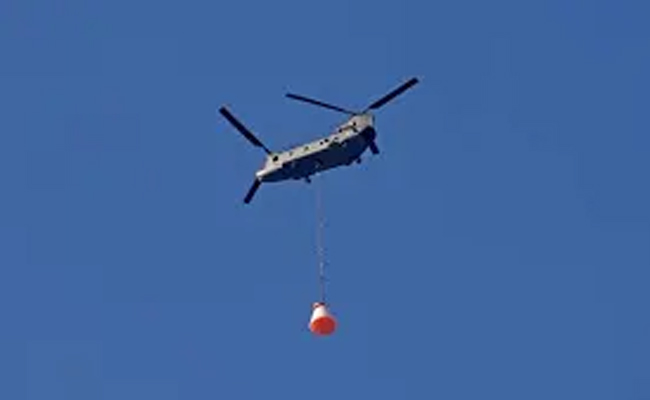
In the IADT-02 test, a simulated crew module, weighing about 5.7 tonnes, was lifted by an Indian Air Force Chinook helicopter to an altitude of about three kilometres and released over a designated drop zone in the sea, near the Sriharikota coast.
In a statement, the ISRO said, "Ten parachutes of four types were deployed in a precise sequence during the descent of the crew module, gradually reducing the velocity for safe touchdown. Subsequently, the simulated crew module was successfully recovered in coordination with the Indian Navy."