DPR is being prepared to revive HMT factory, says Union Minister H D Kumaraswamy
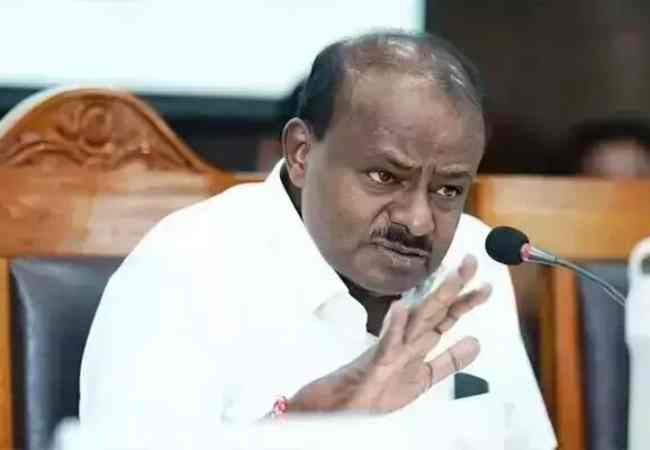
Mandya (PTI): Union Minister for Heavy Industries and Steel, H D Kumaraswamy, on Thursday announced that a Detailed Project Report (DPR) is being prepared to revive the prestigious HMT factory.
He said that under the leadership of Prime Minister Narendra Modi, efforts are underway to rejuvenate both HMT and the Sir M Visvesvaraya Iron and Steel Plant (VISL) in Bhadravathi.
"Several rounds of discussions have already taken place in this regard," Kumaraswamy told reporters here.
"Dr V K Saraswat, a member of NITI Aayog, has submitted an important report on the revival of HMT. High-level meetings have been held in New Delhi with senior officials of the Ministry of Heavy Industries, the Managing Director of HMT, and Dr. Saraswat," he said.
Kumaraswamy further informed that a team led by the Additional Secretary of MHI & HMT Managing Director were also sent to Japan to explore possibilities of technical collaboration.
Noting that the people of Mandya have long aspired for industrial establishments in the district, the union minister, who is MP from district said, "I have sought cooperation from the state government and have also held discussions with several industrialists in Delhi regarding setting up industries in Mandya."
Kumaraswamy said that with the responsibility of two key portfolios, he is making every effort to boost industrial growth in Karnataka, and urged the Congress government in the state to build a strong working relationship with the Centre.
"The state government should build a strong working relationship with the Centre. Only then can the state fully benefit from central initiatives. Bringing politics into every matter is unnecessary," he added.
Let the Truth be known. If you read VB and like VB, please be a VB Supporter and Help us deliver the Truth to one and all.
Two arrested for allegedly sexually assaulting woman at knifepoint in Kochi
Kochi (PTI): Two persons have been arrested after a three-member gang allegedly sexually assaulted a woman at knifepoint near Ernakulam Junction Railway station, officials said on Friday.
The arrested accused were identified as Danish (26), a native of Varkala in Thiruvananthapuram district, and Rahul (39), a native of Paravoor in Kollam district.
Police officials said they were searching for the prime accused, Sanjay, a native of Aroor in Alappuzha district.
According to police, the incident occurred on the night of May 5 when the victim was chatting with her friend near a closed hotel near Ernakulam Junction Railway station.
Officials said the accused approached them, attacked the victim’s friend and then allegedly threatened the woman with a knife before sexually assaulting her.
Police said the accused also allegedly disrobed the victim during the attack.
However, the woman managed to escape from the spot and approached a nearby shop for help.
Police were informed immediately and shifted the victim to the police station.
Officials said the accused were heavily drunk at the time of the incident and went into hiding soon after the attack.
Police registered a case on May 6 under charges including rape, disrobing a woman, criminal intimidation and robbery.
The two accused were later arrested in the city, while efforts are continuing to trace Sanjay, police said.
The accused were produced before a court and remanded to judicial custody.