Drugs case: High Court rejects bail plea of Kannada film actors Ragini Dwivedi, Sanjjanna Galrani

Bengaluru: The Karnataka High Court on Tuesday declined to grant bail to Kannada film actresses Ragini Dwivedi and Sanjjanaa Galrani in the drugs case.
Justice Sreenivas Harish Kumar also dismissed the bail plea of four others, including the anticipatory bail application of film producer Shivaprakash, in the case.
The Central Crime Branch, probing the drug case arrested Ragini Dwivedi and Sanjjanaa Galrani in September. Shivaprakash is still at large, the police said.
The two actresses and the drug supplier Prashant Ranka were in the CCB custody till September 13 and were later remanded to judicial custody on September 14.
Prashant was also denied bail. Since then they were lodged in the Parappana Agrahara Central jail here.
The city police intensified investigation into the drug abuse among celebrities after the Narcotics Control Bureau arrested three people, including a Malayalam tele serial actress Anikha and Bineesh Kodiyeri's aide Mohammed Anoop with synthetic drugs.
The trio were charged with supplying drugs to the celebrities in Bengaluru including Kannada film actors and singers. One of the high profile accused is Aditya Alva, son of former minister Late Jeevaraj Alva.
The CCB probing the case had even raided the Mumbai residence of Bollywood actor Vivek Oberoi who has married Alva's sister but to no avail.
Let the Truth be known. If you read VB and like VB, please be a VB Supporter and Help us deliver the Truth to one and all.
Chhattisgarh govt enforces austerity measures, restricts foreign travel and cuts convoy vehicles
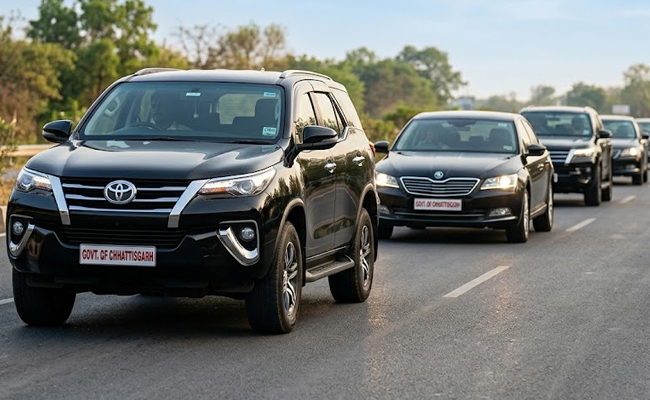
Raipur (PTI): The Chhattisgarh government on Saturday rolled out a set of austerity measures, including restricted use of convoy vehicles for the chief minister, ministers and heads of state-run bodies, besides curbs on foreign travel at government expense.
The state has decided to implement the cost-saving steps with immediate effect to ensure efficient management of financial resources and discipline in public spending, said a directive issued by Finance Secretary Rohit Yadav.
The move follows Prime Minister Narendra Modi’s appeal for austerity amid the ongoing conflict in West Asia.
The order said that only essential vehicles should be used in the convoys of the CM, ministers and office-bearers of corporations, boards and commissions, while ensuring restrained use of other government resources.
It also directed departments to take steps for a phased conversion of all official vehicles into electric vehicles in order to promote the use of EVs.
As part of fuel-saving measures, expenditure on petrol and diesel for government vehicles should be kept to a minimum, the directive said.
Vehicle pooling arrangements should also be implemented for officials of departments travelling to the same destination, it added.
The order further stated that foreign travel of government employees at state expenses will be completely prohibited except under extremely unavoidable circumstances. In such cases, prior approval of the CM will be mandatory.
To reduce administrative expenditure, departments have been instructed to hold physical meetings preferably only once a month and encourage virtual and online meetings. Regular departmental review meetings should compulsorily be conducted through video conferencing, it said.
The government also stressed the need for energy conservation in its offices, directing that all electrical equipment, including lights, fans, air-conditioners and computers, must be switched off after office hours.
The directive will remain effective till September 30 this year.
Amid the war involving the US, Israel and Iran, Modi has suggested reducing petrol and diesel consumption, using metro rail services in cities, carpooling, increased use of EVs, utilising railway services for parcel movement and working from home to conserve foreign exchange.