Eight black-capped capuchin monkeys arrive at Bannerghatta zoo
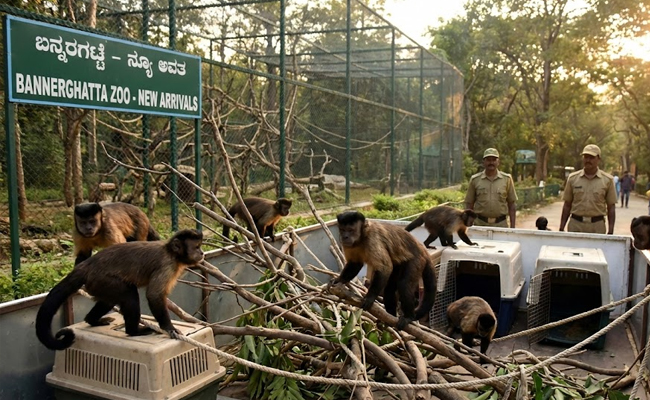
Bengaluru (PTI): Bannerghatta Biological Park on Monday announced the successful import of eight black-capped capuchin monkeys from a wildlife facility in South Africa under an animal exchange programme.
The four male and four female monkeys (Sapajus apella) were imported from the Induna Primate and Parrot Park in South Africa and arrived at the Kempegowda International Airport at around 9 pm on December 14, BBP said in a statement.
The exchange, carried out under a duly approved animal exchange programme, aims to strengthen conservation initiatives, enhance genetic diversity of the captive population, promote visitor awareness, and support scientific research, the statement said.
According to BBP officials, the import was conducted in strict compliance with all statutory and regulatory requirements.
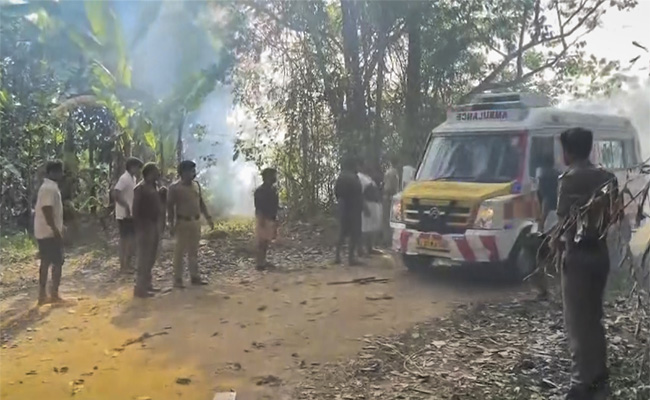
ALSO READ: Bomb threat at Mangaluru RTO turns out to be hoax
Prior approvals were obtained from the Central Zoo Authority, New Delhi, along with no-objection certificates from the State Chief Wildlife Warden, the Ministry of Environment, Forest and Climate Change, the Department of Animal Husbandry and Dairying, and the Wildlife Crime Control Bureau.
Import permits were also secured from the Directorate General of Foreign Trade (DGFT) in accordance with guidelines prescribed by the Department of Animal Husbandry, officials said.
"All animals were inspected and quarantined in South Africa as per the prescribed guidelines. In addition, advance no-objection certificates were obtained from the Animal Quarantine Services before importation," the statement said.
Upon arrival, the capuchins were placed in a designated quarantine facility and will undergo post-import health checks before being moved to the zoo premises for public display, officials said.
"This initiative underscores Bannerghatta Biological Park’s continued commitment to global conservation collaboration, scientific animal management, and compliance with national and international wildlife regulations," the statement added.
The exchange programme further strengthens BBP’s role in promoting best practices in ex-situ conservation and wildlife education.
Let the Truth be known. If you read VB and like VB, please be a VB Supporter and Help us deliver the Truth to one and all.
21 hours raid fetch nothing for ED, claims Karnataka Cong MLA’s son
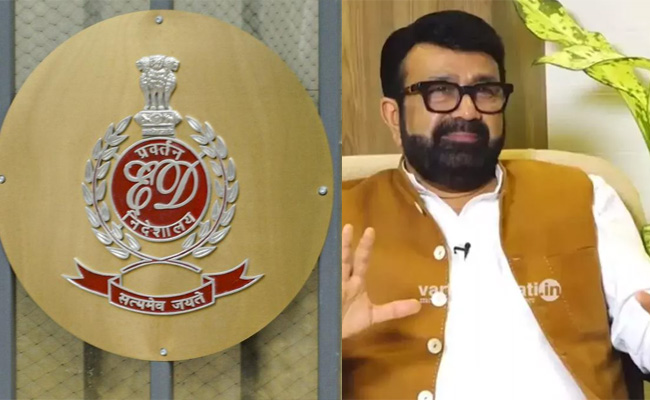
Bengaluru (PTI): Karnataka Congress MLA N A Haris' son Mohammed Haris Nalapad on Tuesday claimed that the 21 hours of search by the ED in his house and other locations did not fetch anything.
The Enforcement Directorate on Monday raided the premises of the two sons of Haris (Mohammed Haris Nalapad and Omar Farook Nalapad), Aqeeb Khan, grandson of ex-Union cabinet minister K Rahman Khan and an alleged crypto hacker named Srikrishna Ramesh alias Sriki in a crypto currency-linked money laundering case.
More than a dozen premises in the city have been covered as part of the action executed under the provisions of the Prevention of Money Laundering Act (PMLA).
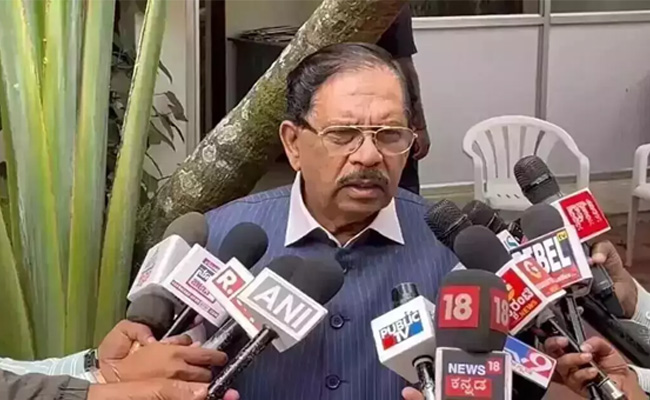
"My grandfather is 89-year-old. There is not a single bad mark. My father (N A Haris) is a four-time MLA. There is not a single accusation against him. Their only intention was to target myself and my brother. As simple as that," Mohammed Nalapad, who is a former Karnataka Youth Congress president, told reporters.
According to him, the ED officials carried out raids for 21 hours.
"After 21 hours of search, they took away only two mobile phones from our house. They did not get a single paisa. The ED will testify it," the Congress leader said.
Exuding faith in the law, he said he is ready to fight the case in court.
"Me and my father have opted for politics and we are in public life. You can call me whatever you want but I have not done anything wrong," Mohammed Nalapad said.
Regarding his relationship with Sriki, he said he knew him but had no clue what he was doing.
"I have never said that either me or my brother do not know Sriki. But how will I know what he does in his house? Can his crimes be linked to us," he asked.
The money laundering case stems from some Karnataka Police FIRs and chargesheets filed in a 2017 case of hacking of national and international websites, stealing of bitcoins and sale of these 'stolen' virtual digital assets (VDA) through crypto platforms by the alleged hacker Sriki and his associates.
The Nalapad brothers and Aqeeb Khan are alleged to be the beneficiaries of the proceeds of crime generated through this alleged crypto-linked crime, the ED said.