Elector-Population Ratio: Karnataka sees drop in people below 18 years as senior citizens surge
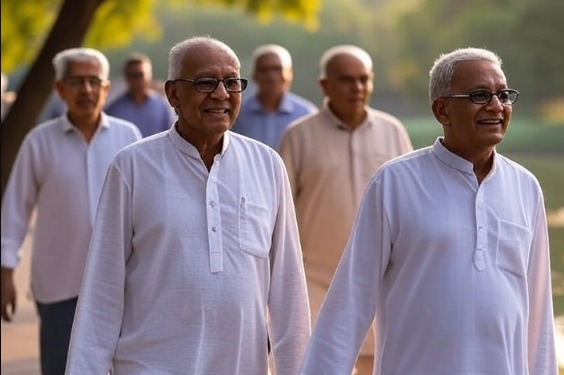
Bengaluru: Karnataka is experiencing a demographic shift, with the population under 18 years steadily decreasing while the number of adult voters and senior citizens continues to grow. This trend, particularly evident in several districts, raises concerns about a potential population crisis driven by declining birth rates.
As of January 2025, the Elector-Population Ratio (EPR) for Karnataka stands at 70.61, surpassing the national average of 65, according to the Office of the Chief Electoral Officer, Karnataka, as reported by The New Indian Express on Monday.
However, significant variations in the EPR exist across districts. Chikkamagaluru district leads with the highest EPR at 85.84, followed closely by Kodagu at 84.25. In Chikkamagaluru, this means that more than 85 out of every 100 people are aged 18 or older, with a projected population of 11.33 lakh, of which 9.73 lakh are adults enrolled as voters.
“The EPR shows the number of electors in the state. The idea of preparing it regularly is to know if all the people above 18 years of age (voting age) are included in the rolls or not. The present EPR data shows the number of electors in the state is high, the elderly and people above 18 years are more than the young and newborn. However, this does not give the accurate population as the base for calculation (actual population of the state) is not accurately available in the absence of the latest census report,” TNIE quoted Manoj Kumar Meena, Chief Electoral Officer, Karnataka, as saying.
District-level officials, when asked to explain the unusually high Elector-Population Ratio (EPR) in certain areas, pointed to factors such as migration, low birth rates, and under-registration of the voting population.
The yet to be released NHFS-6 report mentioned that there is low fertility in the districts of Dakshina Kannada, Chikkamagaluru, Kodagu, Hassan, Shivamogga, Bengaluru Urban and Mysuru.
Meanwhile, the EPR is lowest in Bengaluru Urban district and the city’s municipal area, ranging between 51.78 and 63.21.
“Bengaluru houses a large number of young people. It is a youth-centric city with a good number of elderly people and children. But most of them are migratory. They stay here, with voting rights elsewhere. Healthcare facilities and economic growth in Bengaluru is very high, but at the same time the fertility rate is on a gradual decline. A separate study on Bengaluru city is needed,” TNIE quoted experts from the Election Commission and demographers as saying.
Earlier this month, a United Nations report projected that India’s population would reach 1.46 billion in 2025, while highlighting a critical demographic trend: the country’s fertility rate has dropped below the replacement level. This indicates that fewer children are being born than are needed to sustain the current population size across generations, in the absence of migration.
Let the Truth be known. If you read VB and like VB, please be a VB Supporter and Help us deliver the Truth to one and all.
CM Revanth Reddy slams PM Modi over petrol, diesel price hike, seeks immediate rollback
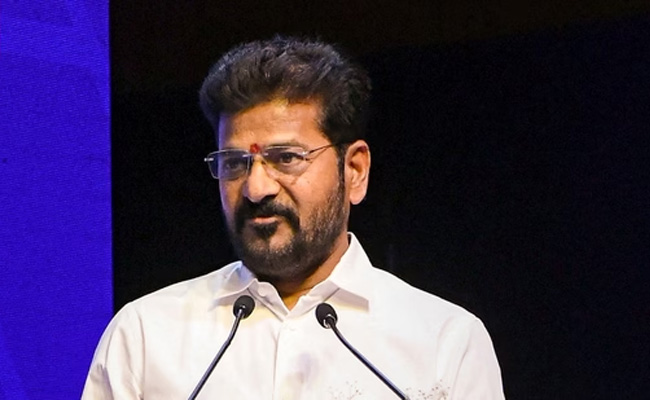
Hyderabad (PTI): Telangana Chief Minister A Revanth Reddy on Saturday demanded that the Centre roll back the recent hike in petrol and diesel prices, saying the move will adversely impact many sectors.
In a post on X, Reddy termed the Prime Minister Narendra Modi-led government’s decision to increase prices of petroleum products as "unjustifiable".
He said that citing the US-Iran war as an excuse to raise petrol and diesel prices does nothing but break the backbone of the common man.
Reddy claimed that before the recent elections in four states and one Union Territory, the PM Modi government repeatedly stated that “petroleum product prices will not be increased.
Yet, less than ten days after the election results, prices were raised by more than Rs 3. This amounts to betraying the people's trust. People believe Modi "lies" merely for votes and electoral victories. This is a betrayal of public trust. I demand that the central government immediately roll back the increased petrol and diesel prices,” Reddy slammed the PM.
According to him, due to the central government’s inefficient administration and ill-conceived policies, the country’s economy has weakened and 'Atmanirbhar' has proven to be merely a slogan to garner votes rather than a policy that delivered results.
"Small and medium-scale industries have suffered. A situation has emerged where there is no guarantee of employment for the youth. The promise of doubling farmers’ incomes has remained only a promise. Over the past ten years, the value of the rupee has been steadily declining, and now that decline has reached its peak," he said.
Reddy sought to know how the Modi government could justify the decision while proudly claiming that it had made India the world’s third-largest economy.