Elephant camp to be established in Bhadra Wildlife Sanctuary: Eshwar Khandre
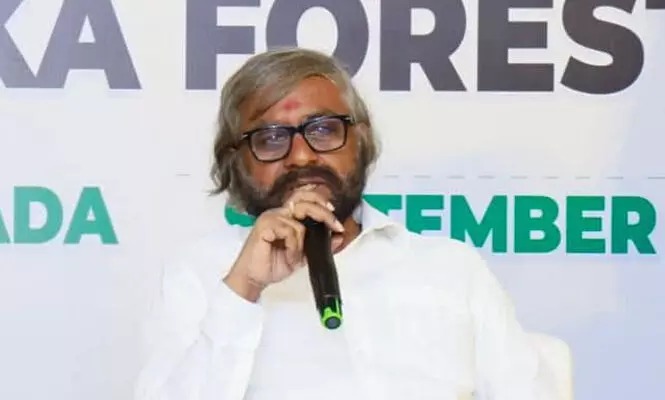
Shivamogga: Karnataka's Minister for Forest, Ecology, and Environment, Eshwar Khandre, has announced the establishment of an elephant camp in the Bhadra Wildlife Sanctuary to mitigate the human-elephant conflict in the regions of Hassan, Chikkamagaluru, and Shivamogga.
Speaking at the silver jubilee celebration of the Bhadra Tiger Reserve held at Kuvempu University, Shivamogga, Khandre highlighted the rising cases of human-wildlife conflict across the state, particularly incidents involving elephants that have resulted in both loss of life and damage to crops. To address this issue, he stated that a proposal has been submitted to establish an Elephant Soft Release Center on 2,000 hectares of land within the sanctuary. The project, which will span around 5,000 acres, will include the cultivation of bamboo, jackfruit, and grass preferred food sources for elephants. Captured elephants will be relocated to this facility, which will be surrounded by barricades to prevent their escape, thus reducing the conflicts in Kodagu, Hassan, Shivamogga, and Chikkamagaluru districts.
The Bhadra Tiger Reserve, spread over 1,000 square kilometers, is a lush, ecologically rich region that forms part of the Western Ghats, a UNESCO World Heritage Site. Karnataka ranks second in the country for its tiger population, with around 563 tigers. The reserve, established in 1974, is one of the state's five tiger reserves and holds a significant place in the national tiger conservation strategy.
Khandre expressed satisfaction over the steady increase in the country's tiger population from 1,827 in 1980 to over 3,000 today, attributing it to the dedicated efforts of the Forest Department and the anti-poaching camps established across the state.
In 1951, the then Mysore government recognized the importance of the wildlife in the region and declared 124 square kilometers of the area as the Jagara Valley Game Reserve. It was later expanded to 492 square kilometers and renamed Bhadra Wildlife Sanctuary in 1974 by the Karnataka government. In 1998, it was included under Project Tiger as the 25th tiger reserve in the country.
The reserve previously housed 16 villages with 736 families, who were voluntarily relocated under the Bhadra Rehabilitation Project to Kelaguru and Malali Chanenahalli in Chikkamagaluru district. This project is considered one of the most successful rehabilitation efforts in the country, demonstrating the importance of community participation in wildlife conservation.
After the relocation, human-wildlife conflicts have significantly reduced. The reserve, which initially had 8 tigers, is now home to 40 tigers. The forest also hosts more than 400 elephants, dense forest cover, and a variety of flora and fauna, including unique species of frogs and rare plants.
Minister Khandre emphasised the need to protect the rich biodiversity of the region and urged the participation of public representatives, officials, organizations, and environmentalists. He also released a commemorative postal stamp, a website, and a booklet to mark the silver jubilee celebrations of the reserve.
Let the Truth be known. If you read VB and like VB, please be a VB Supporter and Help us deliver the Truth to one and all.
UP SIR: Over 84 lakh voters added in final list, total electorate rises to 13.39 crore
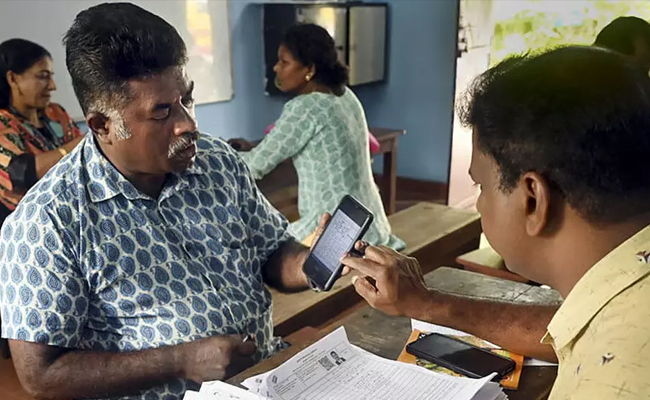
Lucknow (PTI): Uttar Pradesh's electorate grew by over 84 lakh to 13.39 crore after the completion of the Special Intensive Revision (SIR), according to the final voter list published on Friday.
Addressing a press conference at the Lok Bhawan Media Centre here, Uttar Pradesh's Chief Electoral Officer Navdeep Rinwa said the SIR exercise was conducted from October 27, 2025, to April 10, 2026, covering all 75 districts, 403 assembly constituencies and polling stations across the state.
He said the 166-day exercise was carried out with the contribution of 75 District Election Officers (DEOs), 403 Electoral Registration Officers (EROs), 12,758 Assistant EROs, 18,026 BLO supervisors and 1,77,516 Booth Level Officers (BLOs). In addition, 5,82,877 booth-level agents of recognised political parties and crores of voters extended cooperation.
Print, electronic and digital media also played a key role in awareness efforts, he added.
Rinwa said the draft electoral roll published on January 6, 2026, had a total of 12,55,56,025 voters, including 6.88 crore male voters, 5.67 crore female voters and 4,119 third gender voters.
The number of voters in the 18-19 age group stood at 3,33,981, while the gender ratio was 824 female voters per 1,000 male voters.
The final electoral roll published on April 10 shows the total number of voters at 13,39,84,792, he said.
Of these, male voters number 7,30,71,071 (around 54 per cent), female voters 6,09,09,525 (45.46 per cent) and third gender voters 4,206 (less than 0.01 per cent).
The number of voters in the 18-19 age group has risen to 17,63,360, accounting for 1.32 per cent of the total electorate. The gender ratio has also improved to 834 female voters per 1,000 male voters.
Comparing the draft and final rolls, Rinwa said the total increase in the number of voters is 84,28,767. This includes an increase of 42,27,902 male voters, 42,00,778 female voters and 87 third gender voters.
The 18-19 age group registered a rise of 14,29,379 voters, while the gender ratio improved by 10 points from 824 to 834, he said.
Among districts, Prayagraj recorded the highest increase in voters at 3,29,421, followed by Lucknow at 2,85,961, Bareilly at over 2,57,000, Ghaziabad at 2,43,666 and Jaunpur at 2,37,590.
The CEO said the successful completion of the revision exercise reflects coordinated efforts by election officials, political parties and voters across the state.