Eleven bills tabled in Karnataka assembly
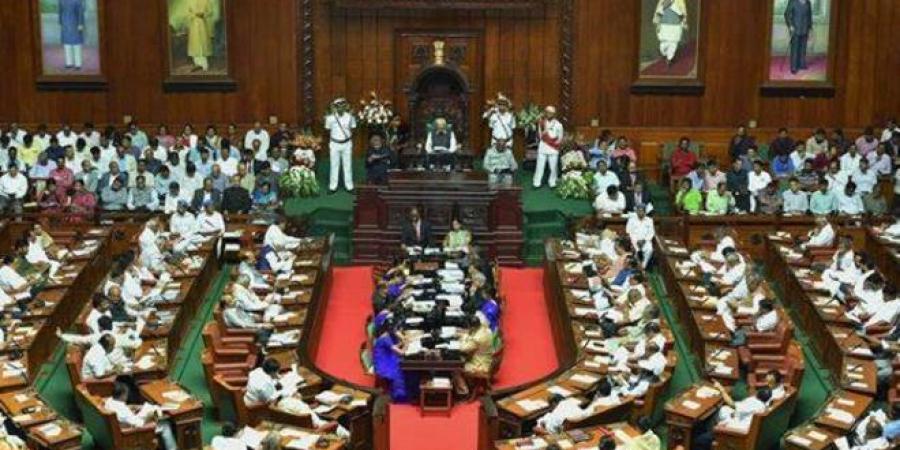
Bengaluru, Jan 29: A bill providing for imposition of penalty for contravention of rules under the Epidemic Diseases Act and for compounding of such offences was tabled in the Karnataka Assembly on Friday.
Besides, ten other bills, including one authorising the state government to investigate complaints in fraudulent transactions, were also presented.
The Karnataka Epidemic Diseases (Amendment) Bill, 2020, tabled by Health Minister K Sudhakar, considers it necessary to amend the act to make provisions for imposition of penalty for contravention of rules and regulation made under act and for compounding of such offences.
According to the bill, whoever contravenes the provisions shall be punished with such fine as may be prescribed in rules or in regulations, which may extend to Rs 50,000 or with imprisonment for a term which may extend up to three months or both.
The Karnataka Protection of Interest of Depositors in Financial Establishments (Amendment) bill, 2020 was tabled by Chief Minister B S Yediyurappa.
The bill to amend the act of 2004 in its statement of objective states that it is to authorise the government or the District Magistrate or public authorities to cause investigation on the complaint or fraudulent transaction and to empower the Revenue Secretary or any government authority to investigate.
It also seeks to empower the Secretary to government or competent authority with powers of civil court to summon persons and documents, and empowers the government to appoint a competent authority in cases pertaining to any financial establishment which is spread over in more than one district.
Among the other bills tabled today are Karnataka Municipalities and Certain Other Laws (Amendment) Bill, Karnataka Municipalities (Second Amendment) Bill, Karnataka Lokayukta (Third Amendment) Bill among others.
Let the Truth be known. If you read VB and like VB, please be a VB Supporter and Help us deliver the Truth to one and all.
TVK chief Vijay files nomination from Perambur in Chennai

Chennai (PTI): TVK chief, actor-politician Vijay on Monday filed his nomination to contest Assembly polls from Perambur constituency in Chennai.
This is the debut polls for Vijay and he has chosen to fight from Perambur in north Chennai, which has a sizable population of the working classes.