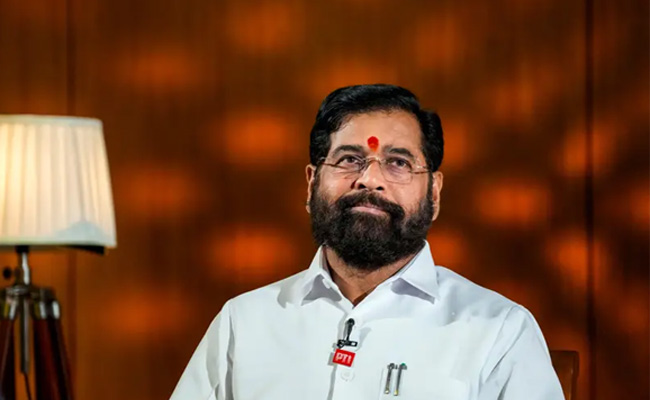
Eshwarappa quashes allegations of demanding commission from Hindu Yuva Vahini National Secretary
Says, my department never approved work he claims to have completed
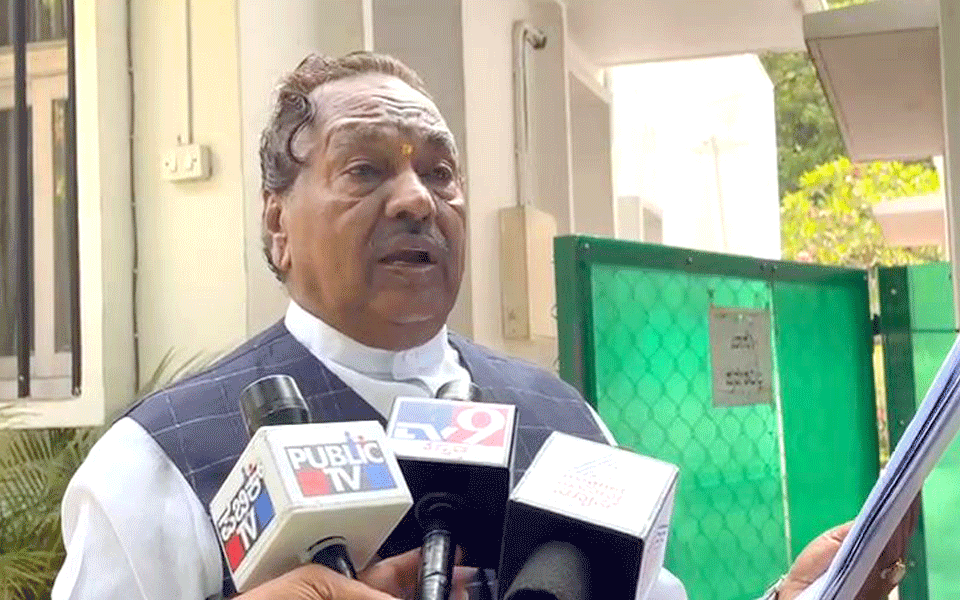
Bengaluru: Karnataka RDPR Minister K. Eshwarappa has said that he has filed a defamation case against the civil contractor and Hindu Yuva Vahini National Secretary Santhosh Patil who alleged that the minister was demanding commission for the payment of completed road works.
Reacting to the allegation labeled against him by Patil, the Minister said he did not demand a commission for releasing the payment of completed work and that the allegations made against him are fabricated.
“The allegation against me about having asked the commission to release the payment for the remainder of the completed work is fabricated. I have filed a defamation case against the Belagavi-based contractor and ‘Hindu Vahini’ National Secretary Santhosh. K. Patil who has made this accusation against me”, he informed.
Earlier on Monday, Patil wrote a letter to Prime Minister Narendra Modi seeking his intervention in the matter adding that he was under pressure from his creditors and if the issue is not resolved soon, he will have no options left but to commit suicide.
In his letter, Patil had alleged that Eshwarappa and his associates were demanding commission for releasing his payment of Rs. 4 crores for completed road work even after a year of completion of the work. He also alleged that the Minister was not releasing the work order for the same.
Eshwarappa however, has claimed that Patil had not sought any grant from his department and that the government had not approved any work that Patil claims to have completed.
“Santhosh K. Patil did not seek any grant from the Department of Rural Development and Panchayat Raj and the government did not provide approval to undertake the said work. The department had not issued any direction regarding this construction work and neither were the administrative grants given. Construction work as said by Santhosh K. Patil has not been implemented at the Hindalaga village. No government agency has provided technical grants or taken charge of this construction work. The department head has provided clarification that therefore, the matter of releasing funds does not arise”, Eeshwarappa said.
“It has come to my attention that on March 9, Santhosh K. Patil had fabricated allegations against me on TV. In the background of this, on March 10, I have registered a defamation lawsuit against Santhosh K. Patil at the 6th Main Metropolitan Court. He will be issued a notice tomorrow”, Eeshwarappa said.
He further added that Patil is not a BJP activist and that there is no connection between him and the party.
Responding to the question of the media, the Minister said, “I don’t know who is behind the conspiracy of accusing me of demanding commission. After contacting the party’s Belagavi District President today morning and inquiring, I learned that Santhosh K. Patil and BJP have no connection. He is not our activist or worker”, he said.
Let the Truth be known. If you read VB and like VB, please be a VB Supporter and Help us deliver the Truth to one and all.
Mohsin's fifer helps LSG restrict KKR to 155/7 despite Rinku's 83
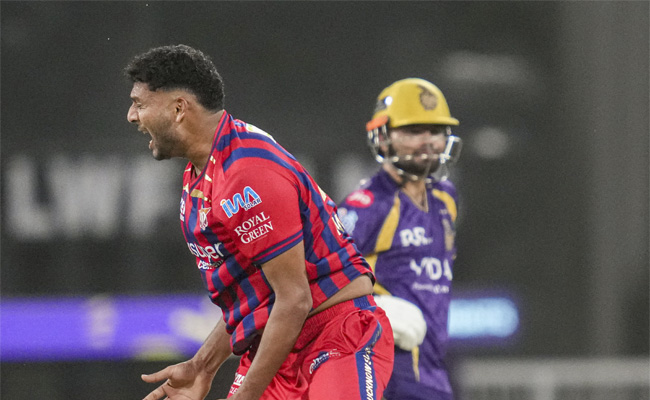
Lucknow (PTI): Lucknow Super Giants pacer Mohsin Khan added another sordid chapter to Kolkata Knight Riders' batting woes, taking five wickets to restrict the three-time champions to a modest 155 for seven in their IPL match here on Sunday.
Mohsin’s 5 for 23, a personal best for the left-arm pacer in this format, tore apart an already struggling KKR batting unit, as he snaffled the cream wickets of Ajinkya Rahane, Tim Seifert, Cameron Green, Rovman Powell and Anukul Roy.
Rinku Singh (83 not out, 51 balls) made a well-paced fifty and punished Mohammed Shami in the 19th over for 6, 4, 4 and the smoked four sixes in a row against spinner Digvesh Rathi as KKR made 43 runs in the last two overs to go past the 150-run mark.
But his fifty remained a lone act, as Mohsin firmly stood in the limelight.
His bowling ethos were rooted in simple tactics — bang the ball into the black soil pitch to gain bounce or use cutters at various pace to keep the batters guessing.
Mohsin, who started the night with a wicket maiden, showed his variety across two dismissals.
He followed Rahane with a fuller ball as the batter tried to go over the covers, but the ball’s trajectory forced the KKR skipper to just slice the ball up for a simple catch for Aiden Markram.
The 27-year-old stayed calm when Green, who looked comfortable out there while smashing George Linde for two successive sixes, slammed him for a huge maximum.
Two balls later, Mohsin dug one short, challenging Green (34) to go for the pull and the Australian all-rounder took the bait.
The into-the-body angle worked again as Green could only sky the ball to wicketkeeper Rishabh Pant.
Green’s ouster also ended a fifth wicket alliance worth 42 with Rinku Singh.
Bizarre dismissal of Raghuvanshi
=====================
If the existing turmoil was not enough, KKR had to bear the dejection of seeing Angkrish Raghuvanshi getting dismissed obstructing the field.
On the final ball of the fifth over from Prince Yadav, Raghuvanshi nudged one towards mid-on and set off for a single, only to be rejected by Green.
Raghuvanshi put in a dive to save himself but he came in the line of the throw from Shami.
Subsequently, third umpire Rohit Pandit accepted LSG’s appeal and decided that the batter’s turning radius was more than required, eventually resulting in the batter’s dismissal in a rare manner.