Ex-Karnataka CM Bommai demands immediate halt to release of Cauvery water to Tamil Nadu
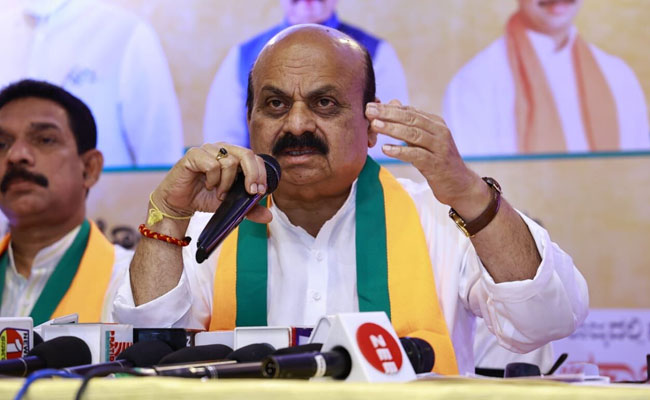
Bengaluru (PTI): Former Karnataka chief minister Basavaraj Bommai on Thursday demanded that the state government immediately stop the release of Cauvery river water to Tamil Nadu, file an appeal in the Supreme Court and fight a legal battle.
The BJP leader accused the Congress government of failing to protect the interests of farmers and the drinking water needs of people in Karnataka.
"The government has been faltering on the Cauvery issue since the beginning. Already about 15 TMC water, by way of releasing 10 thousand cusecs (cubic feet per second) water everyday, has been released as per the order of Cauvery Water Management Authority (CWMA) directive but yet no legal action has been taken against it," he alleged.
Bommai wondered as to what was the point of Deputy Chief Minister D K Shivakumar, who holds Water Resources portfolio, discussing with legal experts now when the government has already started releasing 5,000 cusecs of water daily on the instructions of CWMA.
An appeal against the previous order should have already been filed with the Supreme Court, which has not been done yet, he said.
"I demand that the release of water should be immediately stopped and an appeal to the Supreme Court should be filed and a legal fight should be initiated by making strong convictions. The Congress government has failed to protect the drinking water requirements of Karnataka state and the interest of the farmers," Bommai said.
Earlier, CWMA had ordered Karnataka to release 10,000 cusecs of water daily for 15 days. Karnataka later appealed to the authority against its order saying that there were inadequate rains in the watershed regions of Cauvery.
The CWMA ordered Karnataka to release water to ensure that 5,000 cusecs reaches Biligundlu in Tamil Nadu daily till September 12.
Let the Truth be known. If you read VB and like VB, please be a VB Supporter and Help us deliver the Truth to one and all.
Rickelton's ton in vain as SRH beat MI by 6 wickets
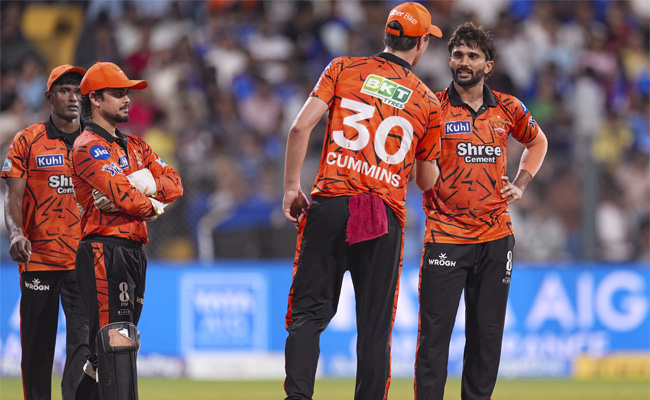
Mumbai (PTI): Ryan Rickelton's whirlwind unbeaten ton was overshadowed by Heinrich Klaasen's unbeaten 65 as Sunrisers Hyderabad defeated Mumbai Indians by six wickets in an IPL match here on Wednesday.
Chasing an imposing 244-run target, Travis Head (76 off 30) and Abhishek Sharma (45 off 24) shared 129 runs for the opening wicket to set the platform for SRH.
Klaasen (65 not out off 30 balls) then displayed his all-round hitting abilities to guide SRH home with the help of Nitish Kumar Reddy (21) and Salil Arora (30 not out off 10) in 18.4 overs.
Earlier, Rickelton's knock powered MI to 243 for five.
MI rode on a 93-run stand between Rickelton (123 not out off 55 balls) and Will Jacks (46 off 22) in 7.1 overs for the opening stand to power the side.
MI skipper Hardik Pandya scored a valuable 31 off 15 balls before being dismissed.
Praful Hinge (2/54), Eshan Malinga (1/29), Sakib Hasan (1/39) and Nitish Kumar Reddy (1/31) were the wicket-takers for SRH.
Brief Scores:
Mumbai Indian: 243 for 5 in 20 overs (Ryan Rickelton 123 not out; Praful Hinge 2/54).
Sunrisers Hyderabad: 249 for 4 in 18.4 overs (Travis Head 76, Heinrich Klaasen 65 not out; AM Ghazanfar 2/51).