Ex-PM Deve Gowda writes to PM Modi on plight of mango growers
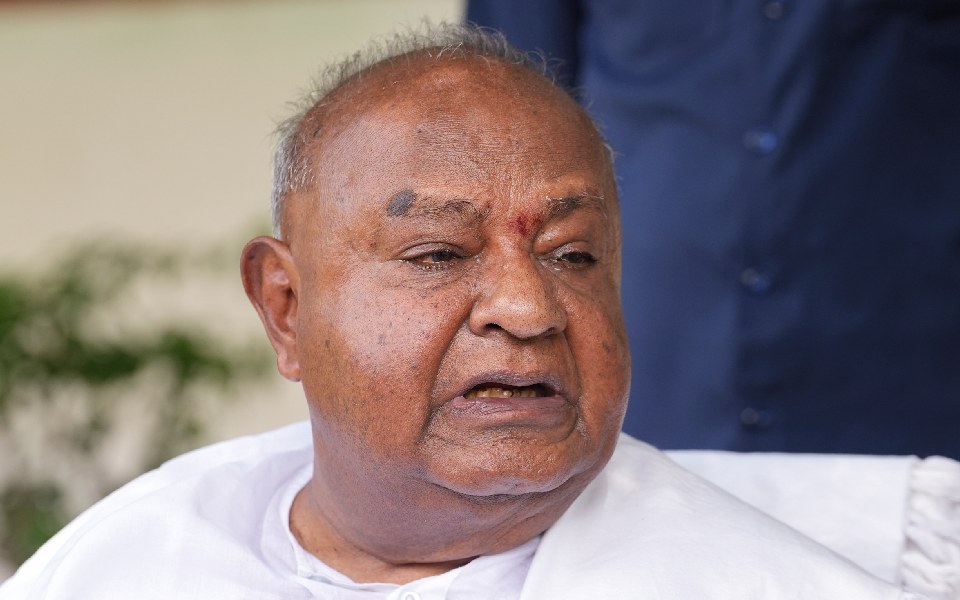
Bengaluru, Jun 22 (PTI): Former Prime Minister and JD(S) supremo H D Deve Gowda on Sunday sought PM Narendra Modi's intervention to rescue Karnataka farmers facing steep losses due to poor yield of mangoes, price crashes, and interstate trade disruptions.
In a letter to Modi, Gowda said that Karnataka, a major horticulture hub in the country, especially in the production of mangoes, is witnessing an unprecedented crisis.
He noted that mangoes are grown on 1.39 lakh hectares across districts like Bengaluru Rural, Urban, Chikkaballapura, Kolar, and Ramanagara, with an expected production of eight lakh to 10 lakh tonne during the Rabi season. However, this year, output has fallen by more than 70 per cent due to adverse weather and disease.
"The situation worsened between May and June when market arrivals surged, causing mango prices to plummet from Rs 12,000 per quintal to as low as Rs 3,000 per quintal--far below the cultivation cost of Rs 5,466 per quintal," he said.
Many small and marginal farmers are now unable to recover even their input costs, pushing them into distress and triggering protests in several districts.
The former prime minister also highlighted the additional blow to growers along Karnataka's border due to Andhra Pradesh banning the entry of Totapuri mangoes into its Chittoor district.
"This interstate restriction has disrupted the supply chain and aggravated post-harvest losses," he wrote, adding that the Karnataka Chief Minister and Chief Secretary have already raised the matter with Andhra counterparts, seeking a reversal of the ban.
Calling the situation dire, he urged PM Modi to immediately instruct central agencies like National Agricultural Cooperative Marketing Federation of India Ltd (NAFED) and National Cooperative Consumers Federation of India (NCCF) to begin mango procurement under the Price Deficiency Payment (PDP) and Market Intervention Scheme (MIS).
He suggested that procurement should be done directly from farmers and through Farmer Producer Organisations (FPOs) to ensure fair prices and prevent further rural distress.
The JD(S) patriarch expressed confidence that the Centre would extend timely support to safeguard the livelihoods of mango farmers in Karnataka.
He also wrote a similar letter to Union Agriculture Minister Shivraj Singh Chauhan.
Let the Truth be known. If you read VB and like VB, please be a VB Supporter and Help us deliver the Truth to one and all.
K’taka HC asks Centre to examine broadcasts, digital content on media trial against actor Darshan
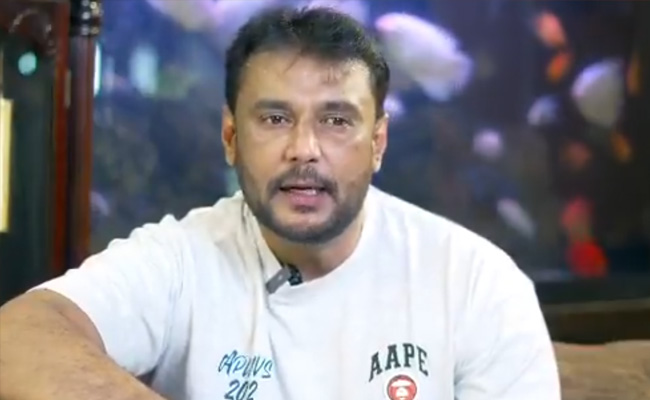
Bengaluru (PTI): The High Court of Karnataka has directed the Ministry of Information and Broadcasting and the Ministry of Electronics and Information Technology to examine broadcasts and digital content related to Kannada actor Darshan in connection with the Renukaswamy murder case.
It has also asked them to take necessary action if any violations of the rules are found.
Darshan and his friend, actress Pavithra Gowda, are among the 17 accused in the Renukaswamy murder case. He is currently lodged in jail under judicial custody.
“Respondent Nos. 1 and 2 (Ministries) are directed to forthwith examine the impugned broadcasts and digital content relating to the petitioner and the subject crime. Upon being satisfied that the same are violative of Rule 6 of the Programme Code framed under the Cable Television Networks (Regulation) Act, 1995, they shall take immediate action in accordance with Sections 19 and 20 of the Act,” Justice Sachin Shankar Magadum said in his order dated April 30, while partly allowing the petition.
“This may include regulating, suspending, prohibiting, or directing discontinuance of such telecast, broadcast, streaming, or dissemination, pending inquiry and final consideration of the complaint,” he added.
Darshan, in his petition, had claimed that he is aggrieved by a sustained and targeted media campaign in connection with the murder case.
He said that despite the trial being at a nascent stage, various television channels and digital platforms have indulged in media-driven adjudication, disseminating speculative narratives, selectively leaked materials, and unverified allegations, thereby shaping public perception and impairing the petitioner’s right to a fair trial.
Despite judicial interdictions, the petitioner alleged that the media continues to telecast content in violation of statutory provisions and binding court orders.
The court said the material placed on record, particularly the clippings produced, unfortunately, depicts a disturbing trend wherein the broadcast media has gone to the extent of recreating courtroom proceedings, with only the face of the presiding judge masked, while the faces of the accused and counsel are openly displayed.
Such programmes are telecast on every date of hearing, thereby converting pending judicial proceedings into a form of public spectacle, it said.
The judge said, “This Court cannot but observe that such conduct amounts to a calculated media-driven adjudication, fostering a parallel narrative and engendering prejudicial pre-trial publicity. The continued telecast of such content, in the teeth of subsisting injunction orders, reflects a blatant disregard for judicial authority and contributes to the creation of a ‘carnival atmosphere of justice.’”
By virtually staging courtroom scenes and projecting selective narratives, the media not only risks subverting due process but also erodes adjudicatory neutrality, impairing the petitioner’s right to a fair trial, he said.
The court further said that the material on record discloses violations of the Programme Code under the Cable Television Networks (Regulation) Act, the Contempt of Courts Act, and the Information Technology Act and Rules.
“The material on record discloses prima facie violations of statutory provisions and judicial orders. The ongoing media narrative poses a serious threat to the petitioner’s right to a fair trial under Article 21,” it said.
“Freedom of speech is a cherished constitutional value; however, when it degenerates into media-driven adjudication, it ceases to be a safeguard of democracy and becomes a threat to it,” the judge said.
“The press is a watchdog, but when it assumes the role of judge, jury, and executioner, the rule of law stands imperilled. Courts cannot permit the course of justice to be overshadowed by the glare of studio lights,” he added.
The court has also asked the ministries to examine the necessity of prohibition of broadcast, suspension or revocation of permissions or licences, imposition of penalties, and initiation of such further statutory proceedings as are permissible in law; to conduct an inquiry into the alleged violations of the Programme Code and pass appropriate orders.
It has directed them to file a compliance report before the court within twelve weeks.
The judge also stated that liberty is reserved to the petitioner to initiate appropriate proceedings under the Contempt of Courts Act, 1971, if so advised.