Expert committee finds major gaps in Bengaluru tunnel road project report

Bengaluru: A key initiative of Bengaluru’s proposed tunnel road project, backed by Deputy Chief Minister D.K. Shivakumar, has been called into question after a government-appointed expert committee identified serious flaws in its Detailed Project Report (DPR). The panel, constituted by the Karnataka Urban Development Department, said the DPR appeared to have been prepared hastily, with inadequate data and insufficient technical assessment.
Headed by Siddanagouda Hegaraddi, Executive Director (Civil) of the Bangalore Metro Rail Corporation Limited (BMRCL), the committee observed that the DPR relied on just four soil test points for planning the tunnel, according to a report published by The Hindu. The soil tests conducted are carried out in insufficient number for a project of this magnitude, as per the report. It also advised that the decision to locate one of the tunnel shafts inside the Lalbagh Botanical Garden be reconsidered, citing the ecological sensitivity of the area.
The report also pointed out major deficiencies in the traffic study and noted that the proposed tunnel would run almost parallel to the planned Namma Metro line along Bengaluru’s north-south corridor. The committee said that the justification for such an expensive infrastructure project could not be verified, without credible data on how many people would shift from private vehicles to public transport. It pointed out that, making its assumptions difficult to substantiate, the DPR did not include reliable peak-hour traffic data, modal share, or future projections.
The committee described the traffic studies as weak and noted that they were based on secondary information and assumptions and no field surveys were carried out to collect primary data. The committee further found that critical technical facts about mode-specific commuter distribution, predicted changes to BMTC buses, metro and suburban rail, and estimated lane requirements were missing from the study.
The DPR also lacked critical documents and studies about land acquisition plans, utility and tree relocation details, environmental and social impact assessments, disaster management and security plans, and pavement and drainage designs, according to the panel.
The committee observed inconsistencies in the proposed lane configuration. The DPR projected traffic demand only up to 2041, while it proposed a six-lane design intended for a 25-year horizon. The committee recommended either extending the projection period or adjusting the lane plan to match the available data.
The panel further cautioned that the placement of entry and exit ramps could worsen surface congestion, especially where tunnel traffic merges with existing junctions. It advised a minimum two-lane design for ramps and improvements in layout near Palace Grounds and Mehkri Circle.
Urban mobility expert Sathya Arikutharam, who compared the findings of the Directorate of Urban Land Transport (DULT) and the Urban Development Department’s expert panel, said both reached similar conclusions, that the tunnel project lacked a sound transport or environmental basis. He noted that DULT’s review in November 2024 had already warned that the proposed alignment did not align with the city’s Comprehensive Mobility Plan or Climate Action Plan. He had also advised exploring shorter tunnel segments instead.
The report also stated that the Bruhat Bengaluru Mahanagara Palike (BBMP) proceeded with commissioning the DPR before the Bengaluru Metropolitan Land Transport Authority (BMLTA) completed its review and ignored the warnings. Both DULT and the expert committee found that no primary traffic data or real-time surveys had been conducted.
Let the Truth be known. If you read VB and like VB, please be a VB Supporter and Help us deliver the Truth to one and all.
Lakhimpur Kheri violence case: SC expresses disappointment over non-production of witnesses in trial
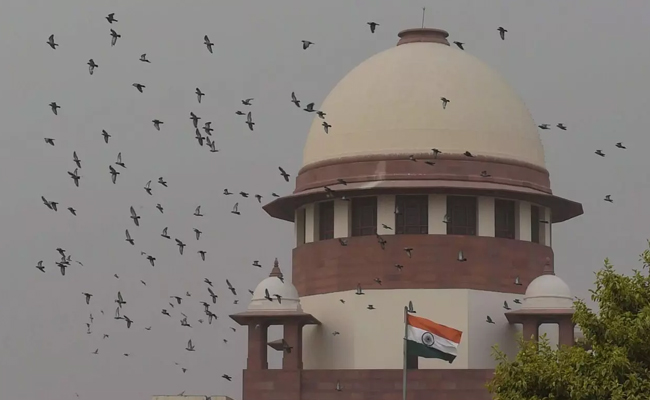
New Delhi (PTI): The Supreme Court on Friday expressed disappointment over the non-production of witnesses in the ongoing trial against Ashish Mishra, son of former Union minister Ajay Mishra, and others in the 2021 Lakhimpur Kheri violence case.
A bench of Chief Justice Surya Kant and Justice Joymalya Bagchi said the status report filed before it by the Uttar Pradesh government has not assigned any reason whatsoever for the non-production of witnesses.
It noted that no witnesses have been examined in the trial for the last two months.
"We direct the presiding judge to take lawful measures to secure the presence of witnesses," the bench said.
It asked the trial judge to make an endeavour to conclude the trial in a time-bound manner, and also to file a status report before it.
The trials in two cases related to the incident are going on before a court in Uttar Pradesh.
The bench noted that in the first case, out of 131 witnesses to be examined, 44 have been examined, 15 have been discharged and 72 are still to be produced.
In the second FIR, out of 35 witnesses, 26 have been examined and nine were left, it said.
Senior advocate Siddharth Dave, appearing for Ashish Mishra, said that as per the latest status report filed by Uttar Pradesh, 44 witnesses have been examined so far in the first FIR.
"No witnesses have been examined in the last two months," Dave said.
He argued that the last status report filed by the state in March also said that 44 witnesses had been examined.
"What have you done from March till today?" the bench asked the counsel appearing for Uttar Pradesh.
The state's counsel said that 3-4 witnesses were summoned for the recording of their deposition during the trial.
The bench said at least 7-8 witnesses should be summoned instead of three or four for a day, so that even if some of them do not turn up, the trial court could proceed with the recording of statements of those appearing before it.
The top court also wondered how official witnesses can remain absent during the trial.
"We are disappointed to note that the so-called status report does not assign any reason whatsoever for non-production of witnesses...," the bench said.
Advocate Prashant Bhushan, appearing for the relatives of the farmers who were allegedly mowed down in the incident, said the apex court will have to do something regarding the manner in which the trial was going on.
The bench noted that besides the two FIRs, another FIR was registered in October last year concerning alleged witness intimidation.
It said that, as per the state's status report, the chargesheet was filed against the main accused in that case.
The bench noted that the status report reveals that, as far as Ashish Mishra is concerned, his alleged role in the third case is still being investigated.
The top court directed the investigating officer of the third case to conclude the pending probe and ensure that the appropriate report is filed before the concerned court within four weeks.
The bench posted the next hearing in the Lakhimpur Kheri violence case for July.
On October 3, 2021, eight people, including four farmers, were killed in Tikunia in Lakhimpur Kheri district during a protest by farmers against Deputy Chief Minister Keshav Prasad Maurya's visit to the area.
Four farmers were mowed down by a sports utility vehicle. A driver and two BJP workers were then allegedly lynched by angry farmers. A journalist also died in the violence.
In one of the cases, the trial court in December 2023 framed charges against Mishra and 12 others for alleged murder, criminal conspiracy and under other penal laws in the case of the farmers' deaths, paving the way for the trial.