Extend GST compensation period else Karnataka will become revenue deficit state: G C Chandrashekhar
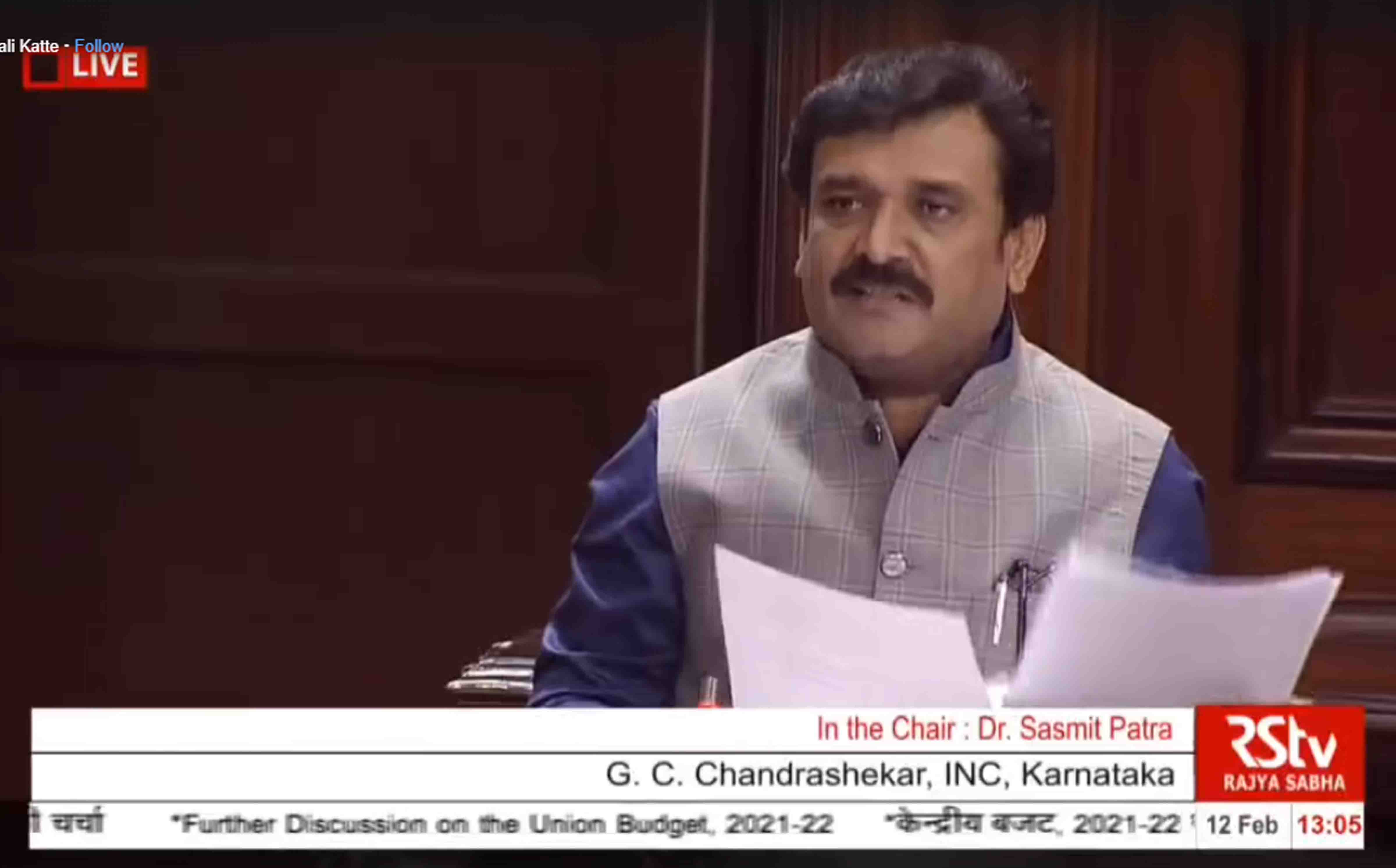
New Delhi, Feb 12: Karnataka - which is expected to have a debt of over Rs 4 lakh crore at the end of this fiscal year - will become a revenue deficit state if the Centre does not extend the GST compensation period, Congress MP G C Chandrashekar said on Friday in the Rajya Sabha.
Participating in a debate on Budget 2021, Chandrashekar pointed out that the GST compensation provided to Karnataka since 2018-19 was very low despite the state being the third highest tax generator in the country.
At the time of implementation of the Goods and Services Tax (GST) on July 1, 2017, the Centre had promised to compensate states for loss of revenue for five years at an agreed formula.
Chandrashekar said Karnataka is in a bad financial situation as its debt is rising every year and is expected to cross Rs 4 lakh crore this fiscal year from Rs 3.27 lakh crore in 2019-20.
The state's transportation department is struggling to pay salaries of its staff and could pay half salary in December 2020 and is yet to decide for January, he said, adding that in the current situation it can only afford fuel for buses.
Even the Bengaluru Metropolitan Transport Corporation (BMTC) is considering borrowing Rs 250 crore, while the transportation department has already mortgaged BMTC head office and is mulling mortgaging more assets, he added.
"If this situation continues and the GST compensation period is not extended, then Karnataka will move from revenue surplus state to revenue deficit state. Then money will have to be borrowed to pay salaries and administrative costs leaving development activities," Chandrashekar noted.
Expressing concern over low GST compensation given to Karnataka, the Congress leader said the state had contributed Rs 79,000 crore GST revenue in 2018-19 but in return got only Rs 10,754 crore as compensation. Similarly in 2019-20, the state contributed Rs 84,000 crore GST revenue and received Rs 16,628 crore compensation.
For 2020-21, the revised estimate shows GST compensation to Karnataka at Rs 7,900 crore, less than Rs 28,000 crore budgeted as GST divulsion, he said.
Further, he said the government has not given the special grant of Rs 5,495 crore for 2020-21 despite being recommended by the 15th Finance Commission to offset the losses.
While noting that the Centre has failed to fulfill the promises it made, the Congress leader said suburban rail project to ease Bengaluru traffic was announced in 2018 but work has not yet commenced. The promise of conducting banking exams in regional languages has also not been kept.
Let the Truth be known. If you read VB and like VB, please be a VB Supporter and Help us deliver the Truth to one and all.
Car driver alleges assault by auto drivers after minor road incident in Bengaluru
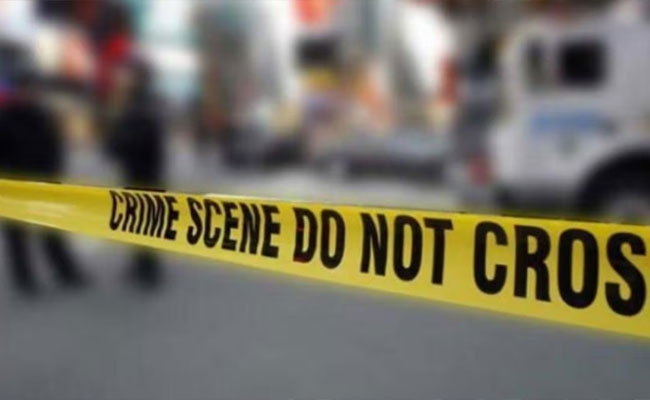
Bengaluru (PTI): In a suspected case of road rage, a car driver was allegedly chased and assaulted by two autorickshaw drivers following a minor road incident on Sarjapur Road here, police said on Monday.
The incident occurred on March 25 around 8.20 pm when Shriraj Bhardwaj, a native of Ajmer in Rajasthan, and his colleague were driving on Sarjapur Road and allegedly encountered an autorickshaw coming from the wrong side of the road, they said.
The victim later lodged an online complaint regarding the incident on March 26.
A senior police officer said that in this connection, a Non-Cognisable Report (NCR) has already been registered at the Bellandur Police Station and further investigation into the matter is underway.
Registration of NCR means the complaint has been noted in the station diary, but a formal FIR and investigation will require further legal steps or magistrate approval, police said.
Following the incident, Bhardwaj took to 'X', recalling the episode and claiming that it began with a negligible touch between the vehicles that caused no damage.
"What followed was not an argument, it was a chase. The auto driver started aggressively chasing us, trying to block our car multiple times in moving traffic, hitting the vehicle, and attempting to open the doors. We chose not to engage and instead tried to reach a safe place," he alleged.
According to him, the situation escalated when another autorickshaw joined the chase. Together, they allegedly blocked their path near Sarjapur Bridge, and one of them picked up a concrete stone and smashed the windshield of his car while they were still inside.
"We somehow managed to reach RGA Tech Park, thinking a gated office space would mean safety. It didn't. Both drivers followed us inside. Before I could even step out of the car, I was physically assaulted, repeatedly hit in the face, leaving me injured," he alleged.
"Only after things calmed down did the main accused flee. When the police arrived, the second driver apologised in front of them," Bhardwaj further alleged.
He said that following the incident, he has made up his mind to leave Bengaluru and never return.
Bellandur police said they have registered a non-cognisable report and traced the autorickshaw driver.
"The complainant is yet to record his statement for further action. We have been trying to contact him but he informed us that he is out of state. Further inquiry into the matter is underway," the officer said.
The auto driver, however, has alleged that his vehicle was damaged and that he was asking them to stop the car to resolve the issue, but they did not stop, which led to the incident.