Eyeing electoral foothold, AAP to field candidates in all 224 seats in Karnataka assembly polls
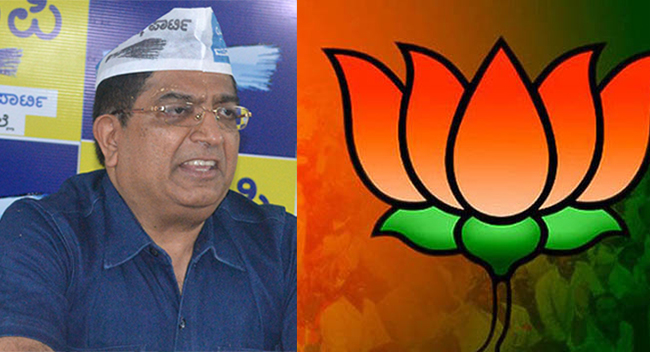
Bengaluru, Oct 30: The fledgling Aam Aadmi Party in Karnataka is aiming big in the upcoming state assembly election as it has decided to field candidates in all 224 constituencies with anti-corruption agenda as its main plank, a party leader said.
The AAP is already in the stage of finalising more than half of the candidates and intends to release its first list by the first week of January 2023, barely four months before the election.
Thereafter, the subsequent list of candidates will be announced.
"We have decided to contest in all the 224 constituencies. We have started our campaign in 170 constituencies of the state through Gram Sampark Abhiyan (village approach drive) and we are in the process of appointing people at the booth level in these 170 constituencies," party spokesperson and Karnataka AAP convener Prithvi Reddy told PTI.
According to him, there are 58,000-odd booths in the state and the party is "aggressively" appointing at least 10 workers in each booth.
"We are strengthening our party by working at the booth level. That's how we can fight against money and muscle power," Reddy explained.
These booth level workers have been assigned the task of raising issues concerning people in their area, Reddy said adding that the response AAP is getting is tremendous because people are already fed up with the rampant corruption in the state.
The AAP leader said all the three main political parties in the state have failed to check corruption and meet people's expectation.
Speaking about the prospects of winning in Karnataka, the AAP leader said the party is fighting the battle to win and it was hopeful that it will make its presence felt in the upcoming election.
"The AAP will be here to stay. We will either win now or in the next election. That's how we are approaching this election," Reddy said.
"We are not approaching people as the fourth party but as an alternative to the 'JCB'," Reddy explained.
The JCB is AAP's coinage for the three main political parties of Karnataka -- Janata Dal (Secular), Congress and the ruling Bharatiya Janata Party (BJP).
"As the JCB these days has become synonymous with demolition, the three main parties of Karnataka have demolished people's aspirations, their hard-earned income, the healthcare and education system, and the infrastructure," Reddy quipped.
The reach of the AAP so far is quite encouraging with 80 per cent of people recognising it and the biggest strength, according to Reddy, is coming from the smartphone users.
"People, especially the youth, who use smartphones know extensively about AAP and what it stands for. They are aware. Similarly, educated women are also rallying behind us," Reddy, who is also the AAP executive committee member, said.
The AAP leader said whenever the party volunteers approach people, they talk about the work that AAP has done in the field of education, hospitals, clean drinking water and electricity in Delhi under Chief Minister Arvind Kejriwal.
"People are already aware of our anti-corruption agenda. They especially refer to the one instance where the AAP's Punjab Chief Minister Bhagwant Mann sacked his minister for demanding one per cent commission on a contract," Reddy claimed.
The new kid on the block is pinning much hopes on the Gujarat assembly election results where, according to Reddy, the fight is neck-to-neck with the BJP.
If the party wins in Prime Minister Narendra Modi's home state of Gujarat, then the prospect of winning in Karnataka will brighten, the AAP leader said.
Let the Truth be known. If you read VB and like VB, please be a VB Supporter and Help us deliver the Truth to one and all.
CM Siddaramaiah alleges ‘criminal conspiracy’ in Sringeri recount, vows legal action
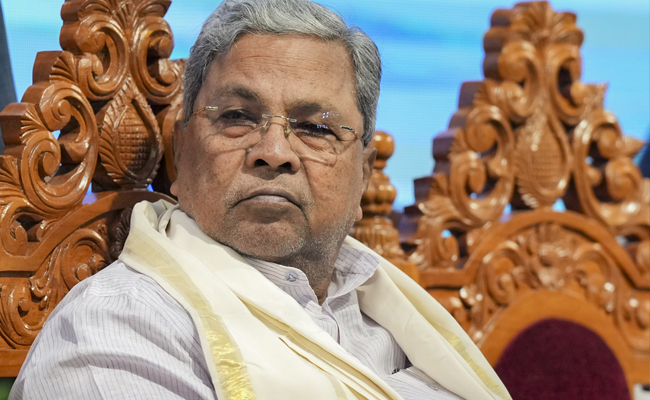
Bengaluru (PTI): Alleging a “criminal conspiracy” by BJP candidate D N Jeevaraj in the Sringeri Assembly poll recounting, Karnataka CM Siddaramaiah on Tuesday said the outcome was manipulated after valid postal ballot votes in favour of Congress leader T D Raje Gowda were tampered with during the recounting process.
Following a Karnataka High Court order on an election petition filed by Jeevaraj, challenging Raje Gowda’s election, the reverification and recounting were conducted on Saturday.
After the reverification and recount of postal ballots for the Sringeri Assembly constituency, votes polled in favour of Raje Gowda were reduced by 255, the returning officer said.
A report on the matter has been submitted to the Election Commission of India for further action, the officer added.
Congress leader Raje Gowda had won the 2023 Assembly polls from Sringeri by 201 votes, defeating his nearest rival Jeevaraj.
Addressing a press conference in Bengaluru, Siddaramaiah said the High Court had directed the recounting of postal ballots and that irregularities were noticed during the exercise conducted on May 2.
“This is a clear case of criminal conspiracy,” Siddaramaiah said, alleging that valid votes cast in favour of Raje Gowda were altered after being accepted by counting agents of all parties, including Congress, BJP, and JD(S).
He claimed that during the recounting of postal ballots, 255 votes were initially accepted as valid by all agents but were later tampered with by subordinate officials.
“There is a second mark on the votes polled in favour of Raje Gowda. They had accepted these as valid votes. Subsequently, another mark was made by officials. This is a clear case of criminal conspiracy,” he said.
When asked who was behind the alleged conspiracy, the CM replied, “It was hatched by Jeevaraj and others. It is planned.”
Siddaramaiah further alleged that the returning officer acted improperly by declaring the result despite the presence of an Election Commission observer during the recounting.
“Immediately after the counting, the returning officer announced the result. He should not have done so; this is against the law,” he said.
He pointed out that Raje Gowda had originally won by 201 votes, but after the recounting, the BJP candidate was declared the winner by 52 votes.
“The BJP has committed a criminal act of conspiracy. This is not vote chori but vote dacoity,” he alleged.
The CM said a police complaint had already been filed by Raje Gowda’s election agent, Sudhir Kumar, and emphasised the need for electoral integrity.
“We want transparency and free and fair elections. That is what our Constitution mandates,” he added.
Stating that the government would pursue legal remedies, Siddaramaiah said, “We are preparing an appeal challenging the returning officer’s announcement in a court of law.”
Responding to a separate query on elections in other states, the CM said there appeared to be an anti-incumbency factor in West Bengal, while results in Tamil Nadu were “surprising,” adding that Vijay’s party was emerging as the largest there.
Following the victory of party candidates in Bagalkote and Davanagere South, Siddaramaiah expressed confidence about future electoral prospects in Karnataka.
“Even in 2028, we will win the Assembly elections. We will come back,” the CM said.
Siddaramaiah added that he would order a forensic examination into the alleged tampering of postal ballots.