Farmer protests in Chamrajnagar intensifies, highway blocked, police detain protesters
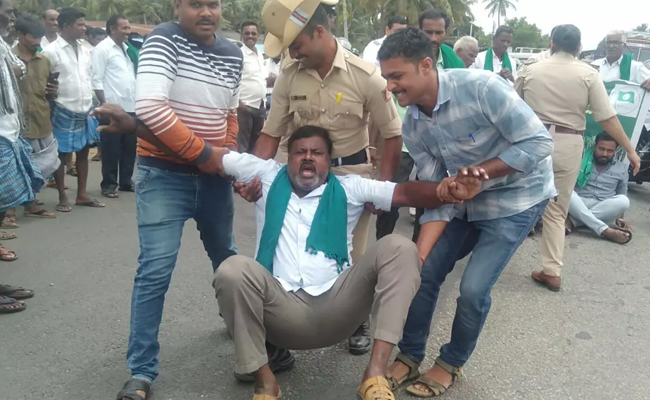
Chamrajnagar: In the backdrop of the Supreme court’s order to release Kaveri water to Tamil Nadu, the members of the Sugarcane Growers Association launched a protest in the city condemning the order. The protest which escalated led to the blockade of the highway near Somwarpet and leading to several detentions.
The protestors who gathered near the city’s tourist home, proceeded towards Somwarpet blocking the highway. Expressing agitation, they set fire to tires and shouted slogans against Tamil Nadu and state governments, leading the Police to detain the protesters.
Sugarcane growers association President Halkerehundi Bhagyaraj criticized the Supreme Court's verdict and termed it as condemnable, he further stated that, “There are even instances where former Chief Minister Bangarappa opposed the Supreme Court verdict. On this basis currently Karnataka should not discharge even one liter of water to Tamil Nadu even if the United Nations (UN) orders the state to release water.”
“Is it appropriate to order Karnataka to release water to Tamil Nadu when the state is grappling with drinking water scarcity? The state government must consider halting the water discharge to Tamil Nadu in any manner. If water is released, there will be disruptions such as blocking Tamil Nadu cinemas and vehicles from entering Karnataka. Water should not have been released to Tamil Nadu as per the all party policy. Failing which,” Bhagyaraj warned of violent protests in future.
Hali Nagaraju, Mahendra, Praveen, Doddaguru, Gurumallappa, Harisuthana Raju, Siddharaju, Basavarajappa, Nandish, Ravi, and several others joined the protest.
Let the Truth be known. If you read VB and like VB, please be a VB Supporter and Help us deliver the Truth to one and all.
ACP arrested in Mumbai for obscene act in front of nine-year-old girl; sent to judicial custody

Mumbai: An assistant commissioner of police was arrested by Worli Police in Central Mumbai under charge of flashing his private parts before a nine-year-old girl.
The arrested officer is reportedly under judicial custody, at present, according to a report by The Times of India.
The incident occurred in a garden on April 23, a police officer has said, adding that they arrested the ACP soon after the complaint was filed. So far, only one party has filed a complaint against the senior officer, the source has informed.
The senior officer has been charged with molestation and under the Protection of Children from Sexual Offences (POCSO) Act, the police officer said.
Further investigation of the case is underway.