Faulty auto-translation of Kannada on Meta platforms distorting facts: CM Siddaramaiah
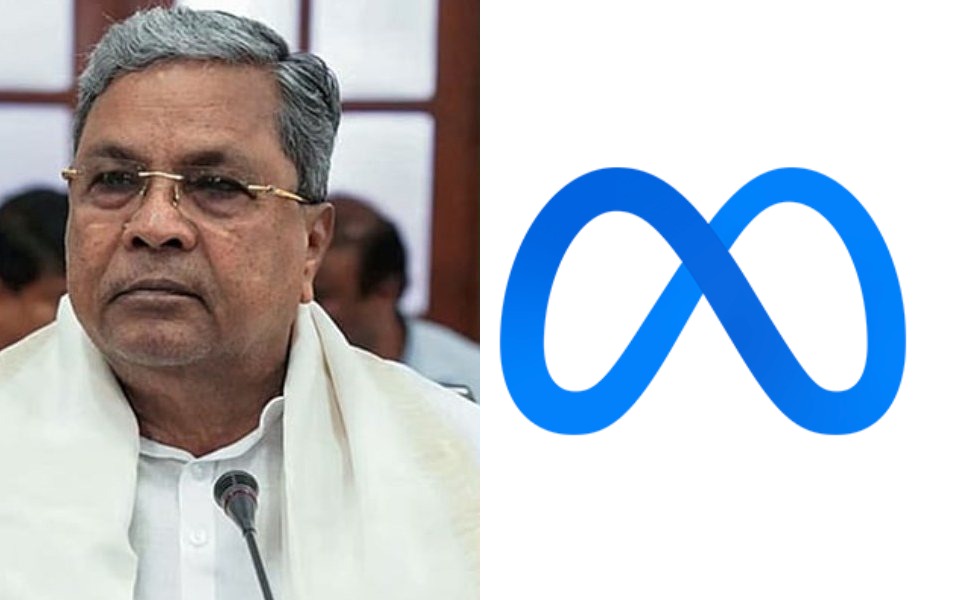
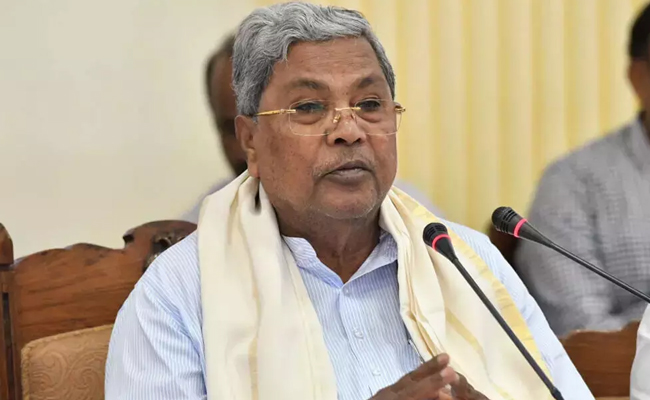
Bengaluru, Jul 17 (PTI): Karnataka Chief Minister Siddaramaiah on Thursday raised concerns over faulty auto-translation of Kannada content on Meta platforms such as Facebook and Instagram, stating that it is "distorting facts and misleading users". He said his media advisor has formally written to the company, urging immediate corrective measures.
Siddaramaiah said social media platforms must act responsibly, especially when dealing with official communication, and cautioned citizens to be aware that translations displayed on these platforms are often inaccurate.
"Faulty auto-translation of Kannada content on Meta platforms is distorting facts and misleading users. This is especially dangerous when it comes to official communication. My media advisor has formally written to Meta urging immediate correction," Siddaramaiah posted on 'X'.
"Social media platforms must act responsibly. I caution citizens to be aware that translations shown are often inaccurate. Such negligence by tech giants can harm public understanding and trust," he added.
In an email sent to Meta on July 16, the chief minister’s media advisor, K V Prabhakar, raised serious concerns on behalf of the CM regarding the automatic translation of Kannada content on Facebook and Instagram.
"We have noted with concern that the auto-translation from Kannada to English is frequently inaccurate and, in some cases, grossly misleading," Prabhakar wrote.
"This poses a significant risk, especially when public communication, official statements, or important messages from the chief minister and the government are incorrectly translated. It can lead to misinterpretation among users, many of whom may not realise that what they are reading is an automated and faulty translation rather than the original message," he added.
Given the sensitivity of public communication, especially from a constitutional authority like the chief minister, such misrepresentations caused by flawed translation tools are unacceptable, Prabhakar said.
"On behalf of the chief minister, we urge Meta to temporarily suspend the auto-translation feature for Kannada content until translation accuracy is reliably improved," he added.
The email also urged Meta to collaborate with qualified Kannada language experts and linguistic professionals to enhance the quality and contextual accuracy of translations between Kannada and English.
Faulty auto-translation of Kannada content on @Meta platforms is distorting facts & misleading users. This is especially dangerous when it comes to official communications.
— Siddaramaiah (@siddaramaiah) July 17, 2025
My Media Advisor Shri K V Prabhakar has formally written to Meta urging immediate correction.
Social… pic.twitter.com/tJBp38wcHr
Let the Truth be known. If you read VB and like VB, please be a VB Supporter and Help us deliver the Truth to one and all.
Two arrested in K'taka for assaulting minors, uploading CSAM content
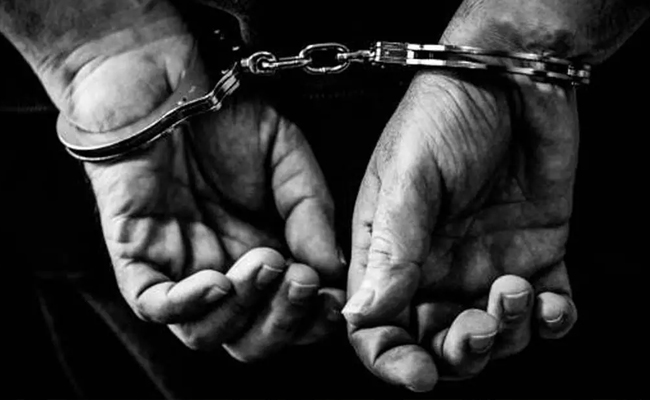
Bengaluru (PTI): Two men were arrested for allegedly sexually assaulting two minor girls, recording the acts on mobile phones and uploading the videos online as child sexual abuse material, police said on Thursday.
The accused have been identified as Kiran Kumar (29), hailing from Chitradurga district, and Aditya M K (20), hailing from Shivamogga district, they said.
A probe was initiated after information was received from the NCRP portal regarding a suspected instance of creation of Child Sexual Abuse Material (CSAM) for online dissemination, police said.
Accordingly, a case was registered at Kaggalipura Police Station under relevant sections of the IT Act on May 10, they added.
Investigation revealed that two minor girl victims were exploited and videos were created and uploaded to the internet. The child victims have subsequently recorded their statements as per procedure and further necessary legal steps have been taken, Pronab Mohanty Director General of Police, Cyber Command, said in a statement.
Based on the statements of the victims, the accused persons, who allegedly assaulted the minors, recorded the acts on mobile phones and uploaded the videos online, were arrested, he said.
Following the probe, sections 65(2) (rape) and 70 (gangrape) of the Bharatiya Nyaya Sanhita, along with relevant sections of the POCSO Act, have been added to the FIR, police said.
Officials collected relevant information and on May 12, arrested the accused persons and seized three mobile phones belonging to them, in which the videos had allegedly been recorded, he said.
The accused were later produced before the court and taken into police custody for further investigation, he added.
According to him, in CSAM cases, police usually apprehend offenders who have downloaded such content or have kept them in their possession after obtaining them from elsewhere, usually the internet.
"The present case is one of the very few instances where content creators and uploaders have been apprehended," Mohanty added.