File FIR on complaints about pothole accidents: Karnataka HC to Home department
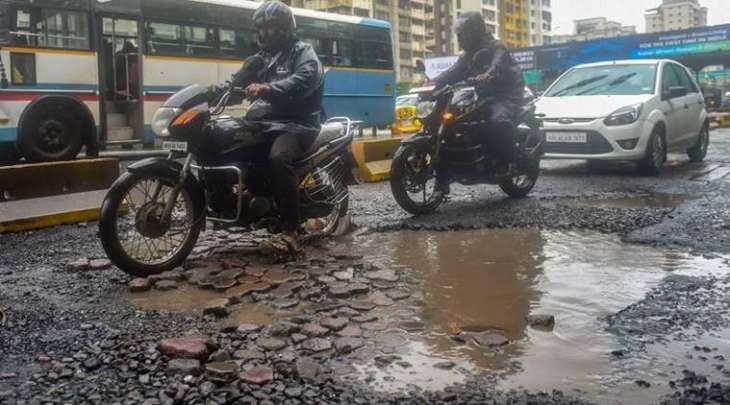
Bengaluru: The Karnataka High Court on Thursday directed the Home Department to register FIR on complaints regarding accidents due to potholes. The HC said when such complaints are received where accidents due to potholes have resulted in injuries or death, the police should not hide behind technicalities and immediately register FIRs.
The Division Bench of Chief Justice Prasanna B Varale and Justice Ashok S Kinagi was hearing a public interest litigation about the alleged failure of the civic authorities in filling up potholes on Bengaluru's roads. The HC also directed the petitioner to include the Home Department as a respondent in the case.
The HC said citizens who have met with accidents due to potholes can file a complaint in the police station and the police concerned will investigate the matter. The HC reiterated its earlier order directing the National Highways Authority of India (NHAI) to survey the pothole-filling exercise carried out by the Bruhat Bengaluru Mahanagara Palike (BBMP) in Bengaluru and file a report within eight weeks.
The BBMP was directed to provide NHAI with all the relevant documents. NHAI was directed to file its report before February 3 and the hearing of the PIL was adjourned to February 6. During the hearing of the PIL on Thursday, the 'American Road Transport Services' which had challenged the cancellation of its road-filling contract by the BBMP submitted that it was withdrawing its application. The court allowed it to do so.
Let the Truth be known. If you read VB and like VB, please be a VB Supporter and Help us deliver the Truth to one and all.
Man arrested with Rs 2.54-crore heroin in Mumbai

Mumbai (PTI): Police have arrested a man and seized over 500 grams of heroin worth Rs 2.54 crore in the illicit market from him in Mumbai, officials said on Friday.
The police's Anti-Narcotics Cell (ANC) made the drug seizure in Santacruz in the western suburbs. The operation was conducted by the Kandivali unit of the ANC on Thursday as part of a special crackdown against drug trafficking in the area, they said.
Acting on specific inputs, an ANC team conducted a raid in Santacruz (East) and intercepted a man. During a search, the team recovered 508 grams of high-grade heroin from his possession, an official said.
The seized contraband, a highly addictive, opioid drug derived from morphine, is estimated to be worth Rs 2.54 crore in the international market, he informed.
Following the seizure, a case was registered against the man under relevant sections of the Narcotic Drugs and Psychotropic Substances (NDPS) Act, 1985, and he was formally placed under arrest in the early hours of Friday.
The police are currently investigating the source of the drug and trying to identify the intended recipients of the consignment, he said.