FIR to be registered against those driving beyond 130 kmph anywhere in Karnataka from Aug 1
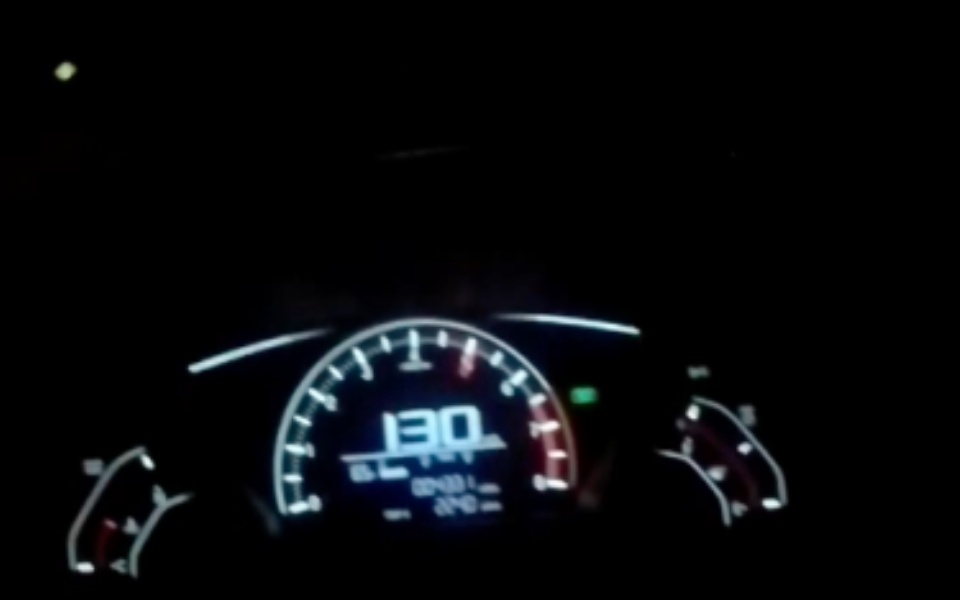
Bengaluru, Jul 29: FIR would be registered against those driving beyond 130 kilometres per hour anywhere in Karnataka from August one, a senior traffic police official said on Monday.
According to him, over-speeding causes about 90 per cent of fatal accidents in the state.
Citing data, the Additional Director General of Police (Traffic and Road Safety) Alok Kumar said 155 persons sped at more than 130 kmph on Bengaluru-Mysuru Highway on July 25.
"From August 1, FIR will be registered against those driving vehicles above 130 kmph anywhere in Karnataka for rash and dangerous driving," he said.
Speaking to PTI, Kumar explained that under Bharatiya Nyaya Sanhita (BNS) - 281 for rash and negligent driving, once the speed limit is beyond 120 Kmph, it becomes rash or dangerous driving.
Recalling an accident on a NICE (Nandi Infrastructure Corridor Enterprise) road earlier this month, he said three people were killed in the mishap and the offending vehicle involved in it was being driven at a speed of 160 kmph.
According to him, the Supreme court monitoring committee on road safety took note of the accident and informed the State government that over-speeding is rampant and it is leading to loss of lives.
"In the year 2022, 90 per cent (accident) deaths in Karnataka were attributed to high speed (over-speeding). Of late, the Supreme Court monitoring committee asked us to make effective enforcement with regard to this. In this direction, we came up with this (registration of FIR against those speeding above 130 kmph). Enforcing it would be a real challenge but we will try to do it," he said.
He said the new rule will be applicable to all the roads and not be only limited to highways.
"For instance, we have speed laser guns installed all along the Bengaluru-Mysuru Highway which record vehicle speeds even at night and Automatic Number Plate Recognition Cameras along the highway help us in recording pictures of over-speeding vehicles, along with their speeds. So, it would be easier for us to record and book them (violators)," Kumar said.
"In other cases too, we are using speed laser guns. We have distributed 155 speed laser guns. Day time, it is easier to record but at night, using it manually becomes slightly challenging," he noted.
According to him, the speed limit on national highways across the country as of now is 100 kmph while the state and other highways have lower speed limits. On Expressways, the speed limit is 120 kmph which is the maximum speed limit any vehicle can be driven in the country.
Let the Truth be known. If you read VB and like VB, please be a VB Supporter and Help us deliver the Truth to one and all.
Man arrested with Rs 2.54-crore heroin in Mumbai

Mumbai (PTI): Police have arrested a man and seized over 500 grams of heroin worth Rs 2.54 crore in the illicit market from him in Mumbai, officials said on Friday.
The police's Anti-Narcotics Cell (ANC) made the drug seizure in Santacruz in the western suburbs. The operation was conducted by the Kandivali unit of the ANC on Thursday as part of a special crackdown against drug trafficking in the area, they said.
Acting on specific inputs, an ANC team conducted a raid in Santacruz (East) and intercepted a man. During a search, the team recovered 508 grams of high-grade heroin from his possession, an official said.
The seized contraband, a highly addictive, opioid drug derived from morphine, is estimated to be worth Rs 2.54 crore in the international market, he informed.
Following the seizure, a case was registered against the man under relevant sections of the Narcotic Drugs and Psychotropic Substances (NDPS) Act, 1985, and he was formally placed under arrest in the early hours of Friday.
The police are currently investigating the source of the drug and trying to identify the intended recipients of the consignment, he said.