Four defiant Cong MLAs absent themselves from assembly
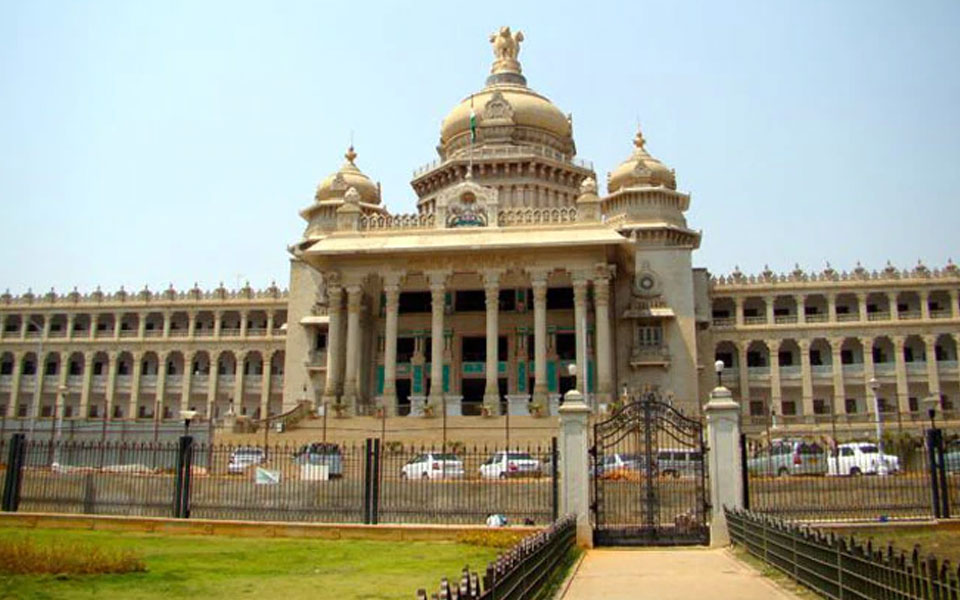
Bengaluru, Feb 6: Striking a defiant note, the four Congress MLAs who had failed to turn up at the January 18 CLP meeting, remained absent on the first day of the Karnataka assembly session, which began here Wednesday.
The MLAs Ramesh Jarkiholi, Mahesh Kumtalli, Umesh Jadhav, and Nagendra did not ascribe any reason for not attending the opening day's session.
On Tuesday, a whip had been issued to all MLAs of the ruling JDS-Congress coalition to be present in the assembly on all days of the budget session.
The whip was seen as a move by the ruling coalition to pre-empt any plans of disgruntled Congress MLAs on the radar of BJP to stay away from the assembly and pose a threat to the stability of the government.
Meanwhile,former chief minister and Congress Legislature Party leader Siddaramaiah served a second notice to the MLAs who did not turn up for the CLP meeting.
While the first notice was served on January 28, the second was given on Monday.
"Yes, Siddaramaiah has served notices on the four Congress MLAs," said a source close to the Congress leader.
Siddaramaiah noted that despite the earlier notice served to them, seeking an explanation for failing to attend the CLP meeting, the MLAs had not turned up.
"Even though nine days have passed (since the first notice was served), you did not give any explanation about your absence.
Hence you are directed to meet me at the CLP office before or during the assembly session on February 6 and give your explanation," Siddaramaiah said in a letter to Mahesh Kumtalli.
"The contents of the letters to other three MLAs is identical," said a source in Congress.
The four MLAs were allegedly upset with the party for not being inducted into the Kumaraswamy cabinet.
Ramesh Jarkiholi remained inaccessible to party leaders and had his mobile phone was switched off.
The Congress-JD(S) coalition government had received a setback on January 15 when two independent MLAs H Nagesh and R Shankar withdrew support to the Kumaraswamy government.
Dealing a further blow to Congress, reports emerged that at least 20 Congress MLAs too had gone missing just around the time when 104 BJP MLAs were huddled in a resort in Gurugram.
Congress and the JD(S) had alleged that the BJP indulged in horse trading to pull down the government.
Congress had, however claimed that all its MLAs were intact and nobody would defect.
To substantiate its claim and to put up a show of unity to allay doubts, the Congress decided to convene a meeting of fits MLAs on January 18.
However, the four MLAs did not show up.
Let the Truth be known. If you read VB and like VB, please be a VB Supporter and Help us deliver the Truth to one and all.
Metro ridership in Haryana sees over 13 pc rise in 2025-26
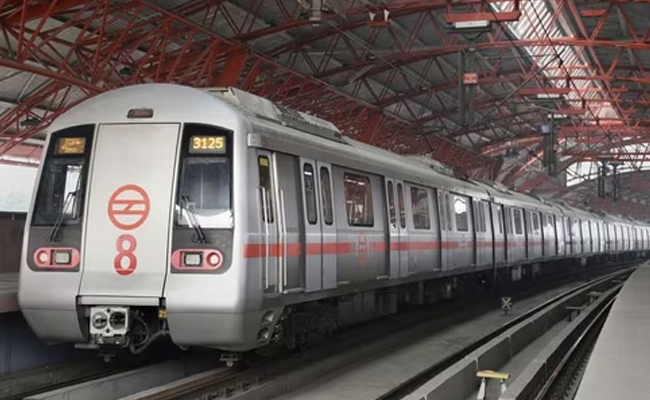
Chandigarh (PTI): Haryana's urban transit system witnessed a strong growth in 2025-26, with metro ridership registering a robust 13.55 per cent increase, the state government said in a statement on Thursday.
The progress was reviewed in the 64th board meeting of Haryana Mass Rapid Transport Corporation (HMRTC) chaired by Chief Secretary Anurag Rastogi.
Between April 2025 and February 2026, the metro network recorded over 1.74 crore passengers, compared to 1.53 crore in the corresponding period the previous year.
July recorded the highest monthly growth at 22.93 per cent, while all months showed consistent positive trends.
Financial performance has also remained strong, with fare revenue rising 12.64 per cent till January 2026, the statement said.
Non-fare revenue surged by 108 per cent, driven by effective monetisation of station spaces, advertisements and commercial activities, resulting in an operating surplus for Rapid Metro.
Further initiatives, including the auction of station naming rights and additional advertisement sites, are expected to strengthen HMRTC's financial position, the statement said.
Appreciating the performance, Rastogi stated that the consistent rise in ridership and revenue reflects the success of Haryana's integrated transport strategy, rising commuter confidence and a clear shift towards public transport.
HMRTC Managing Director Chander Shekhar Khare said that, alongside operational gains, the state is making steady progress on an ambitious pipeline of metro and regional transit projects.
Metro connectivity from Gurugram Sector 56 to Panchgaon is under active consideration, with Haryana State Industrial and Infrastructure Development Corporation Limited studying the Detailed Project Report (DPR) and layout plan, and finalising a depot location in Sector 36A near Sihi village, he said.
The Gurugram-Faridabad Namo Bharat corridor has achieved a key milestone, with alignment and station locations finalised and approved by the Haryana government. The National Capital Region Transport Corporation is preparing the DPR, he added.
Similarly, the Delhi-Kundli metro extension is proposed to be placed before the Haryana Cabinet for approval.
The 136.3-kilometre Delhi-Panipat-Karnal RRTS Corridor has also progressed, with the revised DPR submitted for financial concurrence ahead of Haryana Cabinet consideration.
Within Gurugram, DPR preparation has been approved for key intra-city corridors, including the 17.09-kilometre Bhondsi-Subhash Chowk-Rajeev Chowk-Sohna Chowk Railway Station corridor, enhancing connectivity along Sohna Road, Khare said.