Foxconn plans to start manufacturing iPhones at Bengaluru plant by April 2024: Minister M B Patil
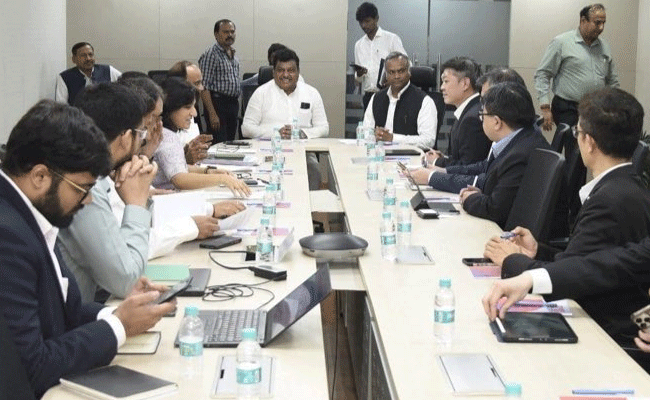
Bengaluru(PTI): Tech giant Apple's contract manufacturer Foxconn has plans to start manufacturing iPhone units at its proposed Devanahalli plant near here by April 2024 and the state government would hand over required land for the company by July 1 this year, Karnataka Large and Medium Industries Minister M B Patil has said.
He stated this after a meeting with the representatives of the company who met him as part of a courtesy visit on Thursday. State IT/BT Minister Priyank Kharge was also present.
With this, the new government has speeded up the process of the Rs 13,600 crore project that is expected to create 50,000 jobs, an official release said.
"The identified 300 acres of land at ITIR (Information Technology Investment Region) of Devanahalli would be handed over by July 1, 2023. Along with this, the government would ensure providing 5 million litres per day (MLD) of water, quality power supply, road connectivity, and other infrastructure facilities," Patil said.
"The company has been asked to provide the details of the skill sets it seeks in employees. Accordingly, steps will be taken to facilitate training programmes for eligible candidates to make them employable," he said.
The Taiwan-based global company has already paid 30 per cent of the cost towards the land (Rs 90 crore) to Karnataka Industrial Areas Development Board (KIADB), the release said.
It has set a goal of completing the project in three phases and also targeted manufacturing 20 million units (2 crore units) annually from the plant after the completion of all three phases, it added.
Huge boost for Karnataka with Foxconn’s Project Elephant.
— Priyank Kharge / ಪ್ರಿಯಾಂಕ್ ಖರ್ಗೆ (@PriyankKharge) June 1, 2023
They will set up an iPhone assembly plant with an investment of $ 1.7 Bn & will generate 50,000 jobs.
The proposed annual capacity up to 20 million smartphone units per annum.@CMofKarnataka @DKShivakumar pic.twitter.com/kQAuoIPhbI
Let the Truth be known. If you read VB and like VB, please be a VB Supporter and Help us deliver the Truth to one and all.
UDF will have huge win in Kerala, NDA won't open its account: Cong leader Satheesan
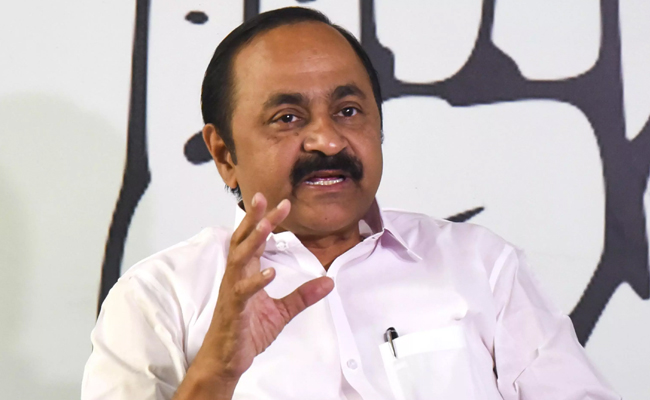
Kochi (PTI): Senior Congress leader V D Satheesan on Friday expressed confidence in a huge win by the UDF, claiming it will make a clean sweep in five districts, and brushed aside speculations that the NDA will open its account in Kerala.
Satheesan, speaking to reporters here a day after the conclusion of the Assembly polls, praised the performance of the UDF leaders and workers during the election, saying it was the best ever he has seen in the last 30 years.
He said that his claims of the UDF getting over 100 seats is not a mere statement, but based on the work the front has done during the last five years to bring back all those who had left it in 2005 and as a result, there was a huge wave in its favour in the state.
The leader of opposition in the state assembly, who contested from the Paravoor constituency, further said that the Congress-led front also had a major social backing from minorities and marginalised groups in the society.
Besides that, there was an anti-incumbency feeling among the people who were disappointed with the LDF rule, he claimed and said that the UDF provided them with a hope and an alternative which no other opposition had done in the past.
"All these factors will contribute to a huge win for the UDF and it would not be surprising if we make a clean sweep in Malappuram, Wayanad, Ernakulam, Idukki and Pathanamthitta districts. That is a total of 43 seats," he said.
According to him, the polling percentage increased because the UDF got people added to the electoral list.
He also brushed aside the LDF remarks about a woman or youth CM, saying that "they can make such statements now as they know they cannot win".
"Otherwise, why did they campaign with Pinarayi Vijayan as the main factor. Why did they say a third Pinarayi rule will come?" he asked.
He also claimed that the LDF's decision to spend government money on its political campaign, by putting up hoardings and carrying out social media programmes to sway voters, has also backfired as people realised that their taxes were being wasted like that.
Asked whether the NDA will open its account, especially in areas where the UDF claimed the BJP-led front had made a deal with the LDF, Satheesan replied in the negative.
He said that as of now he does not see any chance of the NDA opening its account in the state.