From apps to social media influencers, EC set for vigorous drive to increase voter turnout in K'taka
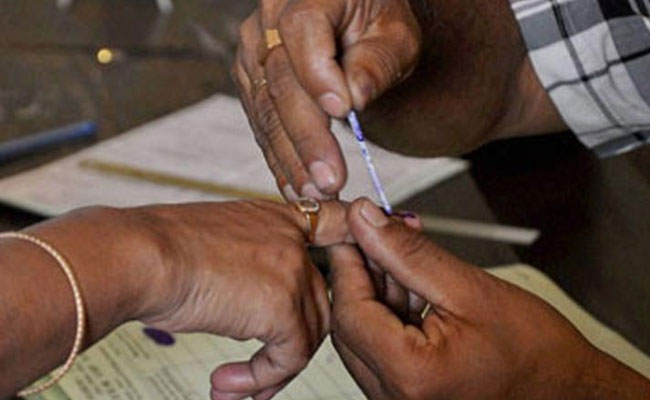
Bengaluru (PTI): Encouraging the public to use various apps to putting QR codes on voter slips to locate polling booths, the Election Commission is coming out with several initiatives to increase turnout in the coming Lok Sabha elections in Karnataka leveraging technology, EC officials said on Tuesday.
Voter Helpline, 'Know Your Candidate' and updating details about number of voters in queue and kind of parking facilities available at polling booths and an elaborate booth election management plan are among the other measures being taken.
The EC is also collaborating with social media influencers to encourage people to cast their ballot.
Celebrities like head coach of Indian cricket team Rahul Dravid, Jnanpith awardee Dr Chandrashekhara Kambar and Paralympian Girish Gowda are the State election icons.
The general elections in Karnataka will be held in two phases on April 26 and May 7 for its 28 constituencies.
Chief Electoral Officer Manoj Kumar Meena told PTI that out of the 58,834 polling booths, the EC has identified nearly 5,000 polling booths especially those in the urban and Kalyana Karnataka region of the state which have seen very low voting percentage in the previous elections.
According to the final electoral roll 2024 published on March 16, there are a total of 5,42,08,088 electors in Karnataka. There are 2,71,21,407 male voters, 2,70,81,748 female voters and 4,933 third gender voters. As many as 11,24,622 voters are in the 18-19 age group, 6,12,154 are PwD voters and 46,412 are service voters.
Citing the Karnataka Assembly elections held last year, he said the state recorded around 73 per cent voting but in urban areas like those coming under Bruhat Bengaluru Mahanagara Palike where there are 28 Assembly seats, the voting percentage was around 54 per cent almost 20 per cent below the state average.
Some constituencies in the Kalyana Karnataka region also saw the turnout below the state average.
ALSO READ: 3 men arrested for assaulting shopkeeper over playing loud music in Bengaluru
Referring to the voter turnout in the 2019 Parliamentary elections, he said the national average was 66 per cent and in Karnataka, it was 68 per cent; around 20 constituencies were above the national average and eight below it.
"So, we have analysed all these things and identified those polling booths - those constituencies which are below national average and those Assembly segments which are below state average and polling booths which are below the average in the Assembly polls. So, all that analysis has been done and our team went to all these polling stations and tried to find out what were the reasons...Why people were not coming out to vote," he said.
To increase voting percentage in such booths, Meena said they have also prepared an elaborate booth management plan to reach out to those people.
"In urban constituencies, need for better facilities for polling was seen, in Kalyana Karnataka region, migration was a major reason for low voter turnout. So, we actually convinced family members to call those outside the state and encouraged them to come to their hometowns just to cast votes," he said.
Elaborating, Meena said: "The booth election management plan contains details about number of young, women, service, elderly, disabled voters, polling stations and whether all facilities are available in these booths or not, details about the voting percentage in the previous elections, what people are saying why they did not vote, what they want, what should be done to enhance the voter percentage. That plan is already ready."
Citing analysis, he said there are 43 such urban Assembly constituencies (out of a total of 224) which witnessed voting percentage below the state average, "We have made an elaborate plan as per what we found out."
Mentioning a few, Meena said suppose if a voter goes to the polling station and needs to wait, there should a place to wait...facility to sit, considering elections will be in summer (April-May), there should be some shade or tent put up, fans arranged, clean potable drinking water facilities and separate toilets for male and females.
"We would be putting QR codes on the voter slips just like how we did for the recently held Bengaluru teachers constituency election. We got a good response. Mostly in urban areas, people usually don't know where their polling stations are. So, you need to just scan this QR code and using Google maps, you will reach the exact location of your polling booth."
The EC in Karnataka is also keen on promoting features of 'Chunavana' mobile application through which the Booth Level Officers would update details about the number of people in queue at their respective polling booths so that sitting at home, people can prioritise the time period when they would want to go to cast their vote.
The app will also give details about the nearest parking facilities available at respective booths.
"The idea is to facilitate people to decide if they need to come on a two-wheeler or a car as per the parking space available at their respective booths. As far as possible, they should be comfortable," he said.
"We will also provide facilities in case wheelchairs are required, information on braille, a magnifying glass, a sign language interpreter if needed at booths and also facilities for any medical emergency," he said.
For the first time in Lok Sabha elections, people above 85 years of age and those with more than 40 per cent disability will be able to cast their votes from home, according to the EC.
"We are hoping that because of these improvements in services, we would be able to enhance voting percentage this time," he added.
Let the Truth be known. If you read VB and like VB, please be a VB Supporter and Help us deliver the Truth to one and all.
Man arrested with Rs 2.54-crore heroin in Mumbai

Mumbai (PTI): Police have arrested a man and seized over 500 grams of heroin worth Rs 2.54 crore in the illicit market from him in Mumbai, officials said on Friday.
The police's Anti-Narcotics Cell (ANC) made the drug seizure in Santacruz in the western suburbs. The operation was conducted by the Kandivali unit of the ANC on Thursday as part of a special crackdown against drug trafficking in the area, they said.
Acting on specific inputs, an ANC team conducted a raid in Santacruz (East) and intercepted a man. During a search, the team recovered 508 grams of high-grade heroin from his possession, an official said.
The seized contraband, a highly addictive, opioid drug derived from morphine, is estimated to be worth Rs 2.54 crore in the international market, he informed.
Following the seizure, a case was registered against the man under relevant sections of the Narcotic Drugs and Psychotropic Substances (NDPS) Act, 1985, and he was formally placed under arrest in the early hours of Friday.
The police are currently investigating the source of the drug and trying to identify the intended recipients of the consignment, he said.