Ganesha idols in Karnataka likely to see 20% hike in prices; Here's why
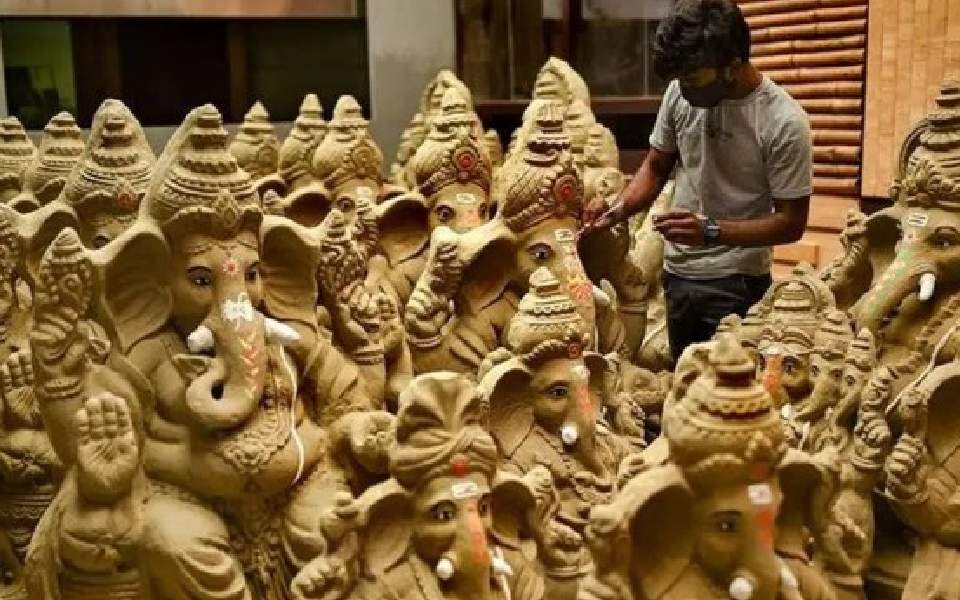
Bengaluru: A shortfall in the supply of high quality clay in the city is expected to cause a 15-20 per cent hike in the price of idols for this year’s Ganesha festival, proving a problem for devotees.
The artists have said that clay, which is used to prepare the idols, is supplied from lakes and riverbeds in and around Bengaluru and Bengaluru South (Ramanagara) districts has become highly expensive. They have also attributed this to the rivers and lakes filling up to at least 50 per cent of their capacity as a result of the heavy rainfall so far, Times of India has reported.
Explaining that they used to get quality clay during an ebb in the water levels of rivers and lakes, an idol maker from Tumakuru, Suresh, said that they are unable to do so this year as the water bodies still contain a considerable amount of water. He added that they are now getting clay supplies from other places like Hoskote, Bagaluru, Malur and Kannur.
Further, the idol makers have been looking for sources outside Karnataka to get the raw material. Shivanand, another idol maker, said that they are forced to do so since the local clay is of poor quality, which might also result in the idols developing cracks once the clay dries.
Shivanand said that they have ordered for clay from the Gangetic plains of Uttar Pradesh and West Bengal., which is of high quality, and the artists are also assured that the quality of the idols is good.
Referring to the use of the clay from UP and West Bengal, he said that the idols are first made with local clay and paddy husk and then coated with the clay from the Gangetic plains.
Let the Truth be known. If you read VB and like VB, please be a VB Supporter and Help us deliver the Truth to one and all.
V.D. Satheesan elected as new Chief Minister of Kerala
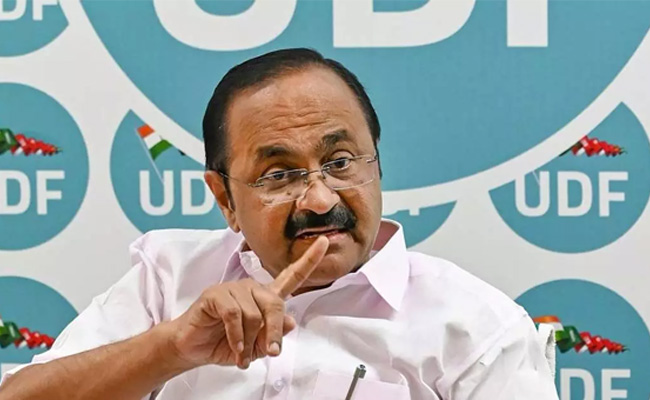
Thiruvananthapuram (PTI): Celebrations erupted across Kerala on Thursday after V D Satheesan was selected by the Congress High Command as the next Chief Minister of the state.
Satheesan was at the Contonment House in Thiruvananthapuram, the official residence of the Leader of the Opposition, when AICC leaders announced it in New Delhi.
Soon after the announcement, jubilant Satheesan supporters burst firecrackers and distributed sweets in several parts of the state.
Paravur in Ernakulam district, the Assembly constituency he has represented since 2001, witnessed large-scale celebrations.
Satheesan was widely seen as the frontrunner for the post, with UDF allies also backing his candidature during the selection process.
As the Leader of the Opposition in the outgoing Assembly, he led the UDF both inside and outside the House.
Apart from Satheesan, senior Congress leader Ramesh Chennithala and Congress MP K C Venugopal were also considered for the post.