Gauri murder case accused one of two Kalburgi killers?
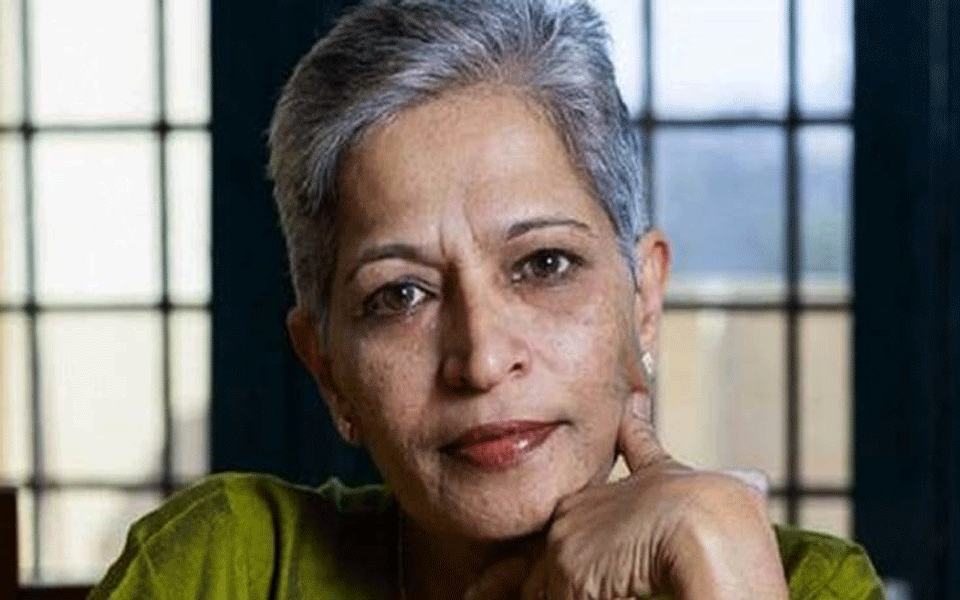
Bengaluru, June 07: A 37-year-old Pune man currently under investigation for his suspected links to the Gauri Lankesh murder was allegedly one of the two men who knocked on the doors of scholar MM Kalburgi’s residence in Dharwad before they gunned him down on August 30, 2015, reports timesofidia.indiatimes.com.
Two unidentified men had gone to Kalburgi’s Kalyan Nagar residence. The visitors struck up a conversation with the scholar and his wife Umadevi went inside as she thought they were his students. The visitors fled after one of them shot Kalburgi dead. One of the visitors is suspected to be Amol Kale, the Pune man, now being questioned by the Special Investigation Team (SIT) probing the Gauri killing.
“A close family member of Kalburgi has identified Kale as one of the visitors. However, we need more evidence to establish the claim. We’ll soon contact sleuths of the Criminal Investigation Department (CID) which did the initial investigation into the Kalburgi killing.” SIT sources said TOI.
Kale is a realtor and lives with his widowed mother and wife in Akshay Plaza Apartments at Manek Colony, Chinchwad near Pune. Kale, Manohar Yadave (from Vijayapura), Amit Degvekar (from Sindhudurg, Maharashtra) and Sujit Kumar alias Praveen from Mangaluru were first arrested for conspiring to kill Mysuru rationalist KS Bhagawan. The SIT took them into custody after it emerged that they had links with the Gauri killing too.
Kale’s absconding accomplice, Nihal alias Dada, is a suspected to have played a significant role in the Gauri murder, SIT sources said. We have launched a manhunt for him,” sources said TOI.
Let the Truth be known. If you read VB and like VB, please be a VB Supporter and Help us deliver the Truth to one and all.
Two die, six injured as wall of house collapses in Bihar
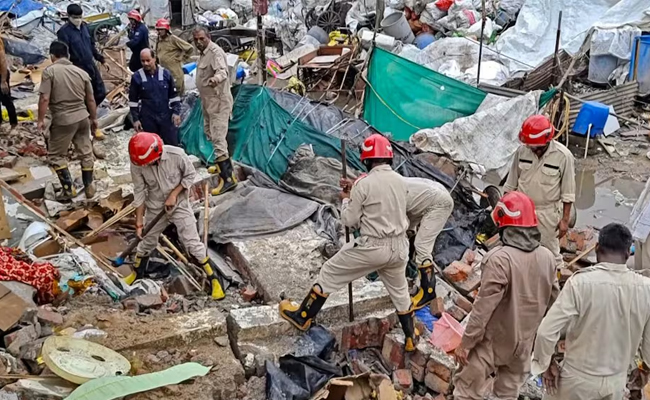
Aurangabad (Bihar) (PTI): Two persons were killed and six others injured after the wall of a house collapsed on them in Bihar’s Aurangabad district, police said on Sunday.
The deceased have been identified as Akhileshwar Yadav (55) and Satyanarayan Yadav (65), a senior officer said.
The incident took place on Saturday night when the people had gathered to watch a wedding ceremony in the Obra area, he said.
According to villagers, the wall of a house where the wedding ceremony was going on suddenly collapsed on them, Obra Police Station SHO Nitish Kumar said.
A police team reached the spot after receiving the information, the SHO said.
"Two died on the spot, and the six injured were immediately taken to the nearest government hospital. Their condition is stated to be out of danger," the station house officer said.
The bodies were sent for the post-mortem examinations, said the SHO, adding that the matter was being examined.