Girl from Kodagu hoists Indian flag atop Mount Elbrus of Russia
Alumni of St. Agnes of Mangaluru scaled the peak
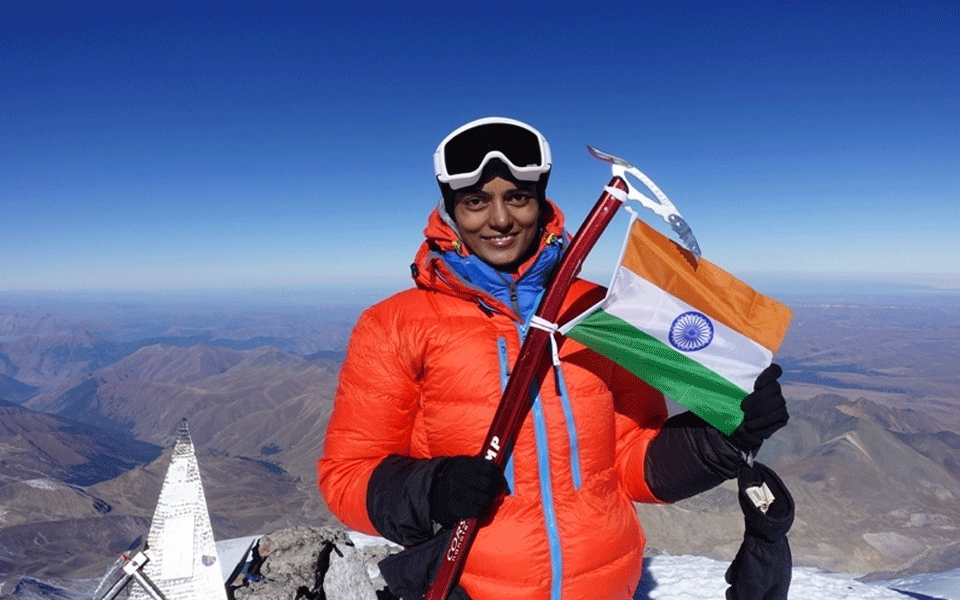
Madikeri, November 13: A girl from Kodagu became the cynosure of all eyes after she created a history by hoisting the tricolour atop Mount Elbrus, the highest peak in Russia.
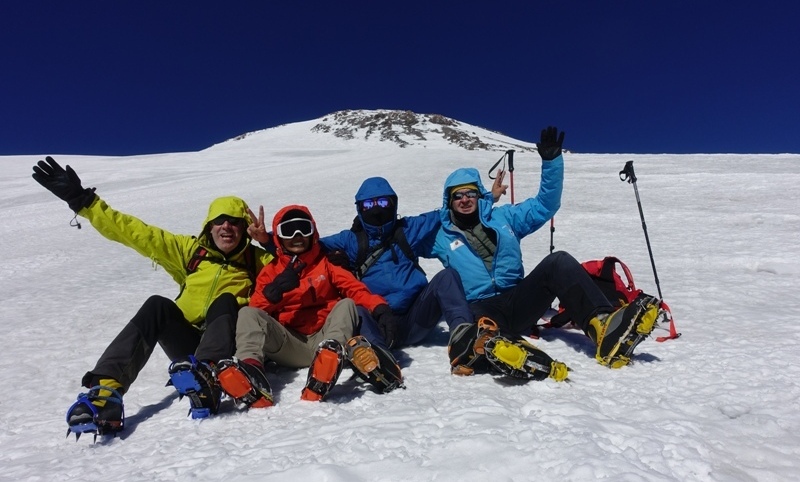
Bhavani, daughter of Tekkada Nanjundaswamy and Parvati of Perur village near Napoklu, scaled 5,642 meters height mountain. She has represented India along with three other climbers of Mexico, France and Romania. All the four were given training for three days in Russia.
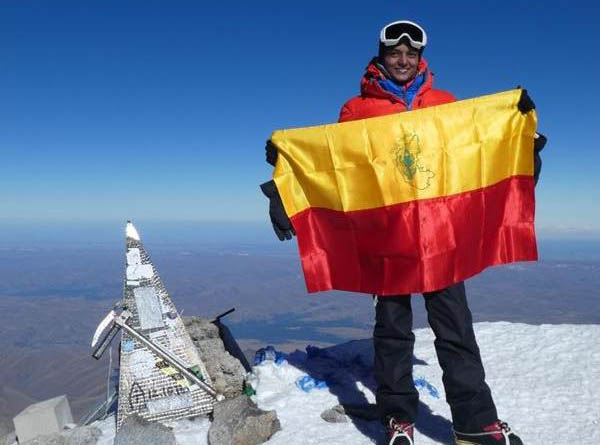
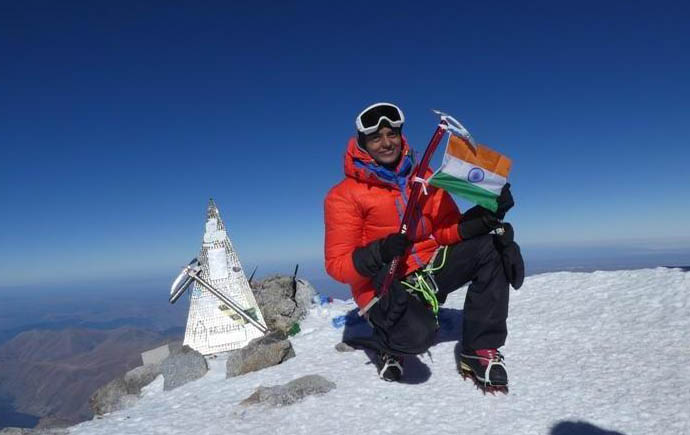
Elbrus is the highest peak in Russia and among European countries, this is the 10th highest peak. But Bhavani has climbed the snowy mountain in eight hours and hoisted the flag. She was also known as the fastest climber. Bhavani climbed the peak first among four climbers. Interestingly, she climbed the mountain as a girl leaving three men behind.
She began her expedition bon October 18th midnight amidst chilling cold and continued her journey stepping on the ice and reached the summit on October 19 at 9.30 am.
Right from the beginning, she has passion for mountaineering. She has the ambition of climbing the Mount Everest, the highest peak in the world. But it is not so easy. It requires preparation, training and financial assistance. If the government and organisations helped her in achieving her dream, she will climb the Everest, she said.
Already, she has climbed the mountain at Darjiling in North India.
Bhavani has completed her primary school at Srimangala JC School. Later, she has continued her study at Jawahar Navodaya Vidyalaya of Galibeedu and completed her graduation at At. Agnes of Mangaluru. Now, she is working as a teacher at Himalayan Mountaineering Institute of Darjeeling.
She has more interest towards defence and adventure. She has joined NCC in high school level and continued it even in college. She had also participated in Republic Day parade held in New Delhi in 2016.
She has also participated in All India Air Force Sainik camp held at Jodhpur and appreciated by the chief minister Siddaramaiah, NCC director general Lt.Gen. Aniruddh Chakravarthy, Karnataka Goa NCC deputy director general air commander C Rajiv. Bhavani has got the primary training in mountaineering from Atal Bihari Vajpayee Institute of Mountaineering Allied Sports of Manali. Higher level training was taken from Himalayan Mountaineering Institute of Darjeeling.

Himalayan Mountaineering Institute has already conducted various tough mountaineering activities successfully. Among them, she is the only girl who completed the mountaineering activities efficiently. She has already climbed the ice mountains like Rudugaira of Uttarakhand, Friendship of Manali, Renic and Stok Kangri in Leh. She has expertise in horse riding, swimming and various other trainings in defense sector.
Let the Truth be known. If you read VB and like VB, please be a VB Supporter and Help us deliver the Truth to one and all.
Vijay''s TVK wins an impressive 108 seats in TN polls

Chennai (PTI): Vijay-led TVK secured an impressive 108 seats trouncing the incumbent DMK led by M K Stalin which finished with only 59 seats in the Tamil Nadu Assembly elections held on April 23, as per the final tally of the ECI on Tuesday.
The opposition AIADMK won 47 seats while its allies the PMK obtained 4 and the BJP and AMMK clinched one seat each respectively in the election, according to the data available on the Election commission of India's website.
The DMK's allies - the Congress managed to win 5 seats, the IUML, CPI, CPI (M), and VCK: 2 each and DMDK secured one seat, among a total of 234 Assembly constituencies in the state.
The votes were taken up for counting on May 4 and the final tally was announced on Tuesday.
Actor-politician Vijay's Tamilaga Vettri Kazhagam on Monday created a record of sorts in the electoral history of Tamil Nadu and emerged as the single largest party by delivering a shock defeat to DMK and its president Stalin in his Kolathur constituency, while the AIADMK was pushed to a distant third spot.
Vijay won from both Perambur and Tiruchirappalli East constituencies.
The TVK has clocked nearly 35 per cent (34.92) vote share in its debut polls.
This will be the first time in Tamil Nadu that a party will assume power a little over two years after its founding in February 2024.