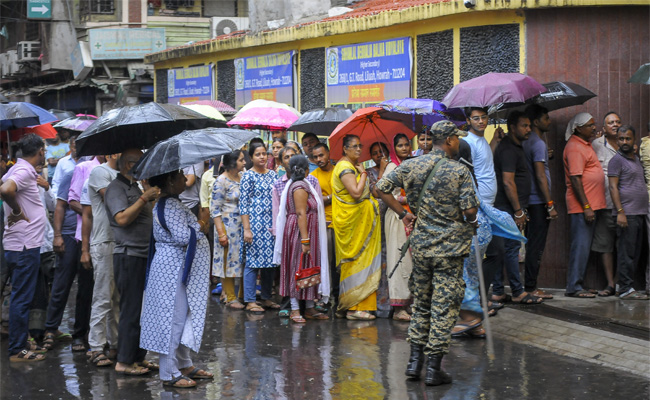
Got a call from BJP to rejoin party, says expelled leader Eshwarappa
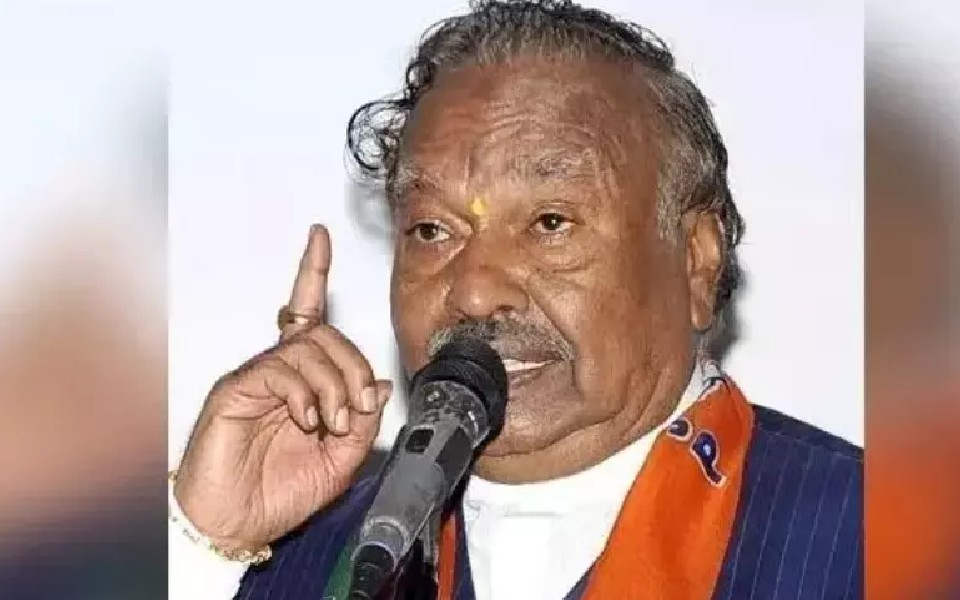
Bengaluru: Expelled BJP leader K S Eshwarappa on Monday said he has been invited by the saffron party to rejoin it.
He, however, said he is not in a hurry to join the party and would discuss it before taking a call.
“A few BJP leaders approached me, asking to rejoin the party. I haven’t decided yet. I am not in a hurry,” Eshwarappa told reporters here.
Eshwarappa had rebelled against the party and contested the Lok Sabha election ignoring the party high command’s direction. He was defeated by former Chief Minister B S Yediyurappa’s elder son B Y Raghavendra.
ALSO READ: Ready to resign if views not in sync with Byrathi Suresh: KUWSDB Chairman Vinay Kulkarni
The expelled leader, who held several key positions including the Deputy Chief Minister, Leader of Opposition in the Karnataka Legislative Council and the BJP state president, was upset when the party denied his son K E Kantesh a ticket in the recent Lok Sabha election to contest from Haveri Lok Sabha seat.
He opened a front against former Chief Minister and BJP stalwart B S Yediyurappa and his two sons Raghavendra and BJP state president B Y Vijayendra accusing them of making BJP a ‘dynastic party’ in Karnataka.
Let the Truth be known. If you read VB and like VB, please be a VB Supporter and Help us deliver the Truth to one and all.
Rickelton's ton in vain as SRH beat MI by 6 wickets
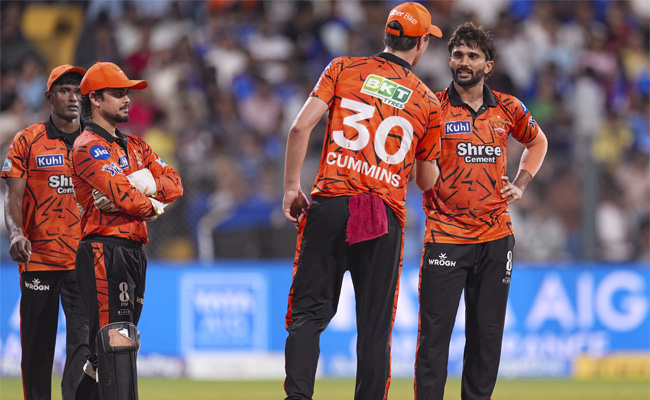
Mumbai (PTI): Ryan Rickelton's whirlwind unbeaten ton was overshadowed by Heinrich Klaasen's unbeaten 65 as Sunrisers Hyderabad defeated Mumbai Indians by six wickets in an IPL match here on Wednesday.
Chasing an imposing 244-run target, Travis Head (76 off 30) and Abhishek Sharma (45 off 24) shared 129 runs for the opening wicket to set the platform for SRH.
Klaasen (65 not out off 30 balls) then displayed his all-round hitting abilities to guide SRH home with the help of Nitish Kumar Reddy (21) and Salil Arora (30 not out off 10) in 18.4 overs.
Earlier, Rickelton's knock powered MI to 243 for five.
MI rode on a 93-run stand between Rickelton (123 not out off 55 balls) and Will Jacks (46 off 22) in 7.1 overs for the opening stand to power the side.
MI skipper Hardik Pandya scored a valuable 31 off 15 balls before being dismissed.
Praful Hinge (2/54), Eshan Malinga (1/29), Sakib Hasan (1/39) and Nitish Kumar Reddy (1/31) were the wicket-takers for SRH.
Brief Scores:
Mumbai Indian: 243 for 5 in 20 overs (Ryan Rickelton 123 not out; Praful Hinge 2/54).
Sunrisers Hyderabad: 249 for 4 in 18.4 overs (Travis Head 76, Heinrich Klaasen 65 not out; AM Ghazanfar 2/51).